
 EN
EN
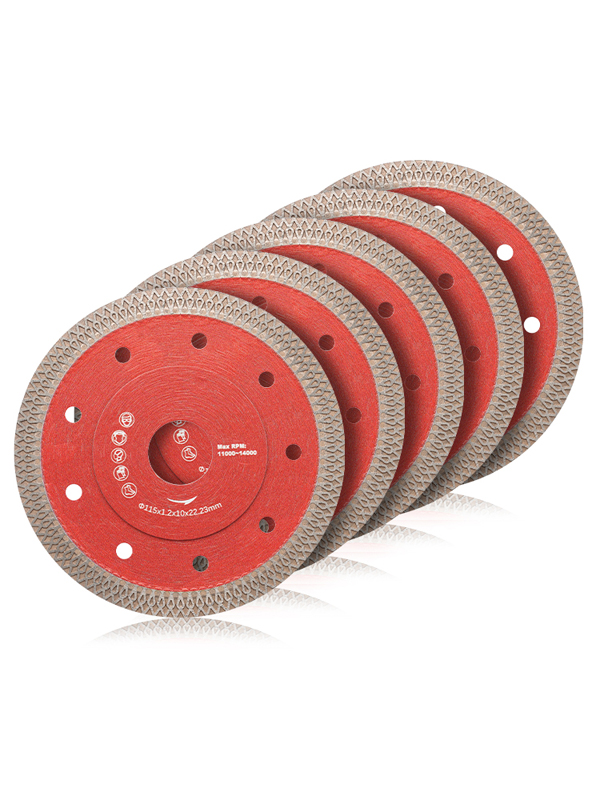
Understanding Runout Tolerance in High-Precision Diamond Saw Blades
Definition of Runout Tolerance in Tile Cutting Applications
The runout tolerance basically tells us how much a diamond blade can wobble while cutting tiles before it starts causing problems. When working with ceramics or porcelain materials, something as small as 0.05 mm of wobble makes a big difference. The cuts just won't be accurate anymore, which means we end up with rough edges or worse, wasted material. What this number really shows is whether the blade stays on track when spinning at those high speeds. A good runout rating helps maintain cleaner surfaces and extends how long the tool lasts before needing replacement.
Differentiating Radial and Axial Runout in Diamond Blade Performance
Radial runout basically means when the blade moves sideways relative to where it should be cutting, which leads to problems with how deep it cuts consistently across the material. Then there's axial runout, what most people call side-to-side wobble, and this issue generates extra heat during operation plus causes uneven wear on different parts of the blade segments. When working with tile saws specifically, if radial movement goes beyond about 10 micrometers, we typically start seeing those annoying chipped edges on finished tiles. And anything over 15 micrometers for axial runout really speeds up the breakdown of the bonding material in diamond blades, shortening their useful life significantly. These tiny measurement differences might seem insignificant at first glance but they actually make a big difference in both quality outcomes and maintenance costs over time.
Measuring Blade Precision: The Role of Total Indicator Reading (TIR)
Total Indicator Reading (TIR) quantifies combined radial and axial deviations using calibrated dial gauges. Industry standards for premium tile blades demand TIR values below 20 µm to ensure:
- ±0.1 mm cutting accuracy across 300 mm tiles
- Uniform diamond exposure for consistent material removal
- Vibration reduction below 2.5 g-force at 3,800 RPM
Blades meeting these tolerances demonstrate 40% longer lifespan compared to units with TIR over 50 µm, as documented in recent abrasive tool studies.
How Runout Tolerance Impacts Cut Accuracy and Tile Surface Quality
Effect of Blade Wobble on Cutting Precision in Ceramic and Porcelain Tiles
When diamond blades wobble beyond 0.004 inches or about 0.1 millimeters on the total indicator reading scale, it starts creating noticeable problems during tile cutting operations. Porcelain tiles are especially sensitive because they absorb around 10 to 12 percent water. Even small amounts of radial runout lead to rough edges that need roughly 23% extra work for polishing according to data from Tile Council of North America back in 2023. For those working with high density ceramic materials, axial wobble tends to make cuts wider by anywhere between 0.3 and 0.5 mm. This widening effect really messes up the fit between tiles in modular installation projects where tight interlocking joints are critical for structural integrity.
Link Between Runout and Edge Chipping, Micro-Fractures, or Surface Imperfections
Excessive runout concentrates thermal stress at diamond segments, creating micro-fractures that propagate into visible chips. Testing shows blades with >30µm TIR produce 4.2 edge fractures per linear meter versus 0.8/meter for <10µm models. Surface roughness (Ra) measurements confirm low-TIR blades maintain Ra ≤1.6µm compared to ≥3.2µm with unstable blades.
Maintaining Consistency in High-Speed Tile Cutting Operations
Industrial saws operating at 3,800 RPM amplify runout-induced vibrations, accelerating segment wear by 40% (NIST 2023). Precision-ground cores reduce harmonic oscillations, allowing 12-hour continuous cutting with ≤0.02mm dimensional drift. Over 72% of thermal warping incidents trace to blade imbalance during 8+ hour production runs.
Case Study: Low-TIR vs. Standard Blades in Commercial Tile Installations
A 10,000m² hotel floor installation compared two 350mm blades cutting 60x60cm porcelain tiles:
| Metric | Low-TIR Blades (≤10µm) | Standard Blades (>50µm) |
|---|---|---|
| Cutting Deviation | ±0.05mm | ±0.5mm |
| Edge Fractures | 0.8/meter | 4.2/meter |
| Installation Waste | 3.1% | 18.7% |
The low-TIR system reduced total project costs by $14,200 through minimized material waste and edge finishing labor—despite a 22% higher initial blade cost.
Runout Tolerance and Its Influence on Diamond Blade Durability and Performance
How Precision Reduces Vibration and Extends Tool Life
Keeping runout tolerance under 10 micrometers helps reduce those annoying harmonic vibrations in diamond saw blades, which actually makes them last much longer during operation. When blades meet the ISO 6104:2019 standard for Total Indicator Reading measurements, they show about half the amplitude oscillation problems compared to blades where runout goes over 50 micrometers. Better precision means less energy gets lost when cutting materials, so friction temperatures drop around 30 degrees Celsius according to research from ISCVE in 2023. For anyone working with porcelain tiles all day long, this translates into better diamond segment retention on the blade itself, plus blades tend to stay sharp and functional about 40% longer before needing replacement.
Uneven Wear Patterns Caused by Excessive Runout and Blade Imbalance
When radial runout goes over 0.05 mm, it throws off how forces are distributed across those diamond segments. What happens next? The wear becomes uneven, concentrating on certain parts of the blade. This leads to the steel core showing through much sooner than expected - sometimes within just 200 hours of cutting instead of the usual 500+ hours we see with properly balanced blades. Looking at thermal images tells another story too. They show these hot spots forming exactly where there's excessive runout, and the bond matrix breaks down about two and a half times quicker compared to what we get from precision ground blades. Makes sense when you think about it really, since everything gets stressed out of proportion.
Balancing Performance and Cost: Are Ultra-Tight Tolerances Always Necessary?
Aerospace grade blades can get down to under 5 microns of runout, but most folks working with tiles find that around 15 to 20 microns works just fine for everyday jobs. Some research from last year looked at what 120 different tile cutting businesses were doing and found something interesting. Once they went past about 12 microns total indicator runout on ceramic stuff, the benefits started dropping off pretty fast. The study said quality only got better by 4%, but the tools cost 22% more to buy. That doesn't sound like a great tradeoff for most contractors. However, when looking at big operations making lots of stone tiles, getting those tolerances below 10 microns actually cut down on wasted material and rework by nearly 20%. According to Tile Tech Quarterly from 2023, this shows how important it is to match blade precision with the actual needs of the job site.
Key Design Considerations
| Tolerance Range | Suitable Applications | Expected Blade Lifespan |
|---|---|---|
| 5–10 µm | Premium porcelain, large-format tiles | 600–800 hours |
| 11–20 µm | Standard ceramic, composite tiles | 400–500 hours |
| 21–30 µm | Demolition/rough cutting | 200–300 hours |
Machine Compatibility and Alignment: Ensuring Effective Runout Control
Matching Blade Runout Tolerance with Saw Machine Precision
Diamond saw blades that offer high precision need machines that can hold really tight mechanical tolerances. When working with blades that have total indicator runout of 0.004 inches or less, the saw itself must have arbor concentricity below 0.002 inches otherwise small errors just keep building up. Most major tile saw makers these days set minimum requirements for machine rigidity, often referencing standards like ISO P5 for commercial grade work when they design their equipment to pair with modern blade technology. What happens when the system isn't properly matched? Tests have actually shown that up to one third of what a blade could potentially deliver in terms of cutting accuracy gets lost. We've seen this happen repeatedly when comparing top shelf Class AAA saws against regular models on the market today.
Arbor Alignment and Its Impact on Real-World Runout Performance
Blades that are made correctly still end up with more runout issues when they're put on arbors that aren't aligned right. When cutting goes on for hours at a time, heat builds up and actually moves the spindle position somewhere between .0005 and .0012 inches every hour, especially if the workshop isn't temperature controlled. The newer alignment techniques with lasers cut down on this problem after installation by around two thirds compared to old school methods with feeler gauges. This makes a big difference in how clean those porcelain tile edges come out at the end of the job.
Overcoming Mechanical Limitations to Achieve Ultra-Thin Kerfs
The push for 0.8–1.2mm kerf widths in decorative tile installations requires rethinking conventional blade stabilization. Five innovations address this:
- Hydrodynamic diamond segment brazing (eliminating 0.0003"–0.0005" weld distortion)
- Multi-stage arbor flange lapping (surface flatness ≤ 0.0002")
- Active damping blade cores that compensate for minor machine vibrations
These advancements enable consistent 0.0018" TIR performance in sub-1mm blades—a 73% improvement over previous generations.
Innovations in High-Precision Diamond Blades for Modern Tile Cutting
Advancements in Tolerance Control for Ultra-Thin Diamond Saw Blades
Today's manufacturers are hitting runout tolerances below 0.05 mm thanks to laser guided manufacturing combined with automated grinding systems. This represents about a 63 percent jump from what was possible back in 2019 according to data from the Tile Cutting Technology Institute released last year. The really thin blades on the market these days have kerfs ranging between 1.2 and 1.8 mm, yet they still manage to keep their TIR precision even at those crazy high RPMs above 15,000 when cutting through porcelain tiles. What this means is practically no chips left behind after making those big format cuts. And let's not forget about the bonding technology advancements either. Nickel based matrix systems basically stop segments from deflecting during operation, which makes all the difference when working with tough stuff like quartzite or terrazzo that would otherwise cause problems for standard equipment.
Emerging Trends in Diamond and CBN Blade Tolerances for Architectural Ceramics
Architectural ceramics rated at Mohs 8 or higher have pushed many professionals to switch to diamond blades reinforced with cubic boron nitride (CBN). The newer hybrid blades expand only about 40% less when heated compared to regular blades, which means they stay straighter during cutting. They maintain really good radial runout around plus or minus 0.03 millimeters even when cutting without water cooling. Most top blade makers are following the latest ISO 13942:2024 standards these days. This helps keep quality consistent between different batches of blades, something that matters a lot for tricky jobs such as installing beveled edge mosaics or setting up rectified tiles where precision counts.
Frequently Asked Questions (FAQ)
What is runout tolerance?
Runout tolerance refers to the allowable amount of blade wobble during tile cutting, impacting the accuracy and quality of cuts.
What are radial and axial runout?
Radial runout refers to the blade moving sideways relative to the cut path, affecting depth consistency. Axial runout, or side-to-side wobble, generates extra heat and uneven wear.
How does Total Indicator Reading (TIR) affect blade performance?
TIR quantifies combined radial and axial deviations. Lower TIR values indicate better precision, leading to longer tool life and reduced vibration.
Why is machine compatibility important for minimizing blade runout?
Precise blade performance relies on saw machines with tight mechanical tolerances to prevent runout accumulation over time.
Are ultra-tight runout tolerances always necessary?
While aerospace grade blades offer minimal runout, most tile cutting operations find that moderate tolerances provide a balance between performance and cost.
Table of Contents
- Understanding Runout Tolerance in High-Precision Diamond Saw Blades
- How Runout Tolerance Impacts Cut Accuracy and Tile Surface Quality
- Runout Tolerance and Its Influence on Diamond Blade Durability and Performance
- Machine Compatibility and Alignment: Ensuring Effective Runout Control
- Innovations in High-Precision Diamond Blades for Modern Tile Cutting
- Frequently Asked Questions (FAQ)