 EN
EN
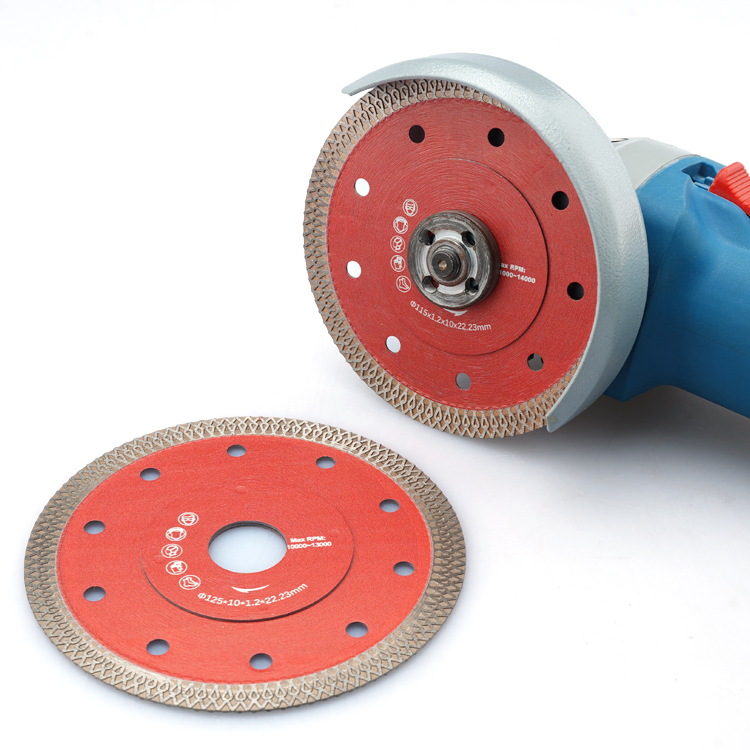
The Physics of Tool Diameter and RPM: Understanding Peripheral Speed
Core Principles: How Blade Diameter Affects Rotational Speed
When looking at how tool size relates to RPM, we're really talking about basic physics principles at work here. Larger blades naturally cover more ground with each spin since their outer edges have further to go during every rotation, which means they pick up speed faster around the perimeter. To figure out exactly what speed we're dealing with, there's a handy calculation: multiply pi by the diameter in meters and then by RPM divided by sixty gives us the peripheral speed in meters per second. Take a typical scenario where someone might be working with a big 1200mm blade spinning at 1000 revolutions per minute. That actually creates a peripheral speed of around 62.8 m/s, way beyond the safe operating range of 25 to 35 m/s that equipment makers generally advise sticking to for safety reasons. Most factory guidelines will warn against going past these limits because exceeding them can lead to all sorts of problems down the line.
Peripheral Speed (m/s): The Critical Link Between Size and Safe RPM
The speed at which the blade's edge moves has a big impact on how well it cuts and what kind of stress builds up in the material. For smaller blades measuring around 400 to 600 mm across, they generally work fine at speeds between 2,000 and 3,000 RPM. But when dealing with bigger blades that are about 800 mm up to maybe 1,200 mm in size, operators need to slow things down quite a bit, usually somewhere between 800 and 1,500 RPM to keep everything within safe limits. There's basically an opposite effect happening here with these speeds affecting the pressure on those diamond segments attached to the blade. If the RPM gets too high, things start getting really hot and segments might pop off completely. On the flip side, if the speed drops too low, the cutting just doesn't perform as expected, which is obviously not good for productivity either.
Why Larger Diamond Saw Blades Must Operate at Lower RPMs
Three key factors necessitate lower RPMs for larger blades:
- Centrifugal force increases with the square of RPMâdoubling RPM quadruples stress on blade bonds
- Heat dissipation becomes less efficient as blade mass grows
- Vibration amplitude rises with diameter, requiring tighter speed control
Industry data shows that for blades over 800mm, every 100 RPM beyond recommended limits increases segment failure risk by 12%. Balancing productivity with tool integrity makes adherence to diameter-specific RPM guidelines essential in diamond saw operations.
How Increased Tool Diameter Amplifies Centrifugal Stress
When blade diameter goes up by 10%, centrifugal force jumps about 21% at the same RPM speed according to physics principles. Take a blade measuring 1200mm across spinning at 1800 revolutions per minute, it creates well over 12,000 Newtons of outward pushing force. To put this into perspective, imagine trying to hang a decent sized sport utility vehicle from one end of the blade. All this intense pressure builds up around areas where the blade isn't as strong, especially those spots where segments connect together and along the cut-out sections called gullets. Over time, these stress points can lead to serious problems like warping or even breaking through the core material entirely.
Balancing Productivity and Safety: High RPM Risks in Large Blades
Running tools at higher RPM definitely cuts down on cutting time, but there's a big jump in risk that doesn't quite match up linearly. The Tool Safety Institute found something pretty alarming back in 2023. When looking at blade performance, they discovered that 1,400mm blades spinning above 1,200 RPM are actually eight times more likely to lose segments than smaller 800mm blades working under similar conditions. OSHA has rules about this too. For every extra 100mm in blade diameter past 600mm, workers need to knock RPM down by around 4 to 6 percent to stay safe. Still, most problems happen because people keep pushing for faster results despite what the machines can handle. About seven out of ten blade failures trace back to operators who put production speed ahead of what the equipment was designed for.
Case Study: Blade Failure From Exceeding Safe RPM Limits
Back in 2022, a metal shop pushed their luck by running a 900mm diamond blade at 2,500 RPM, which was actually 35% over what the manufacturer recommended. Big mistake. During a cut through stainless steel, the blade just exploded into pieces. The mess cost them around $38k worth of damaged materials, knocked production offline for two weeks straight, and sadly left two employees with lasting hearing problems. When engineers looked into what went wrong, they found that the center hole in the blade had warped by 0.9mm. That might not seem like much, but for something this big, it's past the breaking point where the whole thing just can't hold together anymore.
Recommended RPM Settings by Blade Diameter and Material
Manufacturer Guidelines for Optimal Cutting Speed by Blade Size
Most major blade makers set their RPM limits after extensive tests on how blades hold up when spinning fast enough to create serious centrifugal force. The smaller 14 inch diamond blades usually spin between 3,800 and 5,500 revolutions per minute. But those bigger 24 inch models need much slower speeds, around 550 to 700 RPM. Why such a big difference? Well, the manufacturer has to account for things like peripheral speed caps (usually no more than 130 meters per second), how hot the bonding material can get before it fails, and whether the core metal will start to wear out over time. Push past these numbers and bad stuff happens fast warping, chunks breaking off, or in worst cases complete blade failure during operation.
RPM Recommendations for Common Large Diamond Blade Diameters (600mmâ1200mm)
| Blade Diameter | Recommended RPM Range | Maximum Peripheral Speed |
|---|---|---|
| 600mm (24") | 550â700 RPM | 120â130 m/s |
| 900mm (35") | 350â450 RPM | 110â125 m/s |
| 1200mm (47") | 250â320 RPM | 95â115 m/s |
Field data indicates that operating within these parameters extends blade service life by 30â50% compared to overspeed conditions (Blade Performance Report 2023).
Matching Tool Diameter and RPM to Core Material Type
Material hardness requires adjustments to standard RPM settings:
| Material Type | RPM Adjustment | Rationale |
|---|---|---|
| Soft (Asphalt) | +15â20% | Compensates for abrasive wear |
| Medium (Concrete) | Baseline | Balanced cutting/heat dissipation |
| Hard (Reinforced) | -25â30% | Reduces segment degradation |
For example, a 900mm blade cutting granite should operate at 260â300 RPM instead of the standard 350â450 RPM range, preserving diamond exposure while maintaining clean cuts.
Safety Standards and Maximum Safe RPM for Large Diamond Saw Blades
OSHA and ISO regulations on safe operating speeds
Safety regulations put serious restrictions on how fast big diamond saw blades can spin. According to OSHA guidelines, any blade bigger than 600mm needs to show its official max RPM rating somewhere visible (that's regulation 29 CFR 1926.304 if anyone cares). Meanwhile, the ISO standard from 2023 looks at blade materials when setting those speed limits. For example, when we get to really large blades around 1,200mm across, they start experiencing massive stress levels - over 7,200 Newtons per square meter at just 800 RPM according to the latest OSHA manual. That explains why manufacturers have to cut back on speed for these oversized cutting tools. The physics just don't work as well with bigger equipment, so safety becomes even more critical.
Practical RPM vs. diameter safety chart for field reference
The inverse relationship between diameter and safe RPM is summarized below:
| Blade Diameter | Concrete Cutting (Max RPM) | Granite Cutting (Max RPM) |
|---|---|---|
| 600mm | 1,600 | 1,200 |
| 900mm | 1,050 | 780 |
| 1,200mm | 700 | 520 |
This 20% safety margin below theoretical limits helps prevent warping and matrix failure. Operators must further reduce RPM by 15â30% when cutting reinforced materials or working in high ambient temperatures.
FAQ
What is peripheral speed?
Peripheral speed is the speed at which the edge of the blade moves. It is calculated by multiplying pi by the blade diameter in meters and then by RPM divided by sixty.
Why do larger blades need to operate at lower RPMs?
Larger blades must operate at lower RPMs due to increased centrifugal force, heat dissipation challenges, and higher vibration amplitudes requiring tighter speed control.
What are the safety risks of exceeding recommended RPM limits for large blades?
Exceeding recommended RPM limits can lead to segment detachment, excessive wear, and even catastrophic blade failure.
How do you adjust RPMs for different material types?
Adjust RPMs based on material hardness: increase for soft materials, maintain baseline for medium materials, and decrease for hard materials.
Table of Contents
- The Physics of Tool Diameter and RPM: Understanding Peripheral Speed
- How Increased Tool Diameter Amplifies Centrifugal Stress
- Balancing Productivity and Safety: High RPM Risks in Large Blades
- Case Study: Blade Failure From Exceeding Safe RPM Limits
- Recommended RPM Settings by Blade Diameter and Material
- Safety Standards and Maximum Safe RPM for Large Diamond Saw Blades
- FAQ