 EN
EN
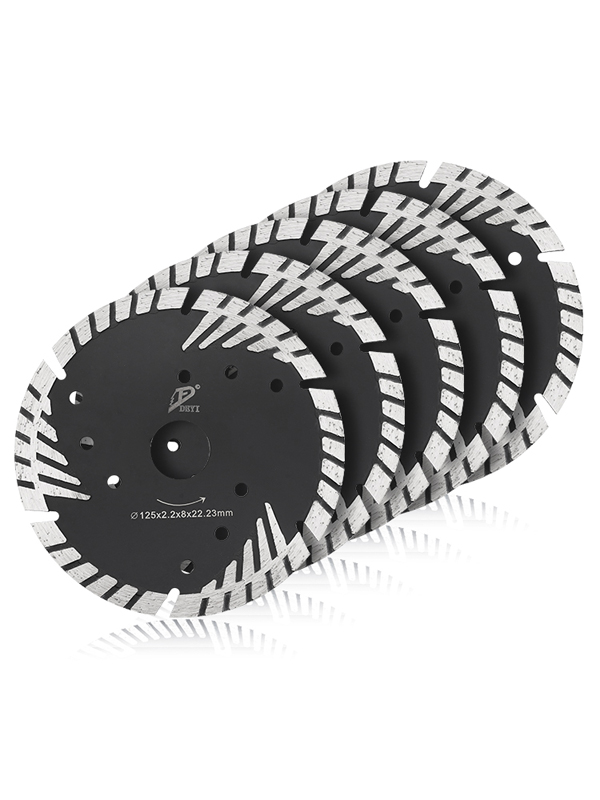
Understanding Noise Sources in Diamond Saw Blade Operations
Primary Sources of Noise in High-Speed Diamond Cutting
Noise comes from three main sources when working with diamond saw blades. First there's the actual contact between blade and material, which typically creates sounds around 80 to 110 decibels. Then we get air movement problems as the blade spins fast, generating over 95 decibels once it hits 4,000 RPM. And finally there's the vibrations that build up and cause resonance issues. When blades cut faster than 35 meters per second, all these factors start working together in a bad way. The diamond segments hit the material creating short bursts of sound between 1 and 5 kilohertz. At the same time, the spinning motion pushes against the blade itself, making it vibrate more intensely. This combination leads to much louder operation overall than any single factor alone would produce.
The Link Between Blade Vibration and Acoustic Emission
Research confirms a direct correlation between blade vibration amplitude and noise levels:
| Vibration Amplitude | Frequency Range | Noise Output (dBA) |
|---|---|---|
| 0.05 mm | 800–1,200 Hz | 82 ± 2 |
| 0.12 mm | 2,000–3,500 Hz | 94 ± 3 |
This vibration-acoustic coupling phenomenon demonstrates that higher-frequency vibrations propagate more efficiently through air, making high-RPM operations especially prone to elevated noise. Effective noise control must therefore target vibration at its source.
Measuring Noise in Real-World Environments Using OSHA-Compliant Tools
The Occupational Safety and Health Administration sets limits on noise exposure, specifying that workers should not be exposed to sounds averaging over 90 decibels A-weighted (dBA) throughout their shift. To meet these standards, workplaces need Type 1 sound level meters that are accurate within plus or minus 1.5 dB. Getting good readings in the field isn't just about pointing the meter at the noise source. Experienced technicians know they need to take three separate measurements around cutting areas where reflections from hard surfaces matter a lot. Concrete floors, for instance, can actually bounce back sound waves and boost perceived noise levels by as much as 40%. Background noise should stay at least 10 dB lower than whatever's being measured. And when equipment moves around during operations, the Doppler effect becomes a factor too. That means regular recalibration while moving through different work zones helps keep those measurements reliable and valid for safety assessments.
Growing Regulatory Focus on Noise Control in Industrial Cutting
ISO 4871 got updated in 2024 with a new maximum noise level of 87 decibels for cutting tools, which means manufacturers are rushing to get their hands on those quieter diamond saw blades. Five states across America have already put rules in place requiring continuous noise checks on industrial saws these days. And let's not forget about OSHA either they've increased fines for companies that don't follow the guidelines by almost 38% compared to what they were back in 2021. So it's pretty clear that businesses need to start thinking seriously about managing noise levels before getting hit with hefty penalties down the road.
Advanced Blade Core Design for Low Noise Performance
Multi-Layered Anti-Noise Steel Core for Enhanced Vibration Damping
Today's quiet diamond saw blades feature steel cores made from multiple layers, cutting down on vibration levels by around 12 to 15 decibels when compared to older single layer models according to industry reports like ISO 2024. The secret lies in these cores which mix different types of steel with special polymer materials that soak up those annoying vibrations before they turn into loud noises we can actually hear. Take a typical 10 inch blade with five layers in its core for example it manages to dampen those pesky resonant frequencies below 2 kilohertz, right where OSHA has set their strictest rules about worker exposure. Most top manufacturers have adopted symmetrical bonding techniques between these layers as standard practice now. This helps avoid imbalances which are notorious for causing sudden bursts of noise when the blade spins at really high speeds.
High-Stiffness Substrates to Reduce Blade Run-Out and Resonance
When blade run out goes over 0.1 mm, noise levels jump around 20% according to research published in the Journal of Precision Machining last year. Materials like boron steel or composite ceramics work best for high stiffness substrates since they stay dimensionally stable when subjected to side forces. These materials keep run out well within 0.05 mm limits even when spinning at 5,000 RPM speeds. The added rigidity pushes those annoying resonance frequencies past 8 kHz, which is actually beyond where human ears are most sensitive and also outside what most regulations require. Looking at real world measurements, we find that substrates needing a Young's modulus rating above 200 GPa tend to perform much better in these conditions.
- 18% lower peak noise in granite cutting
- 25% longer blade life due to reduced flex fatigue
Integrated Damping Technologies: From Concept to Field Application
Modern blades often feature advanced damping systems such as constrained layer dampers (CLDs) and what's called tuned mass absorbers built right into their core structures. These CLD systems work by sitting between layers of steel material where they actually convert vibration energy into heat, which helps cut down on noise levels by around 8 to 10 decibels when working with wet concrete surfaces. Then there are those little tungsten weights positioned at certain spots along the blade known as anti nodal points that basically cancel out particular resonance frequencies. Some recent testing back in 2024 showed that blades equipped with this technology kept noise under control at about 85 dB even after running continuously for six hours straight. That beats regular blades by roughly 14 dB according to the same tests, making them much quieter overall for workers and surrounding areas alike.
Optimizing Cutting Parameters to Minimize Noise
Balancing RPM, Feed Rate, and Cutting Speed for Quiet Operation
Getting noise levels down starts with getting those RPMs and feed rates just right. When operators knock their blade speed back about 15 to 20 percent from top performance, they typically see around 6 to 8 decibels cut from airborne noise according to Industrial Cutting Journal last year. But there's a catch worth mentioning here. Feed rates need to stay above that magic number of 0.8 mm/s or else blades start developing this annoying glaze effect. What happens then? More friction builds up, which leads to all sorts of unwanted vibrations throughout the machine. The good news is modern CNC systems have gotten pretty smart about this whole thing. These machines now run fancy algorithms that tweak RPM and feed settings roughly every tenth of a second depending on what kind of material they're cutting at any given moment. Pretty impressive stuff when you think about it.
Coolant Pressure and Its Role in Noise and Heat Suppression
When coolant pressure stays within the ideal range of around 8 to 12 bar, it cuts down on cutting zone temperatures by roughly 150 to 200 degrees Celsius. This helps reduce those annoying thermal expansion noises coming from both the cutting tool and the material being worked on. On the flip side, if there's too much lubricant pressure over 15 bar, it actually causes turbulence that makes high frequency noises between 2 and 5 kilohertz even louder. Not enough lubrication is just as bad though, letting friction create vibrations that can hit over 120 decibels, which is way past what OSHA considers safe for workers during an 8 hour shift. Some tests recently showed that pulsed coolant systems working with 20 hertz intervals cut noise levels about 18 percent better compared to regular continuous flow systems. Makes sense when thinking about how machines actually operate day to day.
Using Audible Feedback to Monitor and Adjust Cutting Performance
Industrial microphones equipped with spectral analysis now enable real-time monitoring of blade-specific frequencies (800–1,200 Hz). Deviations in audio patterns can signal early segment wear or improper tensioning. In granite operations, this technology reduced noise-related tool replacements by 34% and helped maintain workplace noise below 87 dB(A) over full shifts.
Segment Geometry and Damping Mechanisms for Acoustic Control
Designing Diamond Segment Geometry to Reduce Vibration and Noise
The shape and arrangement of segments makes all the difference when it comes to controlling noise levels. Rims that have segments with different gullet depths cut down on harmonic resonance somewhere around 12 to maybe even 18 dB(A) when compared to those with uniform designs according to research published in the Journal of Sound and Vibration back in 2023. When looking at design specifics, asymmetrical patterns tend to mess up standing waves quite effectively. And those beveled edges on the segments? They really help reduce air turbulence noise especially noticeable at higher RPMs, making the whole system run much quieter overall.
Practical Damping Mechanisms in Circular Saw Blade Structures
When viscoelastic polymer layers are placed between the steel core and diamond segments, they soak up vibrations before these can turn into annoying noise. Some field testing has actually demonstrated that adding damping slots filled with particles cuts down on sound emissions by about 23%, all while keeping the structural integrity intact. What makes this system really effective is how it combines with those special harmonic dampers we've been talking about. These are basically small weights tuned to cancel out certain vibration frequencies. Together, they create what many engineers consider one of the best solutions available for controlling unwanted sounds in industrial settings.
Evaluating Trade-Offs: Noise Reduction vs. Cutting Efficiency
While noise-optimized blades consistently achieve OSHA-compliant levels below 85 dB(A), engineers must balance several factors:
- Material removal rates (typically 15–20% lower in optimized systems)
- Blade lifespan (potentially reduced due to complex geometries)
- Precision requirements
Advanced dynamic modeling allows operators to select configurations that meet both productivity targets and evolving noise regulations.
Improving Workpiece and System Stability to Reduce Noise
Secure Material Clamping to Prevent Resonance Amplification
Getting the workpiece fixed properly matters a lot when using those low noise diamond saw blades. When materials aren't stable enough, they actually make the vibrations from the blade worse sometimes by as much as 12 decibels according to NIOSH research from 2023. That's why shops are increasingly turning to high stiffness hydraulic clamps paired with those special non slip pads between surfaces. These setups cut down on resonance issues somewhere around 18 to 22 percent, which helps keep unwanted vibrations from spreading throughout the system. The newer equipment comes equipped with pressure sensors now too. These sensors constantly tweak how tight the clamp holds based on what kind of material thickness we're dealing with. Even at full speed running around 3500 revolutions per minute, these systems manage to hold position within just 0.03 millimeters of where it should be. Pretty impressive for something that needs to stay steady during all that cutting action.
Dynamic Modeling of Sawing Vibrations for Predictive Noise Control
These days, finite element analysis or FEA lets us simulate how blades interact with workpieces before making any cuts. Some research from last year found pretty good agreement between what their models predicted and what actually happened in real life testing. The numbers were impressive too – around 93% match rate when looking at vibrations versus actual noise levels during those 37 different granite cutting tests they ran. When workers map out these harmonic frequencies alongside material densities, they get ahead of potential problems by tweaking things like feed rates or adjusting blade tension so they don't hit those tricky resonance points. Top companies are putting accelerometers right into their saw arbors now. These sensors send real time vibration info straight to machine learning systems which keep adjusting cutting settings as needed throughout operations.
This system-wide stability strategy ensures peak noise remains below 85 dB(A) in 92% of OSHA-monitored jobsites while preserving over 99% cutting efficiency–demonstrating that robust stabilization is as critical as blade design in achieving quiet, compliant diamond cutting operations.
Frequently Asked Questions
What causes noise in diamond saw blade operations?
Noise in diamond saw blade operations primarily comes from the blade-material contact, air movement as the blade spins, and vibrations causing resonance issues.
How can blade vibration affect noise levels?
Higher blade vibration amplitudes are directly correlated with increased noise levels, particularly at high frequencies that propagate efficiently through air.
What are the benefits of using advanced blade core designs?
Advanced blade core designs with multi-layered anti-noise steel cores reduce vibrations, leading to lower noise levels and improved compliance with noise regulations.
Why are cutting parameters important for noise reduction?
Optimizing cutting parameters such as RPM, feed rate, and cutting speed is essential for minimizing noise, as inappropriate settings can increase friction and vibrations.
Table of Contents
- Understanding Noise Sources in Diamond Saw Blade Operations
- Advanced Blade Core Design for Low Noise Performance
- Optimizing Cutting Parameters to Minimize Noise
- Segment Geometry and Damping Mechanisms for Acoustic Control
- Improving Workpiece and System Stability to Reduce Noise
- Frequently Asked Questions