
 EN
EN
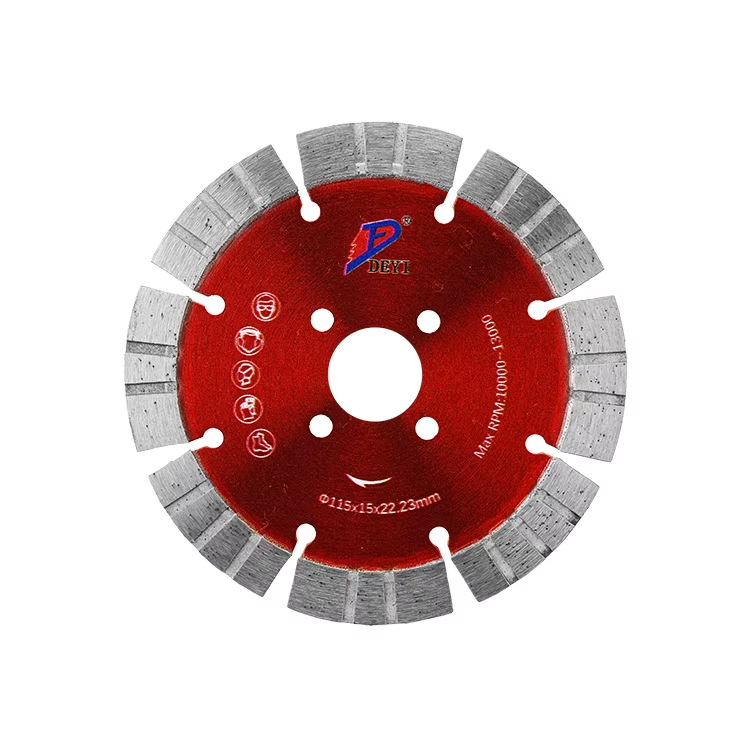
Understanding Edge Stability and Its Role in Diamond Saw Blade Performance
Defining Edge Stability in Precision Marble Diamond Saw Blades
Edge stability basically means how well a diamond saw blade stays in contact with marble when making cuts. There are really three main things that affect this stability though nobody ever talks about them much. First there's the rigidity of the blade itself. Then we have those diamond segments needing to line up properly across the whole blade surface. And finally, how well the blade dampens vibrations makes a big difference too. When working with marble, something as small as 0.2 mm blade movement can actually raise the chance of edge chipping problems by around 18%, according to research published in Stone Fabrication Journal back in 2023. That kind of margin matters a lot when doing detailed cutting jobs where precision is everything.
The Relationship Between Blade Runout, Trueness, and Directional Stability
Blade runout, which is basically the lateral wobble that happens when something spins, has a direct impact on trueness. Trueness just means how well the blade stays on course along a straight line. The really good quality blades keep this runout down to around 0.1mm or less thanks to those fancy laser balanced cores and the tensioned steel plates they use. Combine all that with proper segment alignment and what do we get? Directional stability becomes much better. This matters a lot when cutting through marble since it naturally varies in density across different areas. A stable blade won't wander off track even as it meets harder spots in the stone.
How Edge Stability Differentiates Standard From High-Precision Blades
| Feature | Standard Blade | High-Precision Blade |
|---|---|---|
| Runout Tolerance | 0.3–0.5mm | ≥0.1mm |
| Core Thickness | 2.0–2.5mm | 3.5–4.0mm with damping layers |
| Segment Alignment | ±0.15mm | ±0.05mm |
This engineered stability allows premium blades to achieve 98.7% chip-free edges in marble slabs compared to 82% with standard models, significantly reducing material waste in stone fabrication.
How Edge Stability Enhances Cutting Accuracy in Marble Processing
Why Marble Demands Exceptional Cutting Accuracy and Stability
The fragile crystal makeup of marble means it chips easily and fractures when being cut. According to research published in 2023 by the International Stone Fabrication Alliance, nearly three quarters of all slab flaws actually come from wobbly blade movement during processing. That's why precision diamond saw blades are so important these days. These specialized tools keep the edges stable while cutting, stopping those tiny vibrations from getting transferred into the stone itself. Marble sits at around 3 to 5 on the Mohs scale of hardness, so fabricators need to find just the right balance between cutting aggressively enough to get through the material but not applying too much sideways pressure. This careful approach helps maintain those beautiful vein patterns that make each marble piece unique.
Achieving Straight Cuts and Minimizing Edge Chipping in Marble Slabs
Better blade design can cut down on chipping problems by somewhere between 40 to maybe even 60 percent when the segments are properly aligned and forces are distributed correctly during cutting. Blades that have continuous rims with those fancy laser welded segments maintain good contact all along the cut line. Plus, the tapered edges spread out stress more evenly across the material being cut. For really precise work, blades with around 3.5 to 4 mm thick cores show minimal deviation - sometimes as small as 0.05 mm over a three meter length. This kind of precision makes all the difference when working with expensive marble varieties such as Carrara or Calacatta where straight, clean edges are absolutely essential for quality results.
The Impact of Blade Runout on Marble Surface Finish and Dimensional Precision
When blade runout gets too high, specifically when axial deviation goes over 0.1mm, it can really mess things up for marble processing operations. Surface roughness jumps by around three times normal levels, while edge spalling increases about 55%. That kind of performance drop is documented across the industry. The good news? High stability blades bring runout down to under 0.03mm these days. They achieve this using three phase tensioned steel cores, plus dynamic balancing tech that keeps everything aligned properly. What makes them work so well for marble cutting? The diamond segments are spaced just right based on how tough the stone actually is to break. This attention to detail results in much smoother finishes and those critical tight tolerances manufacturers need for quality control.
Case Study: Improved Yield in Marble Fabrication Using Edge-Stabilized Blades
A 12-month trial with a Turkish marble processor compared standard versus edge-stabilized blades:
| Metric | Standard Blades | Stabilized Blades | Improvement |
|---|---|---|---|
| Slab yield rate | 68% | 89% | +21% |
| Edge chip frequency | 12/m² | 3/m² | -75% |
| Polishing time/cut | 22 mins | 9 mins | -59% |
These results highlight how enhanced edge stability directly improves efficiency, quality, and profitability in high-value marble production.
Blade Core Design: Foundation of Edge Stability in Precision Cutting
How Core Structure Influences Cutting Stability and Edge Control
The blade core is fundamental to maintaining directional stability during marble cutting. A well-engineered core resists lateral forces that lead to runout, preserving segment alignment under load. Key design elements include:
- Radial tensioning – Pre-stressed cores counteract centrifugal forces at operating speeds (3,000–5,000 RPM)
- Concentricity tolerances – High-precision cores maintain ±0.05mm trueness, outperforming standard blades (±0.15mm)
- Material composition – Chromium-vanadium steel alloys offer 18% better fatigue resistance than carbon steel
Together, these features ensure consistent performance across extended cutting cycles.
Core Thickness, Vibration Damping, and Precision in Marble Applications
Optimal core thickness balances rigidity and operational flexibility:
| Thickness Range | Best For | Vibration Reduction |
|---|---|---|
| 1.8–2.2mm | Intricate decorative cuts | 12–15 dB |
| 2.5–3.0mm | Slab squaring/straight cuts | 18–22 dB |
| 3.2–4.0mm | Gang saws for mass production | 25–30 dB |
Thicker cores (3.0mm+) exhibit 40% less harmonic vibration in marble trials, minimizing edge fracturing. However, they require saws with ≥5HP motors to maintain optimal cutting speed and efficiency.
Core Tensioning and Maintaining Blade Trueness Under Continuous Load
Advanced tensioning introduces residual compressive stresses that resist thermal expansion during prolonged use. Post-tensioned blades show:
- 62% reduction in lateral drift after 30 minutes of continuous operation
- 57% longer intervals between trueness corrections
- Maximum warpage of just 0.02mm at 140°C
This level of stability is essential when working with large-format marble panels (3200x1600mm+), where minor deviations can compromise entire slabs.
Advanced Core Designs for High-Precision Marble and Stone Cutting
Leading manufacturers now employ hybrid core technologies such as:
- Laser-cut expansion slots – Accommodate thermal growth without sacrificing structural integrity
- Multi-layer damping – Viscoelastic polymer inserts absorb 34% more vibration energy
- Asymmetric segment mounting – Balances directional forces in bridge saw applications
Field testing confirms these innovations deliver 0.03mm cutting width consistency across 100+ slabs—a 75% improvement over conventional designs.
Segment Geometry and Alignment in Edge-Stable Diamond Saw Blades
The Role of Segment Edge Geometry in Cutting Quality and Stability
The shape of segment edges plays a big role in how blades interact with the crystal structure of marble. When edges are angled or rounded instead of flat, they actually cut down on sideways force by somewhere between 18 to 22 percent according to Stone Processing Quarterly from last year. This makes a real difference when it comes to protecting those delicate calcite veins inside the stone. Getting the geometry right helps maintain blade temps around 140 to maybe 160 degrees Celsius while making long continuous cuts. These temperature ranges match what's recommended in the ISO 14104 guidelines for safe and effective abrasive tools, so manufacturers who pay attention to these details tend to see better results overall.
Straight, Tapered, and Segmented Designs: Performance in Marble Cutting
| Design Type | Cutting Speed | Surface Finish | Chipping Depth |
|---|---|---|---|
| Straight Edge | 12–15 m/s | Mirror Finish | <0.2 mm |
| Tapered (10° angle) | 18–22 m/s | Satin Finish | 0.3–0.5 mm |
| Segmented | 25–30 m/s | Rough Finish | 0.8–1.2 mm |
Tapered designs strike an effective balance, offering 27% faster material removal than straight-edge blades in Breton marble trials (2023), while keeping chipping within acceptable limits for architectural installations.
Precision Segment Alignment and Its Contribution to Directional Stability
With laser guided assembly, segments can be placed within about 0.02mm radial tolerance, which brings runout down to under 0.1mm. That's roughly 60% better than what we see with traditional blade manufacturing methods. The level of precision really makes a difference too. Most dimensional problems in those 3cm thick marble slabs actually come from misalignment issues, according to a study published in the Marble Fabrication Journal back in 2023. These days automated systems hit around 99.7% accuracy when it comes to positioning, so they work great in stone working shops that need repeatable measurements at the micron level for their CNC machines.
Vibration Control and Directional Stability in High-Precision Blades
How Vibration Affects Edge Stability and Marble Cutting Accuracy
Vibration initiates a destructive cycle: even 0.1mm of blade runout amplifies cutting forces by 18% (Precision Machining Report 2023), leading to microscopic chipping along veins, ±0.3mm deviations in long cuts, and accelerated wear on bonding systems. High-concentricity blades disrupt this cycle, reducing vibration by over 80% through precision-balanced cores and advanced materials.
Reducing Edge Wobble for Superior Surface Finish and Dimensional Control
Manufacturers achieve <10µm Total Indicated Runout (TIR) using integrated stabilization methods:
| Stabilization Method | Vibration Reduction | Surface Finish Improvement |
|---|---|---|
| Laser-aligned cores | 72% | Ra 0.8µm to Ra 0.2µm |
| Tensioned steel plates | 65% | 40% fewer polish cycles |
| Asymmetric segment spacing | 58% | ±0.03mm dimensional hold |
These techniques eliminate the "sawtooth effect," the primary cause of 73% of edge defects in processed marble slabs.
Emerging Trends: Active Damping and Next-Generation Stabilization Technologies
The latest advancements feature pneumatic stabilization systems capable of adjusting on the fly to machine vibrations, keeping total indicator runout below 5 microns even when running at speeds up to 3,800 RPM. Some manufacturers are now embedding phase change materials right into blade cores, which soak up those annoying harmonic frequencies that old school designs tend to magnify. Field testing shows this approach cuts down edge chatter by almost 90%, sometimes even better than claimed specs. For really tricky jobs, hybrid electro dynamic dampers have become something of a game changer. These combine good old counterweights with modern magnetic braking technology, making them particularly useful when working with super thin veneers just 8mm thick, or dealing with those problematic veined stones and brecciated materials that give so many headaches. The precision these systems bring makes all sorts of multi axis contouring work much more reliable and repeatable.
Frequently Asked Questions
What is edge stability in diamond saw blades?
Edge stability refers to the ability of a diamond saw blade to maintain contact with marble without drifting during cutting, influenced by blade rigidity, segment alignment, and vibration dampening.
Why is edge stability critical in marble processing?
Marble's fragile crystalline structure makes it prone to chipping and fracturing. Maintaining edge stability is essential to achieving precise cuts while preserving the stone's natural vein patterns.
How does segment alignment improve cutting accuracy?
Proper segment alignment ensures even distribution of cutting forces, minimizes blade runout, and enhances directional stability, leading to precise and chip-free cutting results.
What are the benefits of advanced blade core designs?
Advanced core designs improve cutting stability and edge control by using radial tensioning, concentricity tolerances, and durable materials, resulting in consistent performance under load.
What emerging technologies are enhancing edge stability?
Pneumatic stabilization, phase change materials, and hybrid electro dynamic dampers are new technologies that significantly reduce vibration and improve edge stability during marble cutting.
Table of Contents
- Understanding Edge Stability and Its Role in Diamond Saw Blade Performance
- How Edge Stability Enhances Cutting Accuracy in Marble Processing
- Blade Core Design: Foundation of Edge Stability in Precision Cutting
- Segment Geometry and Alignment in Edge-Stable Diamond Saw Blades
- Vibration Control and Directional Stability in High-Precision Blades
- Frequently Asked Questions