
 EN
EN
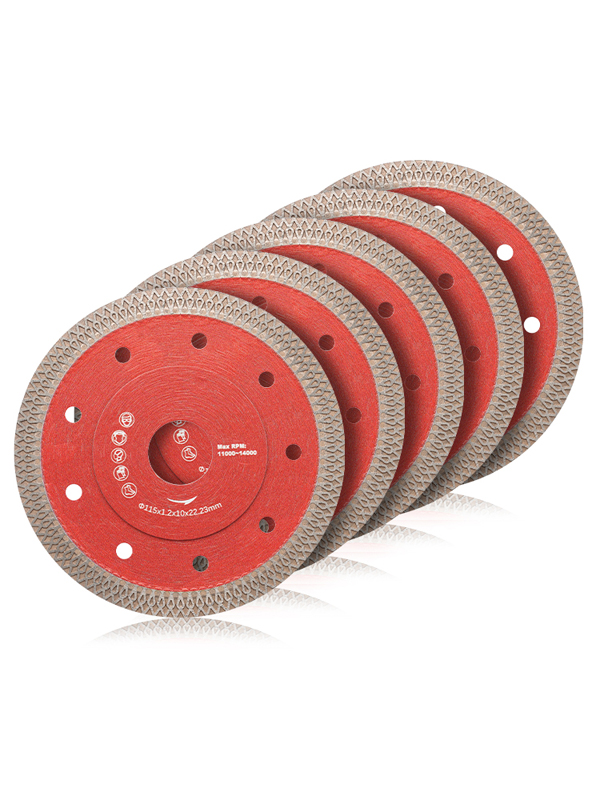
Understanding the Self-Sharpening Mechanism in Diamond Cutting Discs for Ceramics
What Is Meant by "Self-Sharpening" in Diamond Cutting Tools?
Self sharpening blades keep cutting efficiently because they expose fresh diamond particles as they work. Regular abrasive tools tend to wear down evenly over time, but these special diamond cutting discs for ceramics work differently. They depend on the gradual wearing away of their metal or resin bonds. As this happens, old diamond bits fall off in predictable ways, letting new sharp edges form right where the cutting action needs them most. The whole thing works automatically, so there's no need for anyone to stop and dress the tool manually during operation. This makes maintenance simpler and keeps the cutting going strong throughout long jobs.
How Binder Wear Enables Continuous Diamond Exposure
The bond matrix acts kind of like a built-in measuring device, gradually wearing down as the diamonds themselves degrade over time. When working on tough materials such as porcelain, using softer bonding materials like bronze or cobalt alloys makes sense because they wear away quicker. According to Abrasive Engineering Journal from last year, this approach can expose fresh cutting surfaces about 15 percent faster than those stiff nickel based options. What happens here is pretty important for tool performance. The way these components wear together stops those annoying dead spots where diamonds stop cutting effectively. And there's another benefit too - tools stay cooler during operation, dropping temperatures around 40 degrees Celsius below what we see with regular blades that don't sharpen themselves automatically.
The Balance Between Diamond Retention and Timely Grit Release
The whole self-sharpening process works because the bonding material holds onto diamonds just long enough for them to break down into those tiny sharp edges we need, before letting go of the worn out bits completely. Newer disc designs actually play around with how porous they are throughout different parts of the tool. The middle section tends to be packed tighter with diamonds about 70 to 80 percent concentration while the outer areas have less density somewhere around 50 to 60 percent. This kind of layered construction makes these blades last significantly longer when cutting through ceramic tiles, probably anywhere from 30 up to maybe even 50 percent extra time, all without slowing down the cut speed much at all.
The Role of Bond Composition and Wear Rate in Self-Sharpening Performance
How Bond Wear Rate Influences Diamond Protrusion and Cutting Efficiency
Getting the right self sharpening effect really comes down to how well the bond wears compared to the diamonds themselves. When the matrix starts wearing away, new crystals get exposed at the cutting edge which keeps things performing properly. If the wear happens too quickly though, those diamonds stick out more but might fall off sooner than we want them to. On the flip side, if everything wears too slowly, we end up with glazing problems where dull diamonds just stay stuck there doing nothing useful. Some studies indicate that when bonds are made to wear about 15 to maybe even 20 percent faster than the actual diamond breakdown, this creates pretty good results for keeping edges sharp while working with ceramics.
Soft vs. Hard Bond Matrices: Optimal Formulations for Ceramic Cutting
| Bond Hardness | Ceramic Type | Performance Trade-offs |
|---|---|---|
| Soft | High-density (e.g., porcelain) | Faster wear exposes new grits for harder materials |
| Hard | Porous tiles | Slower wear preserves diamond retention |
When working with high density ceramics, soft bond matrices tend to be the go to choice because they wear down faster in those really tough, brittle conditions which actually helps keep diamonds fresh longer. On the flip side, hard bonds work better with porous ceramics since they don't erode as much, so there's less chance of losing all that valuable grit during operation. These days we're seeing more shops turn to hybrid metallic resin mixes. They strike a nice middle ground between standing up to wear on dense alumina materials while still maintaining that self sharpening quality that makes cutting operations so efficient. The industry has basically figured out these combinations offer the best of both worlds for most applications.
Resin vs. Metal Bonds: Material Choices That Enhance Self-Sharpening
Discs made with resin bonding typically fall within the 60 to 80 HRB hardness range and work pretty well for dry cutting jobs since their wear tends to match up nicely with how diamonds break down during operation. For water cooled systems though, metal bonded discs rated between HRC 20 and 35 are generally preferred because they handle heat much better and don't soften prematurely under stress. Testing in actual field conditions reveals some interesting differences too. Resin bonded variants tend to stay sharp around 30 percent longer when working with those tough glass reinforced ceramic materials. Meanwhile, sintered metal bonds really shine in large scale tile manufacturing operations where they last about 40% longer thanks to better diamond holding properties. What connects both types is this fundamental relationship between grit wear and bond degradation, which basically allows the cutting edges to renew themselves automatically as they get worn down over time.
Diamond Grit Behavior and Wear Dynamics During Ceramic Machining
Internal Damage and Fracture of Diamond Grains in High-Speed Cutting
When working with ceramics, diamond grits encounter pressures over 5 gigapascals which leads to internal cracks spreading both laterally and radially through the material. The situation gets worse at cutting speeds beyond 25 meters per second where heat from friction builds up between 200 and 400 degrees Celsius, making cracks form faster along specific crystal directions. These tiny fractures actually help create sharper cutting edges, but there's a catch when the binder holding everything together isn't strong enough for the job. Brittle materials like alumina tend to splinter badly under stress, while stoneware that contains pores experiences more controlled edge wear over time instead.
How Self-Sharpening Prevents Glazing and Extends Blade Service Life
Glazing occurs when diamonds get too hot during cutting and start polishing rather than actually cutting through materials. This is one of the biggest problems faced in ceramic machining operations. A good self-sharpening system fights back against glazing by keeping the bond wearing at just the right pace, around 8 to 12 micrometers per hour. This controlled wear lets new diamond particles stick out about 20 to 35 percent higher than the surrounding surface. As a result, the amount of material removed stays pretty consistent at roughly 0.8 to 1.2 cubic centimeters per minute for most ceramic types. When manufacturers balance their tooling systems properly, they see about a 60% drop in those annoying glazing issues. Plus, blades last almost twice as long as older static bond designs did in similar conditions.
The Paradox: Increased Wear Rate as an Indicator of Effective Self-Sharpening
Counterintuitively, higher bond erosion (15–20% above baseline) often signals optimal self-sharpening. Accelerated matrix wear ensures diamonds are fully utilized before fractures propagate into failure. A 2023 study found discs with moderate wear rates (18 µm/hr) reduced tangential cutting forces by 38% when machining vitrified tiles, demonstrating how controlled wear enhances efficiency.
Impact of Ceramic Material Properties on Self-Sharpening Efficiency
The self-sharpening efficiency of diamond cutting discs for ceramics is strongly influenced by workpiece characteristics. Hardness, brittleness, and porosity directly affect wear patterns and edge-renewal dynamics.
How Hardness and Brittleness of Ceramics Influence Tool Wear
Harder ceramics accelerate bond matrix wear, promoting faster diamond exposure. However, excessive brittleness can cause premature micro-fractures in diamond grains, leading to early grit release. The ideal balance retains sharp diamonds long enough for efficient cutting while shedding worn particles to expose fresh abrasives.
Edge Renewal Dynamics When Cutting Dense vs. Porous Ceramic Materials
Dense ceramics generate higher cutting forces, accelerating bond wear and supporting continuous diamond protrusion. Porous materials allow better chip evacuation, reducing heat and glazing risk. For example, cutting vitrified porcelain (density >2.4 g/cm³) demands faster edge renewal than grooving terracotta (porosity ~20%), where open structures support cooler, sustained sharpness.
Advancements in Self-Sharpening Diamond Disc Technology for Ceramics
Innovations in Bond Formulations for Controlled Diamond Exposure
The latest generation of abrasive discs incorporates nanocomposite materials that mix metal and ceramic components to control how they wear down over time. According to research published last year by Abrasive Engineering Society members, these new composite bonds actually maintain diamond protrusion consistency about 23 percent better compared to old fashioned bronze based matrices during porcelain cutting operations. Manufacturers tweak the balance between cobalt content and silicon carbide levels to engineer specific wear characteristics. This allows fresh cutting surfaces to emerge just at the moment previous grains start breaking apart. The result is significantly reduced instances of material sticking to the disc surface or forming glazed areas. This matters a lot when working with super hard ceramics such as zirconia which ranks around 8.5 on the Mohs scale of hardness.
Design Trends: Porous Structures for Improved Chip Removal and Cooling
Leading manufacturers now integrate laser-etched porous channels into diamond segments to manage heat and debris. These microstructures:
- Reduce cutting temperatures by 40°C (2023 NIST thermal imaging data)
- Decrease chip rewelding by 60% in quartz composite cutting
- Enable faster dry-cutting without compromising blade life
The open design works synergistically with self-sharpening: accelerated bond wear near pores creates localized clusters of aggressive cutting edges.
Future Outlook: Smart Diamond Discs and Adaptive Self-Sharpening Systems
New prototype designs now incorporate piezoelectric sensors that keep track of cutting forces as they happen and monitor how much wear is happening on those diamonds. Pair these with smart AI controllers and what do we get? Smart discs that automatically tweak their rotation speed and apply just the right amount of pressure during operation for better self sharpening performance. According to estimates from the Global Abrasives 2025 Report, manufacturers using this technology might see blade lifespan increase around 35 percent when working with large volumes of ceramic slabs. Plus there's another benefit too - energy consumption drops about 18% compared to traditional methods. Pretty impressive numbers if you ask me!
FAQ
What is self-sharpening in diamond cutting discs?
Self-sharpening in diamond cutting discs refers to the mechanism where the tool automatically exposes fresh diamond particles as it wears, eliminating the need for manual sharpening and maintaining efficiency.
How does bond wear affect diamond exposure?
Bond wear enables continuous diamond exposure by gradually eroding to release old diamond particles, revealing sharp new edges crucial for efficient cutting.
What factors influence the wear rate in diamond cutting discs?
Factors influencing wear rate include the composition of the bond matrix, ceramic type, cutting speed, and operating temperatures, all affecting how self-sharpening is achieved.
Why are softer bond matrices preferred for high-density ceramics?
Softer bond matrices wear faster, which is advantageous for high-density ceramics as they help maintain sharp diamond exposure, essential for cutting such tough materials.
How do resin and metal bonds differ in enhancing self-sharpening?
Resin bonds offer prolonged sharpness in dry cutting, while metal bonds are preferred for wet cutting due to their better heat handling, both contributing to effective self-sharpening.
Table of Contents
- Understanding the Self-Sharpening Mechanism in Diamond Cutting Discs for Ceramics
- The Role of Bond Composition and Wear Rate in Self-Sharpening Performance
- Diamond Grit Behavior and Wear Dynamics During Ceramic Machining
- Impact of Ceramic Material Properties on Self-Sharpening Efficiency
- Advancements in Self-Sharpening Diamond Disc Technology for Ceramics
- FAQ