 EN
EN
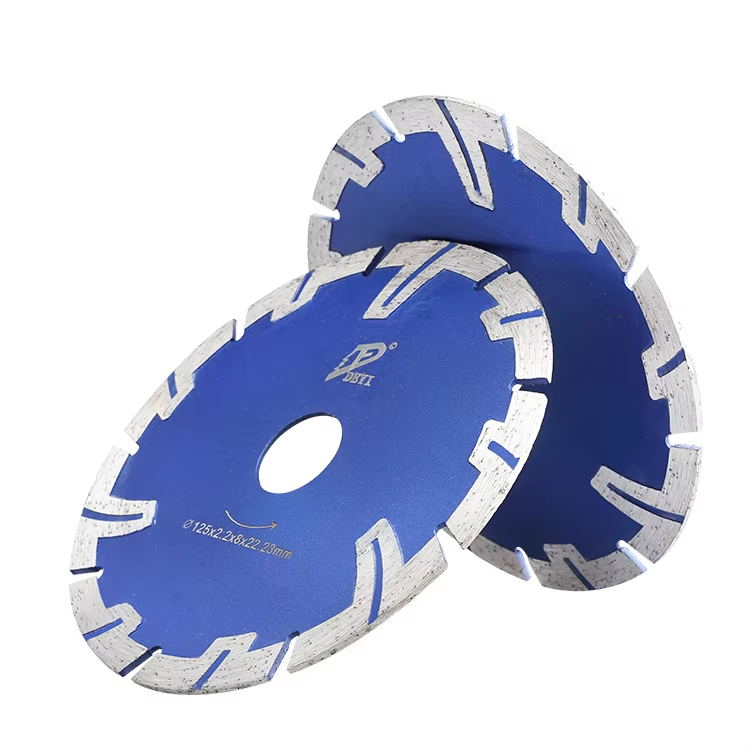
Understanding the Causes of Warping in Small Diameter Diamond Blades
Diamond blades with small diameters (usually less than 4 inches) tend to warp when subjected to heavy loads because of several related issues. First, there's the way people cut aggressively without considering blade limits. Then we have the inherent weaknesses in the materials themselves. And finally, heat buildup creates significant stress on these tiny tools. Research published last year showed something interesting about this problem. Blades thinner than 3mm actually deflect around 40 percent more when working through tough composite materials compared to regular sized 4 inch blades. This makes sense if you think about it since smaller tools just don't handle the same kind of punishment as their bigger counterparts. Manufacturers need to be aware of these limitations when selecting equipment for demanding applications.
Common Scenarios: When Warping Occurs During Aggressive Cutting with Mini Blades
Warping frequently appears in tight-radius cuts where operators apply excessive lateral pressure. Applications like intricate stone inlays or HVAC duct modifications force these blades to endure:
- Torque spikes exceeding 220 Nm (typical limit for 3" blades)
- Oblique cutting angles exceeding 20° from vertical
- Continuous use beyond 90-second intervals without cooling pauses
These conditions push thin blades beyond their elastic limits, initiating permanent deformation.
Core Deformation: How Blade Flexing Leads to Permanent Warping
How thick the steel core is makes all the difference when it comes to resisting warping. Take blades for example: those with 2.5mm cores stay straight about 60 percent longer compared to thinner 1.8mm versions when subjected to the same workload. When stress gets above 550 MPa, things start going wrong pretty quickly. This happens especially during concrete cutting operations running at around 4,500 RPM where coolant isn't flowing properly through the system. Once that core starts giving way, even small additional forces will worsen the alignment issues and seriously impact how accurately cuts are made across different materials.
Material Response: Steel Core Integrity Under Mechanical Stress
Heat-treated alloy cores retain shape 3.2x longer than mild steel counterparts during dry cutting operations. However, even premium materials degrade when blade temperatures exceed 280°C—common in dry concrete cutting—causing:
- Yield strength reductions up to 55%
- Microfractures along the arbor hole
- Loss of segment bonding integrity
Operators can verify core fatigue through the “ring test”—a warped blade produces a dull thud instead of a clear metallic ring when suspended and struck.
The Impact of Heat and Thermal Stress on Blade Performance
Heat Buildup: Why Small Diameter Diamond Blades Overheat During Prolonged Use
Diamond blades with small diameters tend to generate way too much heat because they just don't have enough surface area compared to their cutting edge. When these blades spin faster than 12,000 RPM, the friction creates serious problems. Temperatures can jump over 600 degrees Fahrenheit in dry cutting situations, which is way beyond what most blade materials can handle safely. According to recent research from the abrasive tooling industry in 2023, blades four inches or smaller actually hold onto about 58 percent more heat than bigger blades when doing similar work. This extra heat really takes a toll on the steel core inside. Most concerning is how this heat builds up around the center hole of the blade. Over time, this concentrated heat causes the metal to deform repeatedly until eventually the blade starts to warp out of shape.
Thermal Cycling: How Repeated Expansion and Contraction Weaken the Blade Core
Continuous heating and cooling cycles create microstructural damage in steel cores through two mechanisms:
- Radial expansion mismatch: The diamond segment (coefficient of thermal expansion = 1.2×10⁻⁵°F⁻¹) and steel core (CTE = 6.5×10⁻⁵°F⁻¹) expand at different rates, causing shear stress at their interface.
- Yield strength reduction: Steel loses 30–40% of its room-temperature yield strength at 500°F (260°C), making the core susceptible to permanent deformation during cooling.
These cumulative effects reduce blade concentricricity by up to 0.03" (0.76 mm) after 50 thermal cycles in lab tests, severely impacting cutting accuracy.
Dry Cutting Risks: Increased Warping Incidents in Coolant-Free Environments
Operating small blades without coolant elevates warping risks by 73% compared to wet-cutting applications (Abrasive Tooling Institute, 2022). Without water’s cooling and lubricating effects:
| Factor | Dry Cutting Impact | Wet Cutting Mitigation |
|---|---|---|
| Friction coefficient | Increases 4.7x | Reduced by 61% with water |
| Core temperature | Peaks at 847°F (453°C) | Maintains ≤392°F (200°C) |
| Plastic deformation | Occurs in 8–12 minutes | Delayed beyond 45 minutes |
Implementing low-pressure coolant systems—even at 0.5 GPM flow rates—extends blade lifespan 3.2x by stabilizing core temperatures below critical thresholds.
Cutting Parameters: Speed, Pressure, and Feed Rate Effects
Excessive Pressure: How Force in Tight Spaces Leads to Blade Deflection
When working with small diameter diamond blades, they tend to take on way too much stress if someone pushes too hard while cutting in tight spaces. Research from the machining field back in 2023 showed something interesting: blades smaller than 4 inches actually bend more (about 12% extra deflection) when subjected to around 120 Newtons of pressure compared to their bigger counterparts. What happens is pretty straightforward really. When all that force gets focused into those narrow cuts, it basically overwhelms the steel core until it can't spring back anymore, leading to lasting damage. Try slicing through tough stuff like reinforced concrete aggressively? That just makes things worse. The blade starts bending side to side instead of staying straight, which wears down different parts of the diamond segments at different rates. Before long, the whole thing starts to warp out of shape.
Speed vs. Heat: The Relationship Between RPM and Thermal Accumulation
Higher RPM settings (above 4,500) generate friction temperatures exceeding 600°F in small blades, according to thermal imaging data. While faster rotations improve cutting efficiency, they reduce heat dissipation in compact blade designs. This creates a compounding effect:
| Parameter | High-Risk Threshold | Thermal Warping Likelihood |
|---|---|---|
| RPM (4" blade) | >4,500 | 73% increase |
| Continuous Runtime | >90 seconds | 2.4x higher distortion |
Optimal speed balances material removal rates with airflow cooling—a critical factor absent in wet-cutting systems.
Optimal Technique: Balancing Feed Rate and Load for Stable Cutting
Precision cuts require synchronizing feed rates with blade capacity. For tiles and composites, a 0.04–0.08 mm/rev feed rate minimizes lateral forces while maintaining cutting progress. Operators should:
- Reduce feed pressure by 25% when transitioning between material layers
- Use peck-cutting motions in dense aggregates to reset blade alignment
- Monitor segment glow—sustained red-hot segments indicate imminent warping from load imbalance
This approach extends blade lifespan by 30–50% in bench saw applications, per 2024 abrasive tooling trials.
Cooling Strategies to Prevent Warping in High-Load Applications
Wet vs. Dry Cutting: Comparing Warping Risks and Cooling Efficiency
When working with small diameter diamond blades in dry conditions, there's a real risk of them warping because they get so hot without any coolant to manage the heat. Blades can hit well over 600 degrees Fahrenheit after just a few minutes of continuous cutting, which wears down the steel core pretty fast and eventually causes permanent bending issues. According to industry reports from Material Processing Journal last year, dry cutting for masonry work results in about 40 percent more warping problems than when using water cooling methods. This makes sense practically speaking since most professionals know how much difference proper cooling makes in maintaining blade integrity over time.
Coolant Function: How Water Reduces Friction and Stabilizes Blade Temperature
Water-based coolants serve three critical roles:
- Friction reduction — Lowers cutting resistance by 30–50% compared to dry operations
- Heat dissipation — Maintains blade temperatures below 400°F (204°C) in most steel-reinforced blades
- Debris removal — Prevents abrasive particles from accelerating wear imbalance
Best Practices: Implementing Consistent Wet-Cutting Protocols for Small Blades
To optimize cooling effectiveness in high-load scenarios:
- Maintain 2–5 GPM coolant flow across the blade edge
- Position nozzles within 15° of perpendicular to cut path
- Use polymer-enhanced coolants for high-RPM operations (8,000+ SFPM)
- Monitor coolant pH weekly to prevent corrosion of steel cores
| Parameter | Wet Cutting | Dry Cutting |
|---|---|---|
| Typical Warping Risk | 12–18% | 32–45% |
| Max Continuous Use | 45–60 mins | 15–20 mins |
| Core Temp Range | 250–400°F | 500–700°F |
Structured coolant protocols extend blade lifespan by 200–300% in 4"–6" diameter blades subjected to heavy concrete and stone cutting loads.
Blade Design and Material Quality: Choosing Resilient Small Diameter Blades
Core Construction: How Steel Thickness and Reinforcement Resist Warping
Diamond blades with smaller diameters need special core design features if they're going to handle heavy load situations without failing. The ones below four inches actually have about 12 to maybe even 15 percent greater chance of warping compared to bigger blades simply because there's just not as much material holding everything together. According to what various industry reports indicate, steel cores around 1.8 to 2.2 millimeters thick seem to strike the right balance between staying rigid enough but still flexible when making those really aggressive cuts through tough materials. Some manufacturers now use triple layer reinforcement systems that mix hardened steel with certain alloys designed specifically to dampen vibrations. These multi-layer setups cut down on permanent deformation issues by roughly 38 percent according to recent testing published in Cutting Tool Engineering last year.
Thin-Kerf Trade-Offs: Balancing Cut Precision With Structural Durability
Ultra-thin blades (≤1.0mm kerf width) demonstrate 27% faster material removal but are 3× more prone to warping under lateral forces. Precision-focused applications often accept a ±0.03mm precision loss for blades with 1.2mm kerf widths and ribbed sidewalls. This configuration delivers 60% greater torsional stability without significantly compromising cutting efficiency.
Selection Criteria: Evaluating Blade Quality for High-Load Performance
Three critical factors determine warping resistance:
- Core hardness (58–62 HRC optimal for steel cores)
- Segment bond strength (≥40 MPa shear resistance)
- Thermal conductivity (≥50 W/m·K to dissipate heat)
Blades meeting these specifications exhibit 82% less warping during prolonged dry cutting compared to standard models. Manufacturers prioritizing these metrics typically implement ultrasonic testing during production to detect micro-fractures that predispose blades to deformation.
FAQs About Warping in Small Diameter Diamond Blades
Why do small diameter diamond blades warp more easily?
Small diameter diamond blades tend to warp more easily due to their limited surface area, which results in higher friction and heat buildup, as well as their thinner steel cores, which are less resistant to mechanical stress.
How can I prevent warping in diamond blades?
To prevent warping, use wet cutting techniques with adequate coolant flow, avoid excessive pressure and speed, and select blades with reinforced cores designed for high-load applications.
What techniques improve blade lifespan during high-load cutting?
Applying peck-cutting motions, synchronizing feed rates, and ensuring proper cooling methods can significantly improve blade lifespan when cutting under high-load conditions.
Table of Contents
- Understanding the Causes of Warping in Small Diameter Diamond Blades
- The Impact of Heat and Thermal Stress on Blade Performance
- Cutting Parameters: Speed, Pressure, and Feed Rate Effects
- Cooling Strategies to Prevent Warping in High-Load Applications
- Blade Design and Material Quality: Choosing Resilient Small Diameter Blades
- FAQs About Warping in Small Diameter Diamond Blades