 EN
EN
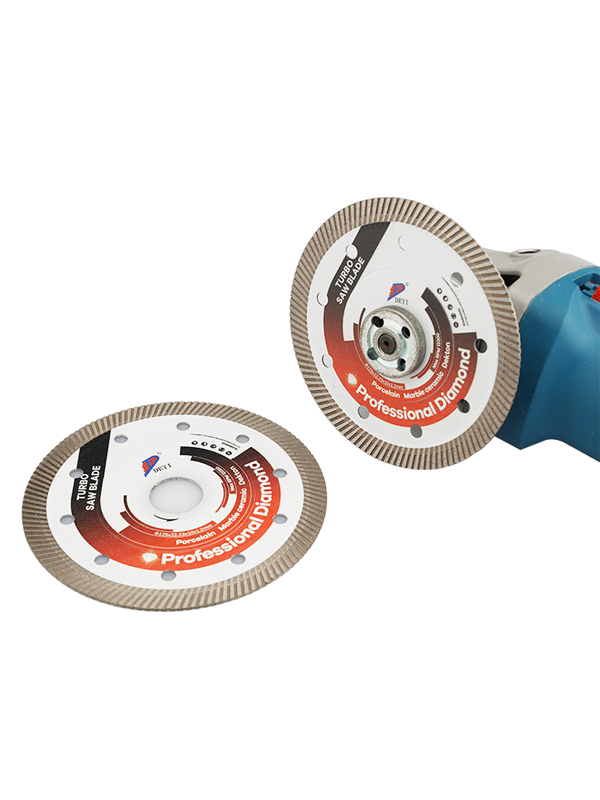
Understanding Bond Strength in Laser Welded Diamond Blade Segments
Definition and Importance of Bond Strength in Diamond Segments
Bond strength measures the weld’s ability to resist mechanical stresses that could separate the diamond segment from the blade core. This property is critical for durability, cutting efficiency, and safety. When bond strength drops below 250 MPa, the risk of blade disintegration increases by 30%, according to a 2023 industry report.
Role of Laser Welding Technology for Diamond Circular Saw Blades
Compared to old school methods like brazing and arc welding, laser welding keeps most of the original material strength intact, around 95 to maybe even 98 percent thanks to how carefully it controls heat application. What makes this method stand out is the way it creates those thin but deep welds, typically between half a millimeter to about two millimeters penetration depth. This approach causes much less warping from heat and actually helps maintain the integrity of diamond grit during processing. Another big plus? Fewer tiny air pockets form in the weld area. These little voids are real troublemakers when it comes to premature wear issues in things like abrasive cutting tools.
Why Bond Strength Determines Blade Performance and Safety
Strong bonds distribute stress evenly during high-RPM operation, preventing dangerous segment detachment. Field tests show laser-welded blades with bond strengths exceeding 400 MPa last 2–3 times longer than mechanically fastened blades. Additionally, robust welds reduce vibration-induced cracking, enhancing cutting precision in tough materials like reinforced concrete and natural stone.
Standardized Mechanical Testing Methods for Bond Strength Evaluation
Tensile Testing of Laser Welded Diamond Blade Segments
Tensile testing assesses resistance to axial forces pulling the weld apart. Using specialized grips, manufacturers apply controlled loads until failure, with modern systems offering ±1.5% measurement accuracy per ISO 6892-1:2023. For concrete-cutting blades, a minimum tensile strength of 400 MPa ensures safe performance under rotational stress.
Shear Strength Testing Under Controlled Laboratory Conditions
Shear testing evaluates resistance to lateral forces during blade deflection or kickback. Standard fixtures apply force parallel to the weld interface at 0.5 mm/min, simulating real-world failure modes. Manufacturers associate shear strengths above 320 MPa with lower segment detachment risks in granite cutting.
Mechanical Load Simulations for Comparative Performance Analysis
Cyclical loading combined with thermal shocks accelerates wear to predict long-term performance. A 2023 study found blades enduring over 50,000 load cycles at 85°C delivered 40% longer service life in marble processing compared to non-tested units.
Industry Standards for Bond Strength Testing in Manufacturing QC
Certifications require three-tier validation: pre-production prototype testing, in-process sampling, and final batch destructive testing. Compliance with EN 13236:2020 and ANSI B71.1-2022 ensures consistency in key parameters such as energy density (90–110 J/mm²) and shielding gas purity (99.995% argon).
Nondestructive Testing Techniques for Laser Weld Integrity
Ultrasonic Testing to Detect Internal Defects in Weld Zones
Ultrasonic testing works by sending out those high frequency sound waves into materials to find problems inside them like little pockets of air, tiny cracks, or spots where things didn't fuse properly during manufacturing. When these waves bounce back, experienced technicians look at how they reflect off different surfaces to spot issues hidden beneath the surface that might be smaller than a grain of sand, all while keeping the actual part intact. The beauty of this approach is it lets manufacturers check product quality on the fly during production runs, which helps meet those strict ISO 17635 requirements about making sure welds are solid enough for whatever application they're going into.
Phased Array Imaging for Precision Weld Integrity Assessment
Phased array ultrasonic testing generates detailed cross-sectional images using beam steering, allowing multi-angle inspection of weld zones. Compared to conventional methods, it provides superior detection of microporosity and lack-of-fusion defects. Recent data shows this technique reduces false defect identification by 27% (NDT Journal, 2024).
Correlation Between Weld Penetration Depth and Blade Durability
Optimal penetration depth (0.8–1.2 mm) maximizes blade lifespan. Insufficient depth leads to weak interfacial bonding, while excessive depth alters the microstructure of the heat-affected zone. Studies confirm that blades with controlled penetration achieve 40% longer service life in granite cutting versus those with inconsistent weld profiles.
Key Factors Influencing Bond Strength in Laser Welding Processes
Laser welding requires tight control over physical and material variables to ensure durable bonds. Up to 32% of industrial blade replacements stem from weld-related defects due to poor parameter selection or material incompatibility (Ponemon, 2023).
Impact of Laser Power, Speed, and Focus on Bond Quality
Three primary parameters influence weld quality:
| Parameter | Optimal Range | Bond Strength Effect |
|---|---|---|
| Laser Power | 2.5–4.0 kW | Increases penetration depth by 18–25% |
| Welding Speed | 3–8 m/min | Reduces heat distortion by 12–20% |
| Beam Focus | ±0.1 mm accuracy | Improves joint density by 30–40% |
Exceeding 4.2 kW risks microcracking in diamond segments, while speeds below 2 m/min may melt the steel core.
Material Compatibility and Metallurgical Bonding Reliability
Cobalt-rich matrix segments form bonds 40% stronger than nickel-based alloys due to better thermal expansion alignment (Journal of Materials Engineering, 2022). Laser wavelength must match material absorptivity–1,060 nm infrared lasers bond tungsten carbide 55% faster than 1,550 nm fiber lasers in controlled trials.
Balancing Heat Input to Prevent Cracking and Ensure Strong Joints
Limiting the heat-affected zone (HAZ) width to under 0.3 mm improves fatigue resistance by 28% (Maxcool CNC, 2023). Adaptive pulse shaping lowers peak temperatures by 15–22%, reducing oxidation in graphite matrices. Real-time pyrometer monitoring maintains weld pool temperatures within ±5°C of the ideal 1,200–1,350°C range.
Real-World Validation: Field Testing and Performance Monitoring
Field Testing Under Operational Conditions to Verify Bond Durability
When put through their paces in actual field conditions, laser welded blades face all sorts of tough materials like concrete, asphalt surfaces, and even reinforced steel structures. Most manufacturers run these blades through grueling tests lasting well beyond 200 straight hours of operation, checking how well the bonds hold up when exposed to temperature changes and physical shocks from repeated impacts. A recent study back in 2023 looked at abrasive cutting performance and found something interesting: blades where the weld strength was above 350 MPa managed to keep about 92% of their cutting segments intact after heavy duty work, whereas those with weaker welds only held onto around two thirds of theirs. That kind of difference really matters out in the field where downtime costs money.
Blade Life and Wear Rate Analysis After Bond Strength Verification
Post-test analysis reveals how optimal bond strength (¥300 MPa) suppresses micro-crack propagation at the weld-diamond interface by 40–60%. Data shows a direct link between verified bond strength and extended service life: compliant blades last 18–22% longer in granite processing environments.
Case Study: Long-Term Performance of High-Bond-Strength Laser Welded Blades
A 12-month study of over 500 laser-welded blades used in bridge demolition projects revealed significant advantages:
- Compliant blades showed wear rates of 0.08 mm/hr versus 0.21 mm/hr in non-compliant units
- Segment detachment dropped from 1.2% to 0.3% per 100 operating hours
- Return on investment improved by 34% due to fewer replacements
These results confirm that rigorous field testing and performance monitoring are essential for refining laser welding practices in diamond blade production.
FAQ
What is bond strength in laser welded diamond blade segments?
Bond strength refers to the weld's ability to withstand mechanical stresses that could detach the diamond segment from the blade core, ensuring durability and safety.
How does laser welding technology improve diamond circular saw blades?
Laser welding maintains the original material strength by precisely controlling heat application, leading to stronger bonds with fewer air pockets, ultimately reducing premature wear.
What are the mechanical testing methods for evaluating bond strength?
Standardized methods include tensile testing, shear strength testing, and mechanical load simulations, ensuring laser welded blades can handle real-world stresses effectively.
What key factors influence bond strength in laser welding?
Important factors include laser power, speed, and focus, as well as material compatibility and controlling heat input to prevent defects.
Why is field testing crucial for laser welded diamond blades?
Field testing verifies bond durability under operational conditions, helping to validate performance and improve welding practices for better product reliability.
Table of Contents
- Understanding Bond Strength in Laser Welded Diamond Blade Segments
- Standardized Mechanical Testing Methods for Bond Strength Evaluation
- Nondestructive Testing Techniques for Laser Weld Integrity
- Key Factors Influencing Bond Strength in Laser Welding Processes
- Real-World Validation: Field Testing and Performance Monitoring
-
FAQ
- What is bond strength in laser welded diamond blade segments?
- How does laser welding technology improve diamond circular saw blades?
- What are the mechanical testing methods for evaluating bond strength?
- What key factors influence bond strength in laser welding?
- Why is field testing crucial for laser welded diamond blades?