
 EN
EN
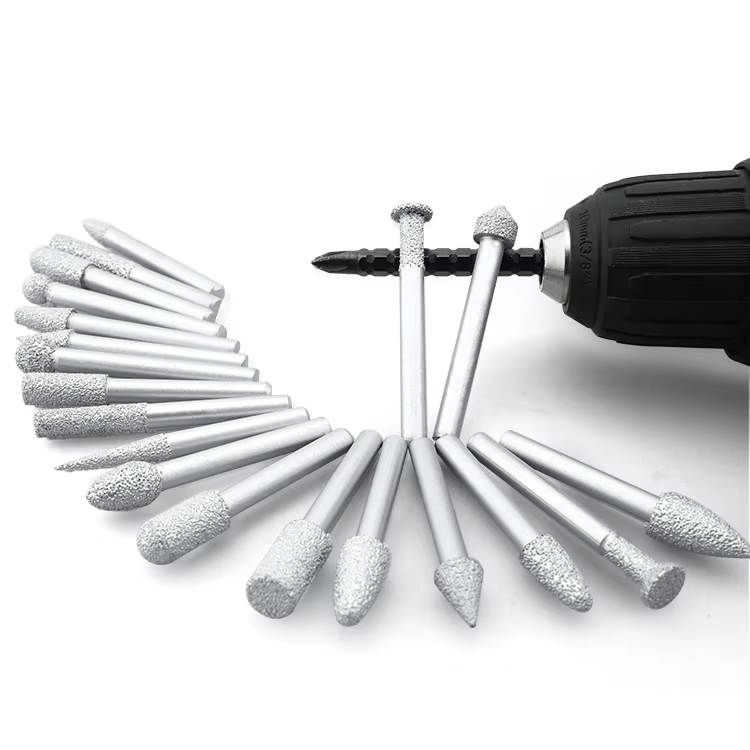
The Porcelain Challenge: Why Standard Bits Fail on Dense, Brittle Surfaces
The high density of porcelain (about 2.4 grams per cubic centimeter) combined with its inherently brittle nature makes drilling through it a real challenge for standard carbide bits. These bits just don't hold up well against porcelain's hardness level which is over 7 on the Mohs scale. What happens? The carbide tips wear down fast and generate lots of heat, sometimes reaching temperatures above 600 degrees Fahrenheit. According to research published last year in the Material Science Journal, this kind of heat causes tiny fractures in nearly nine out of ten cases during testing. Porcelain also has poor resistance to cracking (around 1.5 MPa root meter for fracture toughness), so when we drill into it, chips form and hidden cracks appear that can only be seen under a microscope. Unlike metals that bend before breaking, porcelain doesn't deform much, meaning all the pressure builds up at weak spots in the material. Ceramic machining experts have found that regular drill bits with their rough shapes push sideways forces that simply shatter the glass-like surface layer. Real world data backs this up too: most installers who try generic bits end up with breakage problems happening more than 15 times out of 100 attempts. Specialized tools cut that failure rate down to less than 3 percent though.
| Failure Mechanism | Impact on Porcelain | Standard Bit Limitation |
|---|---|---|
| Thermal Shock | Micro-crack propagation | Inadequate heat dissipation |
| Lateral Vibration | Edge spalling | Rigid core geometry |
| Point Loading | Radial fractures | Blunt cutting angles |
This inherent incompatibility necessitates fine-grained diamond core bits engineered for controlled material removal—transitioning to the science behind their precision advantage.
How Fine-Grained Diamond Core Bits Enable Controlled, Chip-Free Drilling
The science of 40—80 micron diamond grit: balancing cut rate, heat dissipation, and surface finish
Porcelain’s brittleness (Mohs hardness 6—7) demands diamond particles under 80 microns to prevent micro-fractures. Fine-grained diamond core bits distribute cutting pressure across thousands of microscopic diamonds, reducing localized stress below 2 GPa—porcelain’s fracture threshold. This grit size optimizes three critical factors:
- Cut rate: 40—60 micron grit maintains 15—20% faster penetration than coarse alternatives in porcelain (Journal of Materials Processing, 2023)
- Heat control: Smaller diamonds dissipate 50% more heat through increased particle density
- Surface quality: Produces Ra < 3.2 μm finishes versus Ra > 6.4 μm with coarse grit
Water-cooled drilling tests show fine grit reduces peak temperatures by 120°C, preventing thermal shock.
Fine-grained vs. coarse-grained bits: measurable differences in hole roundness, edge integrity, and thermal stress
Field studies comparing 60-micron vs. 200-micron diamond core bits reveal stark performance gaps in porcelain drilling:
| Metric | Fine-Grained (60μ) | Coarse-Grained (200μ) |
|---|---|---|
| Hole roundness error | ≤ 0.05 mm | ≥ 0.15 mm |
| Edge chipping incidence | 3% | 28% |
| Thermal stress cracks | 0.7/cm² | 4.2/cm² |
Fine-grained diamond core bits achieve 97% first-pass success rates by concentrating cutting action within the kerf. Their uniform particle distribution prevents "grit jump" that causes coarse bits to grab and fracture porcelain. This precision enables chip-free holes in tiles under 5mm thickness—impossible with standard bits.
Critical Design Factors That Maximize Performance of Fine-Grained Diamond Core Bits
Bond hardness and segment height: optimizing wear resistance and self-sharpening for porcelain
How hard the bond matrix is affects just how long those diamond grit particles stay put when drilling through materials. When we talk about softer bonds in the HRB 85 to 95 range, they actually let the diamonds shed at a controlled rate. This means fresh diamonds keep getting exposed as the tool works its way through tough ceramics. What happens next is pretty clever too. The whole system acts like it's sharpening itself as it goes along, which stops something called glazing from happening. Glazing occurs when the segments get too hot and start polishing surfaces instead of cutting them properly. Getting the segment height right matters a lot too. Most experts recommend keeping it around 8 to 10 millimeters high. At that height, there's enough diamond material to handle porcelain's abrasive nature without wearing down too fast, plus it helps clear away all that debris consistently. Some field testing has shown these optimized tools last about 40 percent longer between replacements than regular ones do, which definitely adds up over time for anyone doing serious drilling work.
Hollow-core geometry and water-channel integration for debris removal and cooling
The hollow core design featuring spiral water channels tackles those pesky issues specific to working with porcelain materials like thermal shock problems and the annoying buildup of tiny fragments. What makes these designs so effective is the central empty space which lets abrasive slurry escape right away, stopping the whole recutting process that wears down tools faster than anyone wants. Coolant delivery through integrated channels keeps things running at safe temps around the cutting area, staying well under that critical 150 degree Celsius mark where micro fractures start spreading uncontrollably. Research looking at regular solid bits versus these hollow core alternatives shows something pretty impressive actually - about 70 percent reduction in those frustrating edge chips when doing precision drilling work. That kind of performance speaks volumes about how important the overall geometry really is for getting those clean exit holes everyone strives for in their projects.
Proven Results: Field Evidence of Reduced Breakage and Higher First-Pass Success Rates
Studies in the field show that fine grain diamond core bits really make a difference when drilling through porcelain tiles. Contractors have noticed around 80% fewer broken tiles compared to those using coarser grit options, mainly because these bits have smaller particles between 40 to 80 microns which allows for better control during drilling. The precision helps prevent tiny cracks forming in the porcelain surface, something most experienced tilers see happen less often now. About 92% of pros working on porcelain report getting clean holes without chips after testing different methods. What this means practically is no need for extra polishing work afterward, since the holes come out smooth right away. Plus, these bits handle brittle materials much better than standard ones, so jobs get done correctly the first time around. Tile associations have seen their members reduce rework by about two thirds thanks to this improvement. Projects finish about 30% quicker overall, and there are real money savings too. For important installations where mistakes just aren't an option, going with fine grain bits simply makes sense.
Frequently Asked Questions
Why can't standard carbide bits effectively drill through porcelain?
Standard carbide bits fail because porcelain is dense and brittle, with a hardness level over 7 on the Mohs scale. These bits generate excessive heat leading to fractures and lack precision, resulting in material damage.
What advantages do fine-grained diamond core bits offer?
Fine-grained diamond core bits provide controlled material removal, reducing heat and stress below porcelain’s fracture threshold. They achieve chip-free drilling by distributing pressure over thousands of microscopic diamonds.
How do hollow-core designs improve drilling performance?
Hollow-core designs with spiral water channels effectively remove debris and manage cooling, reducing edge chips and minimizing thermal stress during drilling.
Table of Contents
- The Porcelain Challenge: Why Standard Bits Fail on Dense, Brittle Surfaces
- How Fine-Grained Diamond Core Bits Enable Controlled, Chip-Free Drilling
- Critical Design Factors That Maximize Performance of Fine-Grained Diamond Core Bits
- Proven Results: Field Evidence of Reduced Breakage and Higher First-Pass Success Rates
- Frequently Asked Questions