
 EN
EN
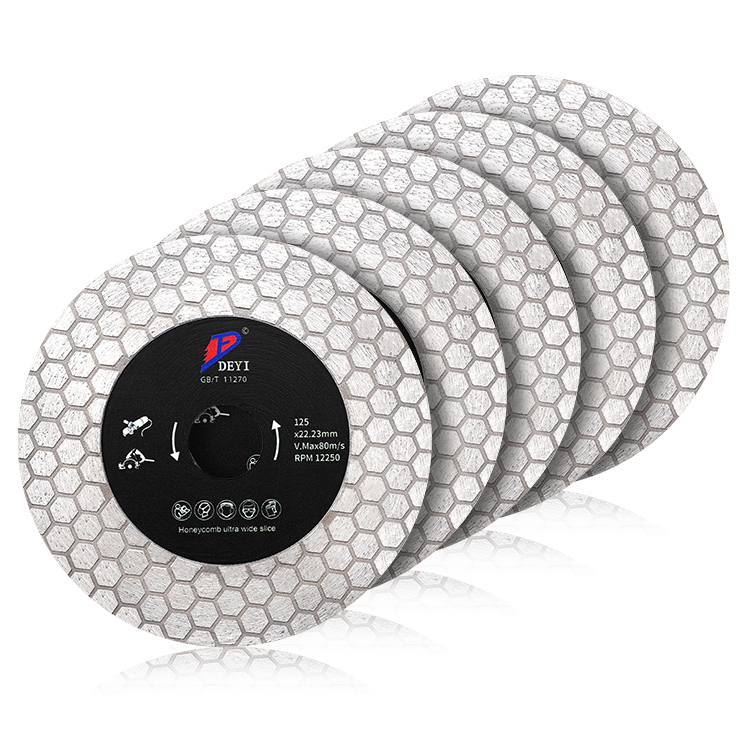
The Physics of Glass Fragility and Why Ultra-Thin Cutting Discs Minimize Damage
How glass brittleness demands minimal kerf width and high blade stiffness
Glass has some amazing strength at the atomic level, theoretically reaching over 10 GPa, but what we actually see in practice is much weaker because even tiny surface cracks can completely ruin its integrity. Metals are different since they can stretch and deform under pressure, absorbing stress as they go. Glass just doesn't work that way it sends all the energy straight into spreading those cracks. Because of this brittleness, special cutting tools are needed ones that don't push sideways too hard. The ultra thin cutting discs available today are great for this job. They have super narrow cuts, sometimes less than half a millimeter wide, and blades designed to stay stiff rather than bend. These features matter a lot when cutting things like fragile glass vases where any wobble in the blade might start a crack that ruins the whole piece.
Micro-cracking thresholds: Why sub-0.3 mm thickness reduces lateral stress by >65%
Cutting discs thinner than 0.3 mm can reduce lateral stress by around two thirds when compared to standard blades that measure between 1.0 and 1.6 mm thick. This makes all the difference since it keeps cutting forces well under what would normally cause micro cracks in most handcrafted glass work. Glass artists working on curved vases especially benefit from these super thin discs because they spread out the pressure across a smaller surface area. The result? No those nasty stress points that lead to big cracks down the road. And for tricky materials such as borosilicate glass or fused silica which are practically fragile by nature, getting this kind of fine control over stress levels becomes absolutely essential if anyone wants their final pieces to look clean and professional without any damage.
Precision Edge Control: Kerf Width, Stability, and Chip-Free Finishes
Kerf width (<0.35 mm) enables clean separation of curved, hollow vase profiles
Cutting discs that are ultra thin can get kerf widths below 0.35 mm which makes them really good for working around those complicated curves in delicate glass vases that have hollow centers. The narrow cut means less material gets lost overall and keeps the blade stable when doing tricky cuts. When glass artists need to separate pieces cleanly without breaking anything, these thin discs help because they don't create much kerf loss. That matters a lot since too much stress builds up at the spots where different sections meet. For expensive art glass creations, where even small changes in size impact how beautiful something looks and whether it will hold up over time, getting such precise cuts just isn't optional anymore.
Optical microscopy evidence: Correlating ultra-thin cutting discs with reduced chipping
Laboratory optical microscopy confirms the performance advantage of ultra-thin cutting discs:
- Crack propagation reduction: Sub-0.3 mm blades limit lateral stress fractures by >65% versus standard blades
- Edge defect correlation: Samples cut with >0.4 mm blades exhibit three times more micro-chipping at separation edges
- Thermal advantage: Narrower kerfs dissipate heat more efficiently, reducing thermal stress fissures
These findings validate that optimized diamond tooling delivers chip-free, optical-grade finishes—critical for translucent vases where edge imperfections become immediately visible under illumination. This scientific rigor underpins adoption across premium glass fabrication studios.
Optimized Diamond Tooling: Grit, Concentration, and Bond Design for Delicate Glass
Sintered metal-bond ultra-thin cutting discs: 70–100 µm grit + 25–30% diamond concentration
Getting precision cuts right on those delicate glass vases requires diamond tooling that's been carefully calibrated. The best results come from sintered metal bonded ultra thin cutting discs with diamond grit between 70 and 100 microns. These create really fine cutting edges which cut down on lateral stress while still maintaining good cutting speed. The 70-100 micron range works well because it takes material away at a decent rate without messing up the surface too much. Most professionals go for around 25 to 30 percent diamond concentration in their discs. That gives enough diamonds spread out evenly across the blade to keep cutting consistently, but leaves room so the blade doesn't get too heavy or prone to breaking under pressure. What makes these discs stand out is the sintered metal matrix that holds everything together. This matrix stays rigid even when making tough curved cuts, keeping the diamonds securely in place. All these factors combined help manage heat buildup and control how the material wears down over time. This matters a lot for thin walled glass pieces where regular blades tend to crack things instead of making clean cuts.
Real-World Performance: Validating Ultra-Thin Cutting Discs in High-Value Glass Fabrication
The glass industry has seen real improvements since adopting ultra thin cutting discs for making delicate glass vases. Many fabricators have noticed about 70 percent fewer tiny cracks forming during production, plus almost no edge chipping when compared to regular blades. This makes a big difference for preserving those intricate details on hand blown pieces. Measurements taken recently show these discs can cut within less than 0.1 mm accuracy even on curved surfaces, which helps put together complicated hollow shapes without gaps or misalignment. The better precision means workshops waste around 15 to maybe 30 percent less material overall, and they spend way less time fixing mistakes in expensive custom work. Artists who deal with fragile glass especially appreciate how these discs produce cleaner edges while managing heat better too. Most end up with finished products that look museum quality, though some still worry about long term durability despite all the improvements.
FAQ Section
Why is glass more fragile than metal?
Glass is fragile because it cannot absorb stress by deforming like metals do; instead, it channels energy into crack propagation.
How do ultra-thin cutting discs reduce damage when cutting glass?
Ultra-thin cutting discs offer minimal kerf width and high blade stiffness, reducing lateral stress and limiting crack formation.
What is the importance of kerf width in cutting glass?
Kerf width is crucial as narrower cuts enhance precision and reduce material loss, which is essential for maintaining glass artistry integrity.
What role does diamond concentration play in cutting discs?
Diamond concentration ensures consistent cutting performance while maintaining blade integrity, especially important for delicate glass structures.
Table of Contents
- The Physics of Glass Fragility and Why Ultra-Thin Cutting Discs Minimize Damage
- Precision Edge Control: Kerf Width, Stability, and Chip-Free Finishes
- Optimized Diamond Tooling: Grit, Concentration, and Bond Design for Delicate Glass
- Real-World Performance: Validating Ultra-Thin Cutting Discs in High-Value Glass Fabrication