 EN
EN
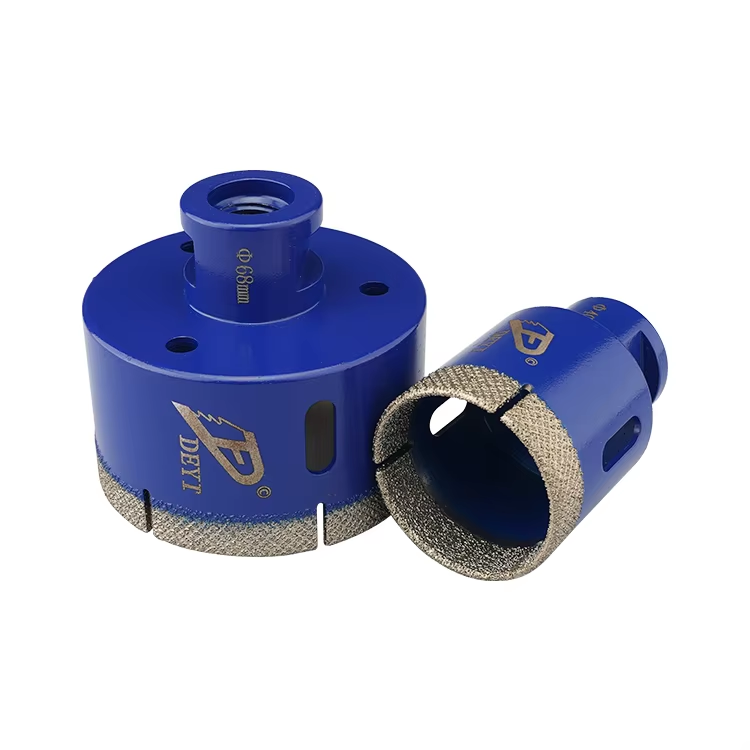
Visible Physical Degradation: Key Drill Bit Replacement Signs
Exposed steel core, severe segment wear, and matrix erosion as unmistakable visual indicators
When working with stone, there are three clear warning signs that it's time to replace a diamond drill bit: when the steel core becomes visible, when the segments show serious wear, and when matrix erosion gets too bad. If the core starts showing through, this means the diamond segments have worn down past what's safe for operation. The structural integrity basically goes out the window, and there's a much higher chance of the bit breaking during use. Segments that look flat, cracked, or just plain weird in shape can't cut properly anymore and struggle to clear away debris efficiently. What happens with matrix erosion is pretty straightforward too the metal that holds those diamonds together starts disappearing. Once it gets past certain points, diamonds start coming loose faster and the whole bonding system weakens. According to field reports from professionals, around 78% of early failures happen because these signs go unnoticed. That's why regular checks make all the difference in preventing costly breakdowns on job sites.
Measurable thresholds: When >30% segment height loss or >1.5 mm matrix recession demands immediate drill bit replacement
Quantitative benchmarks provide objective criteria for replacement decisions. Replace the bit when:
- Segment height loss exceeds 30% of original dimensions
- Matrix recession surpasses 1.5 mm depth
- Concentricity deviations exceed manufacturer tolerances
These thresholds correlate with a 40% reduction in cutting speed and trigger a 200% increase in vibration intensity. Beyond them, fracture risk escalates exponentially—particularly in high-density materials like granite and quartzite—making continued use unsafe. Adhering to these limits prevents costly downtime, equipment damage, and operator injury.
Loss of Cutting Performance: Functional Drill Bit Replacement Signs
Glazing and thermal locking in granite/quartzite — how diamond passivation reduces cutting efficiency
When diamond segments develop that glossy, glassy look, it means passivation has set in. This happens all too often during drilling operations on hard materials like granite or quartzite. The intense friction generates serious heat, sometimes over 600 degrees Fahrenheit, which actually melts away parts of the metal matrix surrounding the diamonds. What's worse, this heat rounds off those sharp diamond edges, making them about 70 to 80 percent less aggressive at cutting. Rather than slicing through material, the drill bit just glides along the surface. Things get even stickier with thermal locking problems. When segments get too hot, they start sticking to stone particles, creating massive resistance that brings everything to a grinding halt. Experienced operators notice several telltale signs: penetration slows down dramatically, feeding becomes harder work, and torque keeps climbing. These are pretty obvious clues that the bit isn't cutting anymore but needs replacement before damage gets worse.
Sudden stoppage, excessive slippage, or prolonged drilling time — distinguishing dulling from bond failure
When bits suddenly stop working, keep slipping, or take way longer than normal (over 30% increase) it usually points to different kinds of problems needing specific fixes. The gradual loss of sharpness happens because diamonds get worn down over time and segments wear away too much, which makes chips build up around the tool and cuts become less efficient. Bond failures are different though. They happen when the metal holding the diamonds breaks down too early, letting the diamonds fall out before they should. We typically see this as little pits along the edges of segments, erratic cutting patterns, and strange vibrations during operation. Getting the right diagnosis is really important here. If it's just dulling, then the bit has reached the end of its useful life. But bond failures point to bigger issues in how we're using these tools - things like not enough coolant getting through, too much pressure applied, or running at the wrong speed. These need fixing first before wasting money on a brand new bit.
Safety-Critical Indicators That Demand Immediate Drill Bit Replacement
Overheating, cracking, and abnormal vibration — early warnings of structural or thermal failure
When a drill bit starts showing signs of overheating like color changes (those blue or purple tints), smoke coming off it, or smells like something burning, that's the biggest warning sign for safety issues. Heat takes a real toll on the bit material, makes diamonds fall out faster, and basically breaks down the metal inside. Cracks spreading out from where the segments join mean the bit is really worn out, and if there's unusual shaking during operation, that usually means something's wrong mechanically or structurally within the bit itself. If any of these things happen, stop drilling right away and replace the bit completely. Safety rules across industries, including OSHA recommendations and ISO 5211 standards for tools, all say to shut down operations when these problems appear because keeping going could lead to the bit falling apart suddenly, sending pieces flying around, damaging whatever we're working on, or worse yet injuring someone nearby. Thermal damage actually changes how the metal behaves at a microscopic level. Once a bit gets glazed over from heat exposure, no amount of cooling or trying to fix it will bring back its cutting power.
FAQ
Q1: What are the visible signs that show a drill bit needs replacement?
A1: The visible signs include the steel core becoming exposed, segments showing severe wear, and extensive matrix erosion.
Q2: What are the measurable thresholds for drill bit replacement?
A2: Replace the bit when segment height loss is more than 30%, matrix recession surpasses 1.5 mm, or if concentricity deviations exceed manufacturer tolerances.
Q3: How does diamond glazing affect drill bit performance?
A3: Diamond glazing reduces the cutting efficiency by making the drill bit glide over the material instead of cutting it, due to the loss of sharp diamond edges.
Q4: What safety signs indicate immediate drill bit replacement?
A4: Overheating signs (color tints like blue or purple), cracking, smoke, and abnormal vibrations are critical indicators to replace the bit immediately.