
 EN
EN
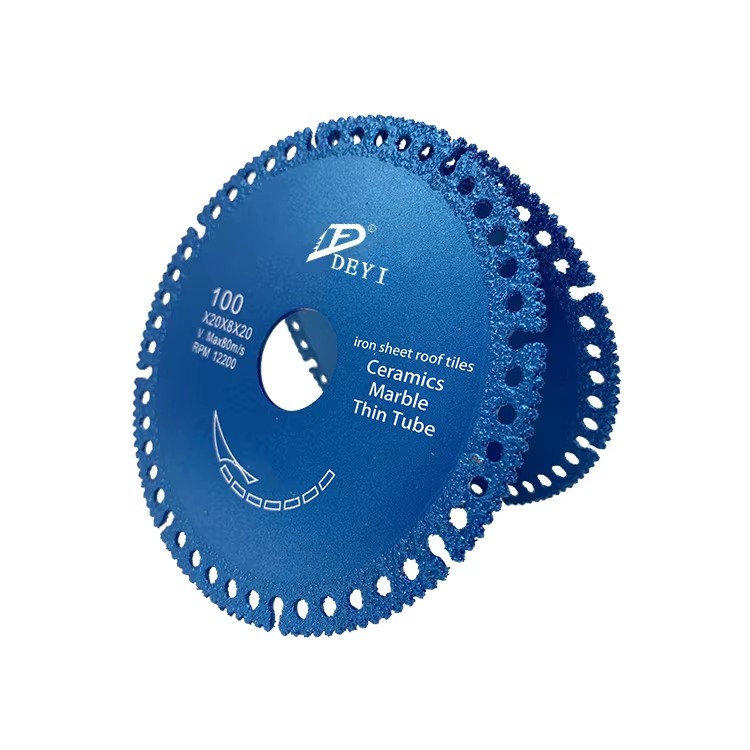
Why Traditional Grits Are Falling Short in Modern Polishing Applications
Wear, Inconsistency, and Contamination Issues with Conventional Abrasives
The grit on traditional polishing pads tends to wear down fast when pressure is applied, which means the material gets removed inconsistently and leaves behind unpredictable surface finishes. When the abrasive particles break apart unevenly during this process, they actually create tiny scratches on surfaces and sometimes push contaminants right into what's being worked on. This becomes a real headache for semiconductor manufacturing operations. Particulate contamination alone can cost companies around seven hundred forty thousand dollars each time it happens according to research from the Ponemon Institute back in 2023. Because these pads don't last long before needing replacement, factories end up changing them out all the time and constantly adjusting settings. All this adds up to roughly fifteen to thirty percent more downtime than what facilities experience when using newer, better technology options available today.
Challenges in Achieving Sub-Micron Surface Finishes in High-Tech Manufacturing
Traditional abrasives just don't cut it when it comes to getting those ultra fine finishes below a micron level. Most standard abrasive mixes have particle sizes all over the map, sometimes varying by more than twenty percent. This inconsistency leaves behind annoying surface haze and causes damage beneath the surface of things like optical components and silicon wafers. The whole step-by-step refinement approach where each grit is supposed to halve the scratches simply falls apart during key stages of the process. At these points, technicians end up having to step in manually, which can slow down production by as much as forty percent in really precise work. When manufacturers fail to maintain strict control over how particles are shaped and distributed throughout the material, getting those pristine laser quality surfaces turns into an inconsistent and frustrating challenge.
How Nanodiamond Innovations Are Transforming Polishing Pad Performance
Superior Hardness, Uniformity, and Thermal Conductivity of Nanodiamonds
What makes nanodiamonds stand out is their combination of super hardness at around 10 on the Mohs scale, pretty much uniform particles throughout, and thermal conductivity of approximately 2000 W/mK which is about fifty times better than what we see with regular abrasives such as alumina or silica. These characteristics mean longer lasting pads since they last about 35% longer than alternatives. They also help maintain even pressure when working on surfaces and get rid of excess heat during polishing so there's less chance of things getting warped or damaged from the heat. Basically, these diamonds fix many problems that plague traditional grit materials including quick wearing down, uneven finishes, and those pesky heat related issues that can ruin substrates.
Enhanced Material Removal Rate and Scratch-Free Finishing Mechanisms
Nanodiamonds using advanced colloidal dispersion techniques can remove materials about 40% faster compared to traditional grit methods, all while keeping surface quality intact. What makes this possible is their tiny, single crystal structure which allows for much better control during the cutting process. The result? Material gets removed evenly across surfaces without causing those annoying subsurface cracks that plague other methods. When manufacturers incorporate these nanodiamonds into specially formulated polymer matrices, they get pads that produce genuinely scratch free finishes. This matters a lot for things like semiconductor wafers and optical components where even the smallest imperfection counts. With these new pads, companies are achieving laser grade surface quality down to less than 0.1 micrometers flatness. And the bonus? They need fewer processing steps overall, cutting down production cycles by around 30% in real world applications.
Key Technological Advances in Nanodiamond Polishing Pad Design
Colloidal Nanodiamond Dispersion for Consistent Abrasive Distribution
When making colloidal dispersions, we suspend those tiny nanodiamond particles in a stable liquid base first, then work them into the pad matrix so they spread out evenly over the whole surface area. Traditional abrasive materials tend to bunch together or sink in spots, causing those annoying streak marks and inconsistent finishes. But with this approach, there's no clustering issues and the end result has that consistent sub-micron finish every time. For things like polishing semiconductor wafers, getting these parameters right matters a lot. The viscosity needs just the right thickness and those electrostatic charges must balance properly too. After all, one little scratch at the micron level can ruin an entire chip and waste hours of production time.
Precision Engineering Through Controlled Particle Size and Binding Matrices
Modern nanodiamond pads use mono-disperse particles (2–10 nm) paired with engineered polymer binders that balance adhesion and controlled release during Chemical Mechanical Polishing (CMP). Key innovations include:
- Size-sorting technology: Filters particles to ±0.5 nm tolerances, eliminating oversized grains that cause microscratches
- Thermoresponsive binders: Soften selectively at operational temperatures to modulate abrasion intensity in real time
- Cross-linked polymers: Improve pad durability by 40% over traditional resin-bonded systems
This level of control enables reliable scratch-free finishing on 3nm-node silicon wafers, where surface roughness must remain below 0.2 nm Ra.
Real-World Impact: Nanodiamond Pads in Semiconductor and Optical Manufacturing
Case Study: Adoption in Semiconductor Wafer Polishing for 3nm and Below Nodes
When we get down to those 3nm nodes and smaller, maintaining atomic-level surface quality becomes absolutely essential. Traditional grit methods just don't cut it anymore though they leave behind those pesky micro scratches and cause thermal distortions that can push yield losses over 15% according to Semiconductor Engineering from last year. That's where nanodiamond pads come into play. These pads solve two big problems at once. First, the colloidal dispersion keeps particles from clumping together during processing. Second, their excellent thermal conductivity means no more hot spots forming on wafers which would otherwise mess with the delicate layers in EUV lithography. The real world impact? Manufacturers report getting around 25% better material removal compared to old school alumina systems, all while achieving surface uniformity measured in fractions of an angstrom. This kind of precision makes defect free polishing possible something that's becoming increasingly important as we push forward with advanced logic and memory chip designs.
Applications in High-Precision Optics and Laser-Grade Surface Finishing
When it comes to making optics, those little nanodiamond pads work wonders at getting rid of those pesky cracks underneath the surface in materials such as fused silica. These tiny fractures mess with how lasers pass through stuff, sometimes dropping transmission efficiency down around 30%. What makes these pads special is their ability to cut super precisely, creating surfaces so smooth they're almost theoretical in quality (Ra below 0.5 nm). This kind of finish matters a lot for things like detecting gravitational waves, building sensors for spacecraft, and powering up high energy lasers. Big observatories have started switching over to mirrors polished with nanodiamonds because they can hit that sweet spot of 99.8% reflectivity which just isn't possible with old school methods involving cerium oxide. And speaking of practical benefits, the same tech used in labs actually makes crystals last longer in industrial laser cutting operations too. We're talking about extending service life by roughly 40%, which means big savings when looking at overall costs over time.
FAQ
What are the main advantages of nanodiamond polishing pads over traditional grits?
Nanodiamond polishing pads offer superior hardness, uniformity, and thermal conductivity compared to traditional abrasives, enhancing material removal rate and achieving scratch-free finishes while reducing production cycle times.
How do nanodiamond pads improve manufacturing for 3nm nodes in semiconductors?
Nanodiamond pads prevent micro scratches and thermal distortions, improving yield losses and surface uniformity, crucial for maintaining atomic-level surface quality in semiconductor manufacturing.
What advancements do nanodiamond pads offer to high-precision optics manufacturing?
Nanodiamond pads provide smooth laser-grade surfaces, nearly theoretical in quality, which improve transmission efficiency and reflectivity, benefiting applications in gravitational wave detection and high-energy laser operations.