
 EN
EN
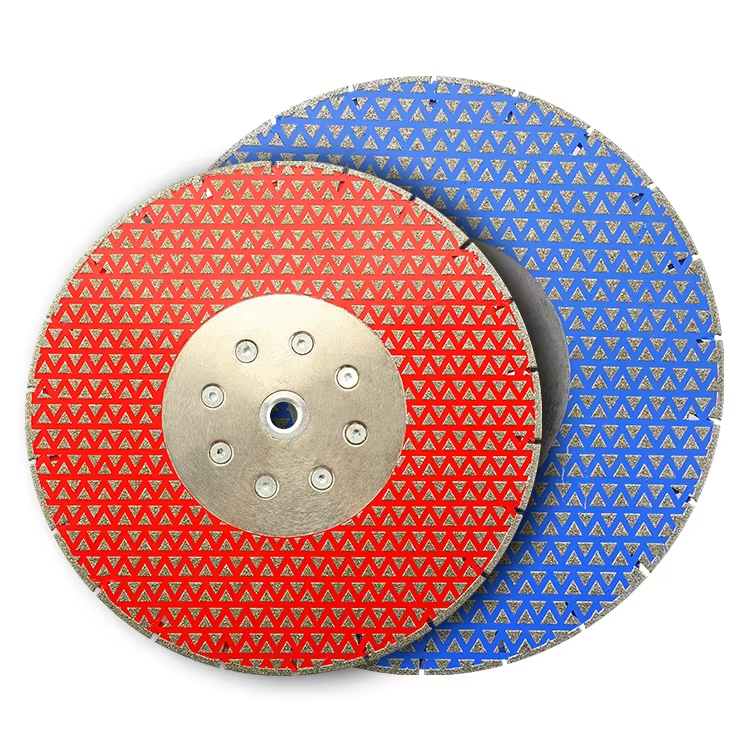
Understanding Smart Machine Adaptation in Diamond Polishing
AI-driven parameter adjustment in diamond polishing machines
Diamond polishing machines today incorporate AI technology that adjusts key parameters like pressure levels, rotation speeds, and how long each spot gets worked on. These adjustments happen automatically based on what the machine sees in real time about the diamond pads themselves – things like what kind of bond they have, how much grit is packed in there, and how worn down they've gotten. Plus it looks at the actual piece being polished too. Sensors built right into the equipment send all this information to AI models that actually apply Preston's formula (Material Removal Rate equals some constant multiplied by pressure and velocity). What does this mean practically? Well, it lets the system predict exactly how fast material will come off during polishing. Setup used to take forever because operators had to tweak everything manually, but now configuration times can drop around 70%. And surfaces stay consistent between different batches which was always a pain point before. The best part? These smart systems keep getting better over time as they learn from every polishing job. They watch what happens when certain settings are used and adjust accordingly to avoid common issues like not polishing enough, diamonds falling out of their seats, or overheating that damages the workpiece.
IoT-enabled grinders and real-time sensor feedback networks
Polishing systems connected to IoT create these closed loop control networks where temperature sensors, vibration detectors, and acoustic emission monitors keep tabs on how healthy the process is at any given moment. The data flows right into central controllers which constantly check what's happening against those quality standards we set. When something goes off track, like when heat causes pads to expand or when resistance suddenly jumps during work on tough alloys, the system automatically adjusts itself back on course in about half a second flat. What does this mean practically? More even pressure across the surface being worked on, better rotation stability overall. Shops report seeing around 40 fewer rework instances per month after implementing these systems, while their polishing pads tend to last about a quarter longer too thanks to this smart wear compensation feature built into the actuators.
Core Principle: Real-Time Parameter Adjustment Based on Pad and Die Compatibility
Diamond abrasive compatibility (metal-bonded/resin-bonded pads) and grit optimization
Getting smart about material removal starts with knowing what kind of pad we're dealing with. The metal bonded ones are built for heavy duty work where lots of material needs removing quickly, so they need those coarse grits between 50 and 300 mesh. Resin bonded pads tell a different story though. These babies are all about getting that smooth finish, working best with much finer grits ranging from 800 to 6000 mesh. But watch out! They don't take kindly to too much pressure which can lead to unwanted burnishing effects. When an intelligent system looks at pad specs alongside how hard the die is and its actual shape, it picks just the right grit size and how deep the pad should engage. This approach cuts down on those pesky surface problems like orange peel texture or tiny scratches by around 30 something percent according to tests. And let's not forget the real benefit here: keeping pads from glazing over while making sure the abrasive stays active until the very end of the tool's useful life.
Adjustment of speed and pressure settings based on die characteristics
The machine adjusts rotational speed between 200 and 3000 RPM along with downward force ranging from 5 to 50 psi based on specific properties of each die material. These adjustments take into account factors like how much the material expands when heated, its stiffness measured by Young's modulus, and the actual surface texture. When working with tungsten carbide dies, operators typically boost the pressure but slow down the rotation rate to prevent tiny cracks from forming. With brittle optical glass materials, the focus shifts toward minimizing vibrations and heat buildup during processing. Real time sensor data about how hard the tool is pushing against the material and temperature changes throughout the process allows for incredibly tight control over dimensions. This kind of precision keeps measurements accurate within plus or minus 0.1 micrometers, which matters a lot in high tech manufacturing areas like polishing silicon wafers for computer chips or making lenses for lasers.
Preston's equation and material removal modeling in deterministic polishing
Adaptive systems operationalize Preston’s equation (MRR = k·P·V) as a real-time control framework, where:
| Variable | Role in Optimization | Adjustment Logic |
|---|---|---|
| P (Pressure) | Governs cutting depth and contact stress | Increases for harder substrates; modulated to stay below fracture thresholds |
| V (Velocity) | Influences heat generation and abrasive trajectory | Reduced for thermally sensitive materials (e.g., fused silica, sapphire) |
| k (Material Constant) | Encodes pad-workpiece interaction dynamics | Auto-calibrated via optical pad recognition and historical wear correlation |
Machine learning refines k values over successive runs, incorporating metrology feedback and pad degradation trends. The result is deterministic, repeatable material removal—achieving 99.7% surface uniformity across production lots without post-process correction.
AI and Adaptive Learning in Polishing Process Automation
Artificial intelligence in polishing automation and adaptive learning algorithms
Artificial intelligence acts like the brain behind today's automated polishing systems, going beyond simple reactions to actual sensor readings by predicting when processes start to wander off track. Modern algorithms take in all sorts of information streams at once including vibration patterns, temperature changes across surfaces, detailed maps showing how rough or smooth areas are, plus telemetry about how much wear is happening on the polishing pads themselves. These inputs get processed instantly to tweak things like pressure applied during polishing, where the spinning tool moves around the workpiece, and how long it stays in contact with different spots. The system knows the difference between various kinds of polishing pads too. When working with resin bonded ones, the AI keeps the maximum force lower so those bonds don't break down prematurely. For metal bonded pads though, it pushes harder to get better results while keeping an eye out for any unwanted vibrations that might damage the finish. All this smart adjustment cuts down on wasted abrasives by roughly 22 percent and regularly produces finishes below 0.02 microns roughness average. What was once considered experimental technology has now become standard practice in many manufacturing facilities looking to boost efficiency without sacrificing quality standards.
HMI touchscreen interface with real-time monitoring and parameter adjustment
When working with these adaptive polishing systems, operators get their hands on some pretty smart HMIs designed for different roles. These interfaces show live data on several important metrics including how well the pad and die line up, any deviations in material removal rate, those telltale vibration patterns, plus predictions about when pads will need replacing. The system doesn't just wait for problems either. For instance, it might pop up a warning saying something like "Resin pad is wearing down to 82% condition, maybe time to switch to a coarser grit next round" so technicians can fix things before quality starts slipping. Most of the time though, people don't even need to mess around with manual controls. Little tweaks happen right from the touch screen - increasing pressure when moving along edges or adjusting acceleration rates for smoother paths. All this works seamlessly whether dealing with various types of diamond abrasives or different kinds of materials being polished.
Dynamic Process Control for Surface Correction and Precision Calibration
Automatic diamond polishing machines with pad recognition systems
The optical and RFID pad recognition systems can spot things like bond type, grit size, concentration levels, and even track how worn out specific batches get when they're loaded in. What happens next? The system automatically loads the best settings for those pads, which cuts down on mistakes that usually come from manual setup by operators. When combined with ongoing wear monitoring through sound emissions and force changes during operation, the whole setup adapts as cutting gets less efficient over time. This keeps the material removal consistent and maintains good surface finishes throughout the process. Best part? There's no need for outside calibration checks either. Before every polishing run, the machine basically does its own check against standard measurements to make sure everything's still performing right.
Calibration of diamond die polishing machines for ultra-precision manufacturing
For aerospace, medical, and photonic applications, machines undergo traceable, laser-interferometer-based calibration to ensure spatial accuracy better than 0.5 µm. This includes:
- Active vibration damping that isolates tool paths from ambient floor noise
- Closed-loop pressure control responding to real-time die hardness mapping (via nanoindentation feedback)
- Thermal compensation algorithms that model and offset drift induced by prolonged operation or ambient fluctuations
The outcome meets stringent industry standards: surface flatness below λ/20 (λ = 632 nm) for precision optics, and form error < 50 nm PV for semiconductor die. Metrology data feeds directly into adaptive learning models, enabling progressive refinement of correction logic—turning every polished part into a data point for future precision.
FAQ Section
What is the main advantage of AI technology in diamond polishing machines?
AI technology in diamond polishing machines offers real-time adjustments, drastically reducing setup times and enhancing surface consistency across different batches by predicting material removal rates.
How does IoT improve diamond polishing processes?
IoT-enabled grinders provide real-time sensor feedback networks that keep track of the polishing process health, ensuring automatic adjustments for even pressure distribution and rotation stability.
What role does Preston's equation play in polishing?
Preston's equation serves as a control framework that helps machines determine and adjust pressure, velocity, and material interactions, ensuring precise material removal.
How do optical and RFID pad recognition systems assist in polishing?
These systems identify pad types and wear levels, automatically setting optimal parameters for effective and mistake-free polishing setups, with built-in monitoring to adapt as conditions change.