 EN
EN
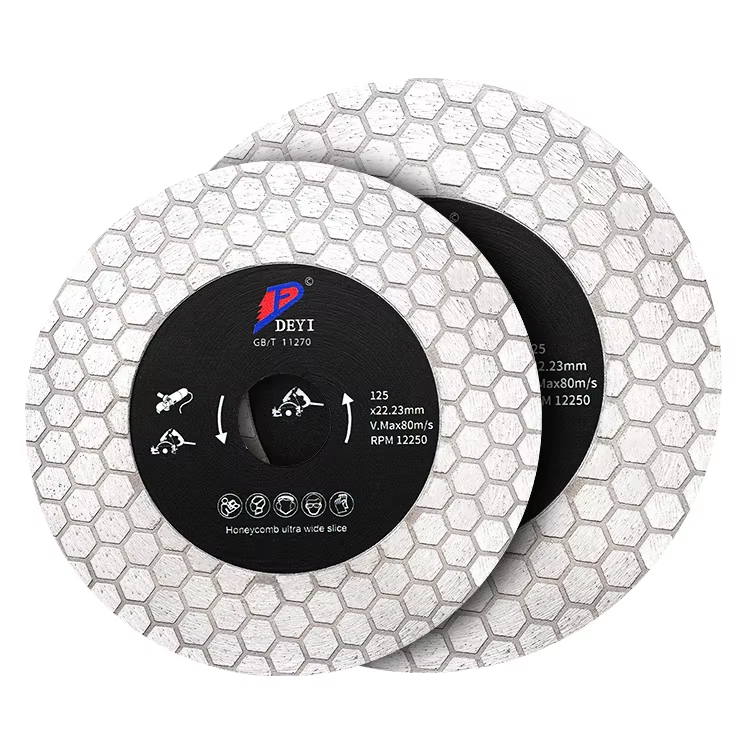
Why CVD Diamond Coatings Are Transforming Glass Cutting Disc Performance
Getting clean cuts in glass requires edges free from tiny cracks and chips, but standard abrasive discs just don't hold up very long. They tend to wear down fast, leading to uneven results and needing constant replacement. That's where CVD diamond coatings come into play. These coatings apply a man-made diamond layer through a process called chemical vapor deposition. What this does is create something incredibly hard and resistant to wear, beating regular abrasives hands down. Some tests show these coated discs last maybe 25-30 times longer than their conventional counterparts. Less time changing discs means fewer interruptions during production runs, which cuts down on overall costs and keeps things moving smoothly when dealing with large volumes of work.
What makes CVD technology really stand out goes beyond just how tough it is. The diamond coating sticks to all sorts of complicated disc shapes with amazing grip, so it doesn't peel off even when things get super hot during operation. For cutting edge stuff like car windshields and those fancy foldable phone screens, getting measurements right down to the micron matters a lot. These diamond edges stay sharp for much longer periods of time, which cuts down on those annoying chips and heat related problems that regular discs tend to have. Factories using this tech see around half the glass going to waste compared to before, plus they can process materials about 60% quicker since there's less need for checking every piece. All these improvements in durability, cutting quality, and production speed mean CVD diamond coatings are changing what's possible in modern glass manufacturing.
How the CVD Diamond Coating Process Enables Precision on Complex Disc Geometries
CVD Synthesis Fundamentals for Uniform, Adherent Diamond Films on Cutting Discs
Diamond coatings are grown using Chemical Vapor Deposition (CVD), where atoms build up layer by layer as hydrocarbon gases break down inside vacuum chambers. What makes this method so effective is that it can coat all surfaces evenly, even those tricky spots on cutting discs like serrated edges and tiny coolant holes that just can't be reached properly with electroplating techniques. The whole process works best when we carefully manage the mix of gases, usually methane mixed with hydrogen, along with keeping the base material at around 700 to 900 degrees Celsius. These conditions help create a dense starting point for growth, resulting in smooth polycrystalline layers throughout. Unlike older methods, there's no worrying about inconsistent coverage areas anymore since CVD delivers much more predictable results across the entire surface area.
Overcoming Thermal Stress and Adhesion Challenges in Thin-Film Deposition
Thermal expansion mismatches between diamond films and steel/tungsten carbide substrates historically caused delamination. Modern CVD solves this through:
- Intermediate bonding layers: Titanium or chromium interlayers buffer thermal stresses
- Gradual temperature ramping: Prevents coating cracks during cooling phases
- Surface texturing: Micro-roughened substrates boost mechanical interlocking by 40%
These innovations achieve adhesion strengths exceeding 80 MPa, critical for maintaining coating integrity during high-speed glass cutting. The result is three times longer tool life with consistent cut quality versus uncoated discs.
Proven Performance Gains: Wear Resistance, Lifespan, and Cut Quality with CVD Diamond Coatings
CVD diamond coatings deliver transformative performance gains for glass cutting discs—enhancing wear resistance, extending operational lifespan, and ensuring consistent cut quality. Industry tests reveal a 70% reduction in abrasive wear versus conventional silicon carbide discs, directly translating to longer service life and fewer tool changes.
Quantifying wear reduction: CVD-coated vs. conventional abrasive discs
Controlled machining trials demonstrate distinct advantages:
- CVD diamond-coated discs maintain cutting edge sharpness 7–10— longer than uncoated alternatives
- Processing identical glass volumes, CVD discs exhibit <0.05 mm edge recession versus 0.3–0.5 mm in standard abrasives
- Reduced friction coefficients enable 20% higher feed rates without thermal damage
Failure mode analysis: How CVD diamond coatings suppress edge chipping and thermal degradation
The ultra-hard diamond layer (8500 Vickers hardness) fundamentally alters failure mechanisms in glass cutting:
| Failure Mode | Conventional Discs | CVD-Coated Discs |
|---|---|---|
| Edge Chipping | Frequent (>15% of cuts) | <2% incidence |
| Thermal Microfractures | 100% after 30 minutes | Eliminated via heat dissipation |
| Coating Delamination | N/A | Prevented by graded interfaces |
By dissipating cutting heat efficiently and resisting crack propagation, CVD diamond coatings eliminate catastrophic failures. This extends mean time between replacements by 15—, while reducing scratch defects on finished glass by 80%.
Real-World Adoption and Integration of CVD Diamond-Coated Discs in Advanced Glass Machining
High-speed processing lines: Case evidence from automotive and display glass manufacturers
Top names in automotive and display glass manufacturing have seen their production output jump anywhere from 40 to 60 percent since making the switch to CVD diamond coated discs. These special tools hold their edges much better too, lasting about twenty times longer than regular abrasive materials before needing replacement, which cuts down on downtime significantly. Looking at actual factory operations, tests on display glass production lines found that when working with Gorilla Glass at speeds around 120 meters per minute, these coated discs cut down on those pesky micro cracks by nearly three quarters. Why does this happen? Well, it all comes down to how tough these thin film diamond coatings really are. They can handle heat well beyond 800 degrees Celsius without breaking down or losing effectiveness. Some interesting research from the aerospace industry backs this up showing that tools with CVD diamond coatings last roughly twenty times longer than standard tools when subjected to intense wear conditions.
| Performance Metric | CVD-Coated Discs | Conventional Abrasives | Improvement |
|---|---|---|---|
| Avg. Lifespan (hours) | 120–150 | 6–8 | 20x |
| Cut Quality Consistency | >95% | 68% | +27 pts |
| Production Downtime | 0.5 hours/day | 2.3 hours/day | -78% |
Seamless integration into automated CNC and robotic glass cutting systems
CVD diamond coatings can be retrofitted right into current CNC machines and robotic glass cutters without needing any changes to the hardware setup. Because these coatings have uniform shape and wear in predictable ways, it makes programming the tool paths much easier. No need to keep adjusting depths manually when running production for hours on end. The thermal stability factor is another big plus point. These coatings don't peel off or come loose even during dry cutting processes, which really matters inside those sealed robotic work cells where maintenance access is limited. Smart manufacturing systems track performance metrics, and what we see is pretty impressive. CVD coated cutting discs stay within about 5 microns of precision throughout most of their lifespan, while regular abrasive tools tend to drift around 25 microns over time. That kind of accuracy means factory floors can run nonstop day after day in automated facilities making complex shapes like curved car windshields and those delicate OLED display panels.
Balancing Economics and Innovation: Challenges and Future Trajectory of CVD Diamond Coatings
Cost-benefit reality check: ROI timeline and total cost of ownership analysis
CVD diamond coatings might cost more upfront compared to regular abrasives, but they last much longer so companies actually save money over time. Manufacturing plants have seen these diamond coated tools last anywhere from 30 to 50 percent longer before needing replacement, which means fewer discs going through the system and less downtime when machines need to be stopped for changes. The savings get even better when looking at all those disposal fees that go down and the money saved on labor costs during tool changes. Most shops find that after about six to twelve months of heavy use, the overall cost ends up being about the same as standard tools despite the higher price tag. And there's another benefit too: these coatings prevent edges from chipping away, something that really cuts down on wasted materials especially important in places where glass is being cut with extreme precision requirements.
Emerging advances: Nanostructured CVD layers and hybrid coating architectures
The latest generation of chemical vapor deposition (CVD) techniques is making it possible to create nanostructured diamond films with those special graded adhesion layers that have been causing headaches for years when applied to complex disc shapes. Scientists working in materials science labs are experimenting with new combinations where CVD diamonds get mixed into ceramic matrices. This approach seems to boost fracture toughness without sacrificing the wear resistance properties that make diamond coatings so valuable. The whole point of these developments is finding that sweet spot between how long a coating lasts versus how flexible it needs to be for things like cutting curved glass surfaces used in cars and modern displays. With better scaling of the deposition process happening all the time, we can expect to see these improved coatings showing up more frequently in automated glass machining operations throughout manufacturing facilities.
FAQ Section
What is the main advantage of using CVD diamond coatings for glass cutting discs?
The main advantage of using CVD diamond coatings for glass cutting discs is their exceptional hardness and wear resistance, which significantly extends the disc's lifespan and ensures superior cutting precision.
How do CVD diamond coatings improve cutting accuracy?
CVD diamond coatings improve cutting accuracy by maintaining a sharp edge for longer periods, reducing chips and heat-related distortions, thus enabling precise cuts down to the micron level.
Why is CVD technology preferred over traditional abrasive methods?
CVD technology is preferred because it offers uniform coating on complex disc shapes, significantly reduces wear, and enhances overall disc durability compared to traditional abrasives.
Can existing CNC and robotic systems accommodate CVD diamond-coated discs?
Yes, CVD diamond-coated discs can be integrated into existing CNC and robotic systems without hardware modifications, allowing seamless upgrades in glass cutting operations.
Is the initial cost of CVD diamond-coated discs justified?
Although they have a higher upfront cost, CVD diamond-coated discs last significantly longer, resulting in reduced downtime and overall cost savings, making them economically viable in the long run.
Table of Contents
- Why CVD Diamond Coatings Are Transforming Glass Cutting Disc Performance
- How the CVD Diamond Coating Process Enables Precision on Complex Disc Geometries
- Proven Performance Gains: Wear Resistance, Lifespan, and Cut Quality with CVD Diamond Coatings
- Real-World Adoption and Integration of CVD Diamond-Coated Discs in Advanced Glass Machining
- Balancing Economics and Innovation: Challenges and Future Trajectory of CVD Diamond Coatings
-
FAQ Section
- What is the main advantage of using CVD diamond coatings for glass cutting discs?
- How do CVD diamond coatings improve cutting accuracy?
- Why is CVD technology preferred over traditional abrasive methods?
- Can existing CNC and robotic systems accommodate CVD diamond-coated discs?
- Is the initial cost of CVD diamond-coated discs justified?