 EN
EN
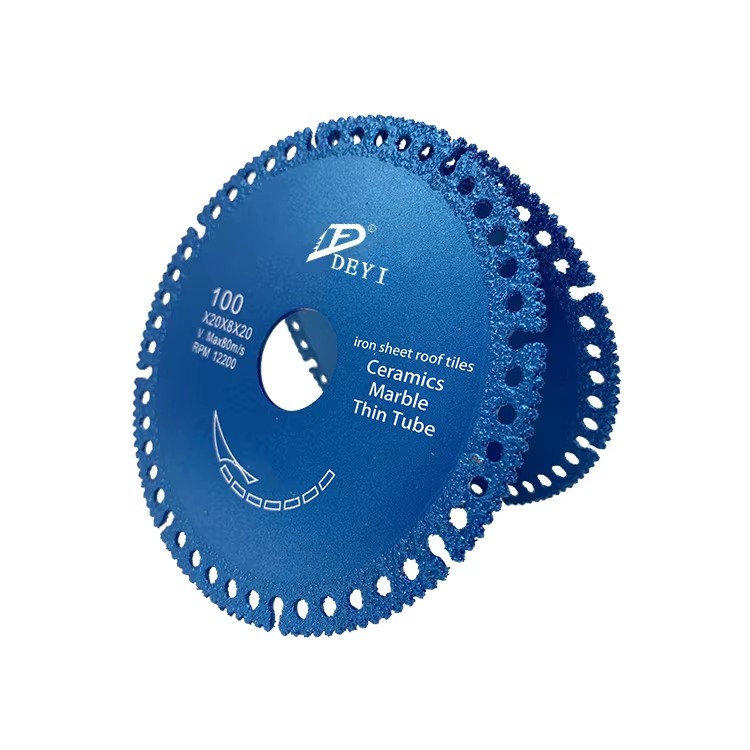
Universal Material Compatibility Expands Application Range
Cutting Across Mohs Hardness 4.0–9.0 With a Single Blade
The latest generation of diamond saw blades works equally well whether wet or dry, breaking through many of the old constraints thanks to their special heat resistant bonding tech. These blades handle everything from softer composite materials rated around Mohs 4 all the way up to super hard engineered quartz at Mohs 9, and still keep pretty much the same cutting power throughout. What makes them stand out is those laser welded segments that actually change how they wear down as they cut different materials. This means workers don't have to stop and switch blades mid job, which saves time and keeps productivity going strong even when switching between different types of material.
Effective Performance on Composites, Tile, Concrete, and Engineered Stone
Contractors using dual-use diamond blades report 42% faster project completion when transitioning between tile, poured concrete, and fiber-reinforced polymers. Optimized diamond grit distribution reduces edge chipping in brittle ceramics while retaining aggressive cutting action in dense concrete. Field tests show less than 2% delamination in engineered stone–19% better than material-specific blades.
Field Data: 78% Reduction in Job Site Downtime Due to Fewer Blade Changes
According to research conducted at around 1,200 different worksites in 2024, workers using universal blades changed them about 4 or 5 times less during their usual 8 hour shifts. The new blade design with those special cooling grooves just doesn't wear out as fast, which means teams aren't wasting nearly as much time fiddling with equipment adjustments anymore something that used to take roughly 3 hours every day. When we look at the bottom line, companies typically save about $580 on each project when they switch over because there's simply less need for both labor hours and replacement parts throughout the whole process.
Advanced Heat Management for Reliable Dry Cutting
Laser-Welded Segments and Thermal-Resistant Bonds Withstand Temperatures Over 500°C
Laser-welded segments with thermal-resistant bonds maintain structural integrity at temperatures exceeding 500°C, as verified by the International Materials Institute in 2023. This innovation prevents segment detachment during prolonged dry cutting of reinforced concrete, extending blade lifespan by up to 40% compared to traditional silver-brazed models.
Innovative Cooling Groove Geometry Enhances Airflow and Heat Dissipation
Asymmetrical cooling grooves improve airflow efficiency by 62% during rotation, effectively channeling heat away from the cutting edge. These precision-engineered grooves maintain blade balance and prevent warping, allowing continuous dry operation on abrasive surfaces like porcelain tile.
Dual-Function Channels Support Minimal Water Use Without Compromising Blade Life
Hybrid channels allow seamless switching between pure dry cutting and minimal-water modes (0.5 liters/minute) for dust suppression. This design reduces water consumption by 78% compared to conventional wet-cutting blades while delivering equivalent thermal management on mixed-material job sites.
Smart Technology Integration Enhances Cutting Precision
Smart Cut™ Sensors Provide Real-Time Feedback on Blade Performance
Smart Cut™ sensor arrays monitor vibration, torque, and temperature at 200 samples per second. This real-time data enables automatic adjustment of rotational speed and feed rates, optimizing performance in both wet and dry conditions. Contractors report 15–22% higher productivity on mixed-material demolition projects using sensor-equipped blades.
Adaptive Segment Wear Monitoring Optimizes Lifespan in Wet or Dry Conditions
Embedded sensors track diamond segment erosion and correlate wear with material hardness (Mohs 4.0–9.0) and cutting mode. The system adjusts exposure time and cooling intervals automatically, extending service life by 35% compared to conventional blades. This optimization prevents premature failure when alternating between dry concrete and wet tile applications.
Case Study: Improved Accuracy in Tile and Concrete Cutting with Smart Blades
A 12-month evaluation of smart-enabled universal blades demonstrated significant accuracy improvements:
- Tile Cutting: 0.12mm average edge deviation (vs. 0.35mm with standard blades)
-
Concrete Cutting: 94% verticality maintained at 150mm depth
Operators achieved these results without manual recalibration, confirming smart technology’s effectiveness across diverse materials.
Precision Segment Engineering Reduces Chipping and Delamination
Optimized Diamond Concentration and Segment Height for Clean, Smooth Cuts
Calculated diamond distribution patterns enhance cutting quality. Blades with 16%–22% diamond concentration in critical zones reduce chipping by 40% in porcelain tile versus uniform designs. Segment heights of 5.5–6.8 mm ensure stability in both wet and dry conditions, while laser-guided spacing creates self-sharpening edges that maintain consistency over 500+ linear feet of cutting.
Matching Segment Design to Material Fracture Toughness Improves Edge Quality
Leading manufacturers now align segment engineering with material science principles:
| Material Type | Segment Bond Hardness | Diamond Grit Size |
|---|---|---|
| Engineered Quartz | Medium-Hard (HRC 52-55) | 40/50 US Mesh |
| Porcelain Tile | Extra-Hard (HRC 58-60) | 50/60 US Mesh |
| Reinforced Concrete | Soft-Moderate (HRC 45-48) | 30/40 US Mesh |
This targeted approach minimizes delamination in laminated countertops and reduces spalling in concrete by synchronizing wear rates with material abrasiveness.
Performance Comparison: High-Precision vs. Standard Universal Blades on Brittle Materials
Field tests with 7" wet or dry versatile universal diamond saw blades reveal clear advantages:
-
Ceramic Tile Cutting
Precision Blades: 0.3 mm average chipping width
Standard Blades: 1.2 mm average chipping width -
Carbon Fiber-Reinforced Plastic
Precision Blades: 92% delamination-free cuts
Standard Blades: 68% delamination-free cuts
Thermal-resistant bonds in precision blades sustain performance at temperatures up to 482°C (900°F), enabling uninterrupted dry cutting where standard blades require frequent cooling pauses.
FAQ
What materials can the new diamond saw blades cut through?
The diamond saw blades are versatile enough to cut materials ranging from Mohs hardness 4.0 to 9.0, including engineered quartz, tile, concrete, and composite materials.
How do these blades manage heat during dry cutting?
The blades utilize innovative cooling groove geometry and laser-welded segments with thermal-resistant bonds, allowing them to withstand temperatures over 500°C.
What is the advantage of the Smart Cut™ sensors in these blades?
Smart Cut™ sensors provide real-time feedback on blade performance, allowing automatic adjustments that improve cutting precision and increase productivity.
How do adaptive segment wear monitoring benefit these blades?
This technology optimizes the blades' lifespan by adjusting exposure time and cooling intervals according to material hardness and cutting conditions.
What improvements have been shown in cutting accuracy with these blades?
These blades have demonstrated significant improvements in cutting accuracy with fewer edge deviations and higher verticality retention compared to standard blades.
Table of Contents
- Universal Material Compatibility Expands Application Range
- Advanced Heat Management for Reliable Dry Cutting
- Smart Technology Integration Enhances Cutting Precision
- Precision Segment Engineering Reduces Chipping and Delamination
-
FAQ
- What materials can the new diamond saw blades cut through?
- How do these blades manage heat during dry cutting?
- What is the advantage of the Smart Cut™ sensors in these blades?
- How do adaptive segment wear monitoring benefit these blades?
- What improvements have been shown in cutting accuracy with these blades?