 EN
EN
Understanding the Tradeoff Between Cutting Speed and Blade Durability
The Fundamental Conflict: Cutting Speed Versus Blade Wear
The main problem engineers deal with when working with diamond saw blades is finding that sweet spot between speed and durability. When operators push for faster cuts, they definitely boost productivity, but this comes at a cost. Industrial tests show that segment wear actually jumps anywhere from 27 to 43 percent with these higher speeds according to Machinery Today last year. What happens? Well, those higher RPMs create more friction which cooks the cutting edge right there at around 600 degrees Celsius or more. This heat messes up the bond matrix holding everything together and causes diamonds to fall out before their time. But go too slow and things get just as bad. Efficiency plummets and we start seeing what's called blade glazing. This occurs when old, worn diamonds stick around instead of getting knocked off naturally, leaving the blade unable to cut properly because no fresh diamonds are exposed for actual work.
How Material Hardness and Abrasiveness Impact Cutting Performance vs Blade Durability
The materials we cut definitely affect how fast tools work versus how long they last. Take granite for instance, which sits around 6 to 7 on the Mohs scale. To get through this stuff, diamond blades need about 28 to 32% concentration. Concrete is another beast entirely though. Those abrasive properties wear down blade segments roughly 22% quicker than regular brick does. A recent report from the Abrasive Materials Institute showed something interesting too. When working with quartzite, each square meter eats up about 8.7 milligrams of diamond grit. Compare that to just 2.1 mg needed for marble and it becomes clear why there's such a difference. Because of these variations, adjusting the bond hardness becomes essential. Getting the right balance keeps diamonds exposed properly without them wearing out before their time.
Quantifying the Balance Between Cutting Speed and Tool Life in Diamond Blades
The tool life coefficient (TLC) provides a measurable framework for evaluating performance tradeoffs:
| Parameter | Impact on TLC |
|---|---|
| 10% RPM increase | –18% lifespan |
| 5% feed rate reduction | +12% lifespan |
| Optimal coolant flow | +29% lifespan |
Manufacturers use TLC values to design specialized blades–construction-grade tools target longevity with TLC ≈1.8, while tile-cutting blades prioritize speed with TLC ≈1.2.
Optimizing Bond Matrix and Diamond Concentration for Performance Longevity
Bond types in diamond blades and their role in balancing cutting speed and tool life
Diamond grit needs something to hold it together while cutting through materials, and that's where the bond matrix comes in. It basically controls how aggressive the cut will be and determines the lifespan of the tool. Metal bonds made from stuff like cobalt or nickel are great for slicing through tough stuff such as concrete because they cut really fast. But there's a tradeoff here since these metal bonds wear down pretty quickly when exposed to abrasive surfaces. Resin bonds don't produce as much heat during operation, which makes them better suited for delicate jobs involving ceramics or fragile stones. Sometimes manufacturers go for hybrid bonds that mix metal and resin properties. These offer a good middle ground when working with multiple types of materials at once. According to research published by NIST back in 2025, companies saw improvements in their bottom line when using specially formulated bonds. The study reported around an 18 to 22 percent boost in efficiency per cut across various industrial settings.
Matching bond hardness to material properties for optimal blade performance
Selecting the right bond hardness is essential for maximizing blade life. The general rule is inverse matching: harder bonds for softer, abrasive materials, and softer bonds for dense, hard materials.
| Material Type | Optimal Bond Hardness | Resulting Benefit |
|---|---|---|
| Soft, abrasive (asphalt) | High hardness | Prevents premature matrix wear |
| Hard, dense (granite) | Medium hardness | Sustains diamond exposure |
| Brittle (porcelain) | Low hardness | Minimizes chipping |
Field tests from 2023 demonstrated that properly matched bond-material combinations extend blade life by up to 40% compared to mismatched alternatives.
Diamond concentration and segment geometry’s influence on cut efficiency and blade life
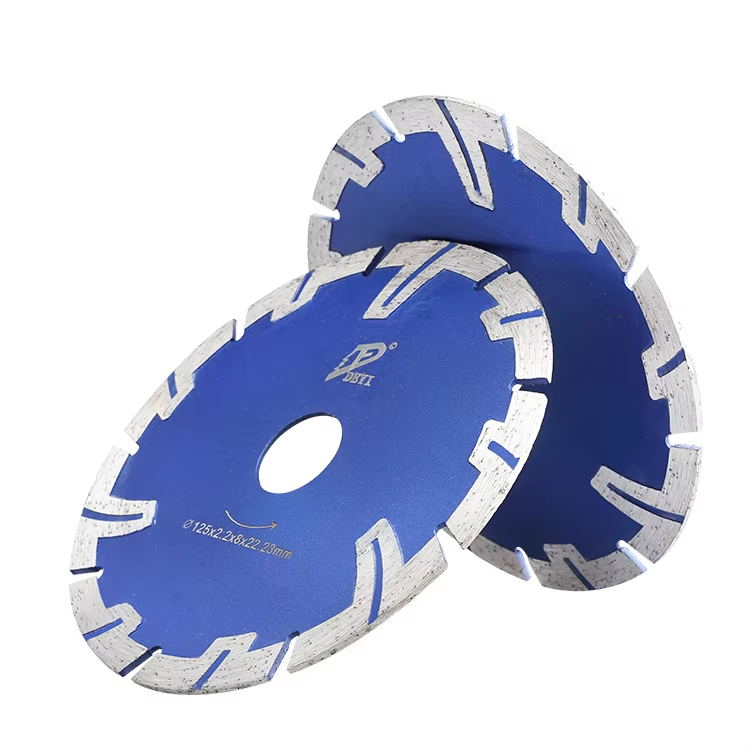
The amount of diamond in a blade really makes a difference when it comes to how well it performs. When blades have higher diamond concentrations around 35 to 45% by volume they tend to last much longer when cutting through tough stuff like granite or concrete. The extra diamonds mean there's always something sharp at work, even as others get worn down. But here's the tradeoff these high concentration blades just don't cut as fast since not all those diamonds are actually exposed to the material being cut. On the flip side, blades with lower diamond concentrations will slice right through softer materials quickly at first, but they simply can't hold up for long before needing replacement. And let's not forget about segment design either. Those laser cut expansion slots we see nowadays? They're pretty smart engineering actually. By letting heat escape better, they help prevent overheating damage which some tests show can drop by about 30% compared to older designs without such features.
Controlled diamond exposure through strategic segment wear design
The latest blade designs incorporate something called progressive matrix erosion which helps keep those diamonds sticking out just right for the whole lifespan of the blade. The wear rate is pretty tightly controlled between 0.02 and 0.05 mm per hour, so the cutting angle stays where it needs to be for best results. There's also this new stuff with adaptive bonds that actually change how deep the diamonds stick out while cutting happens, responding to what's going on in real time. Some tests ran last year found that these intelligent systems cut down on glazing problems by around 60 something percent. That means blades keep performing at their best even when working through different kinds of materials day after day.
Balancing Operational Parameters: RPM, Feed Rate, and Heat Management
Operational parameters such as RPM, feed rate, and cooling are pivotal in managing the tradeoff between cutting speed and blade longevity. A 2023 German abrasives study revealed that exceeding recommended RPM by just 15% reduces blade life by 35% due to thermal damage–even if cutting speed improves slightly.
Impact of RPM on Cutting Speed, Friction, and Heat Generation in Diamond Blades
When running at high RPMs, friction builds up quickly, pushing interface temperatures past 600 degrees Celsius. At these extreme temps, metal bonds start to weaken and diamonds tend to turn into graphite, which isn't good for tool performance. The Fraunhofer Institute found this happening in nearly four out of five segmented blade tests back in 2023. On the flip side, if operators run their tools 20% slower than recommended specs, sure the blades last longer, but projects take almost twice as long to complete when cutting through concrete. That kind of delay really eats into productivity numbers for construction teams working on tight schedules.
Feed Rate Optimization to Minimize Wear While Maintaining Cutting Efficiency
Getting the feed pressure right for what the material can handle really makes a difference in how long blades last before needing replacement. Take granite slabs for instance. When operators cut back on feed pressure from around 1.2 MPa down to about 0.9 MPa during slab cutting operations, maintenance folks noticed service intervals stretched out by roughly 50 extra hours. The best part? They still managed to keep cutting speeds at 2.5 meters per second. Finding this sweet spot means diamond segments get worn down gradually rather than being overloaded which causes them to crack or overheat prematurely. Most shops find this approach pays off in both tool longevity and consistent production rates.
Coolant Use and Temperature Control to Extend Tool Life During Sustained Cuts
Getting proper cooling right matters a lot when it comes to managing heat during operations. A study done at Purdue back in 2022 looked into what happens when we mix water based coolants with compressed air instead of relying solely on dry methods. They discovered something interesting - this combination actually brings down those super hot cutting zones by around 38 degrees Celsius. Pretty impressive drop if you ask me! What does this mean practically? Well, for most blades tested (about 80%), it really helps slow down that annoying process where diamonds start turning into graphite. And let's not forget about how much longer these tools last too. We're talking anywhere from 22% to 31% extra life span when working through tough materials such as asphalt or reinforced concrete structures.
Case Study: Balancing Pressure, Speed, and Cooling in Concrete Cutting Applications
In a recent 2024 test at an industrial site, workers found that using 18 inch diamond blades against 6,000 PSI concrete worked best when running at around 3,400 RPM with about 55 gallons per minute of coolant flowing through. What they noticed was pretty impressive actually the blades needed replacing less often about 8 percent fewer times than before. And even better, the cutting speed stayed close to what it should be, maintaining roughly 98% of top performance throughout. For each machine involved, this translated into nearly $18,400 saved every year because there was less waiting time between jobs and not so many extra parts getting used up. These kinds of details really show why getting those operational parameters right makes such a difference in day to day operations.
Smart Monitoring and Adaptive Control for Consistent Performance
Real-time monitoring of blade wear and adaptive adjustment of cutting parameters
Today's cutting systems come equipped with IoT sensors that track blade wear down to just 0.1 mm. These smart devices monitor changes in cutting force which usually fluctuates around plus or minus 15 percent as blades start to degrade. The system then makes real time adjustments to the feed rate so everything stays efficient. Take reinforced concrete cutting for example. When there's a sudden spike in torque, the adaptive controller kicks in and cuts back on feed pressure about 20 percent. This simple adjustment can actually make blades last 34 percent longer while still keeping the job moving forward according to Abrasive Technology Quarterly from last year.
Emerging trend: Smart diamond blades with embedded sensors for performance feedback
Manufacturers today are putting tiny sensors right inside blade sections so they can keep track of temperature changes and vibrations as things happen. Once the heat gets above 400 degrees Fahrenheit, which is when diamonds start turning into graphite faster than normal, workers get warnings on their Bluetooth enabled tablets. With all this information coming through, technicians can tweak the cooling systems and adjust how fast the blades spin around. Some tests done out in the field indicate these smart blades cut down on early wear problems during granite work by about thirty percent simply because they stay within safe operating temperatures most of the time.
Strategy: Preventing uneven wear through dynamic feed control systems
Most blades get retired way too soon because of uneven wear patterns, which actually happens in around 62% of cases according to industry data. What's frustrating is that there's still plenty of good diamond grit left on those blades when they're taken out of service. The newer feed systems tackle this problem head on by making automatic adjustments to blade position while doing long cuts. When working on pavement cutting jobs specifically, these kinds of smart controls can stretch blade life by roughly 22%, since all parts of the grit surface gets used evenly over time. Contractors who've switched to these systems notice their projects finish about 18% faster overall. Fewer blade changes mean less downtime and better consistency across different jobsites.
Maximizing Cost-Per-Cut Efficiency in Professional Applications
Evaluating Total Cost-Per-Cut: Balancing Upfront Cost, Speed, and Tool Lifespan
Cost efficiency isn't just about what's on the price tag when buying equipment. Smart industrial operators look at total cost per cut instead, factoring in blade expenses, how fast they can work, and how much material gets processed overall. Take concrete cutting for instance. A blade priced around $150 that handles 1,200 linear feet works out to about 12.5 cents per foot. Compare that to a cheaper $100 blade that only manages 500 feet before needing replacement, which actually costs 20 cents per foot. According to recent industry reports from Freedonia Group, pushing RPMs up by 15% without proper cooling systems in place leads to roughly 40% more wear and tear on blades. This basically cancels out any time savings gained from running faster. Most forward thinking workshops these days keep detailed records on their cutting operations, tracking various metrics to find that sweet spot between speed and longevity.
- Material removal rate (MRR) per blade segment
- Energy consumption per inch of cut
- Edge degradation patterns via digital microscopy
Strategic Blade Selection for Long-Term Productivity and ROI
Getting the right blade specs for what needs cutting makes all the difference in the long run. When working with tough materials like abrasive granite, softer bonds rated between 10 to 20 Rockwell actually last longer than their harder counterparts. We're talking about an extra 25 to 35 percent lifespan here. According to research from manufacturers back in 2022, blades containing around 6 to 8 carats per square centimeter of diamonds cut down how often they need replacing by nearly 18 percent without losing much cutting power either (around 92 percent efficiency remains). Businesses running large scale operations should look for blades where the segments have been specially designed to maintain just the right amount of diamond exposure, somewhere between 0.003 to 0.005 inches. This kind of engineering keeps performance steady across different jobs and ultimately saves money over time.
Frequently Asked Questions
What are the key factors affecting the performance of diamond blades?
Key factors include cutting speed, blade wear, material hardness, abrasiveness, bond matrix, diamond concentration, RPM, feed rate, and coolant application.
How does RPM influence blade performance?
Higher RPM increases cutting speed but generates excessive heat, accelerating wear. Lower RPM enhances blade longevity at the cost of slower cutting speeds.
What role does diamond concentration play in blade efficiency?
Higher diamond concentrations extend blade life for tough materials but may slow cutting speed. Lower concentrations increase cutting speed for softer materials but reduce longevity.
Why is proper coolant application important?
Coolant helps manage heat during cutting operations, preventing thermal damage and graphite formation, ultimately extending blade life.
How do smart diamond blades improve cutting operations?
Smart blades come equipped with sensors that monitor temperature and vibrations, allowing real-time adjustments to keep blades within optimal operating ranges, reducing wear and enhancing longevity.
Table of Contents
- Understanding the Tradeoff Between Cutting Speed and Blade Durability
-
Optimizing Bond Matrix and Diamond Concentration for Performance Longevity
- Bond types in diamond blades and their role in balancing cutting speed and tool life
- Matching bond hardness to material properties for optimal blade performance
- Diamond concentration and segment geometry’s influence on cut efficiency and blade life
- Controlled diamond exposure through strategic segment wear design
-
Balancing Operational Parameters: RPM, Feed Rate, and Heat Management
- Impact of RPM on Cutting Speed, Friction, and Heat Generation in Diamond Blades
- Feed Rate Optimization to Minimize Wear While Maintaining Cutting Efficiency
- Coolant Use and Temperature Control to Extend Tool Life During Sustained Cuts
- Case Study: Balancing Pressure, Speed, and Cooling in Concrete Cutting Applications
- Smart Monitoring and Adaptive Control for Consistent Performance
- Maximizing Cost-Per-Cut Efficiency in Professional Applications