
 EN
EN
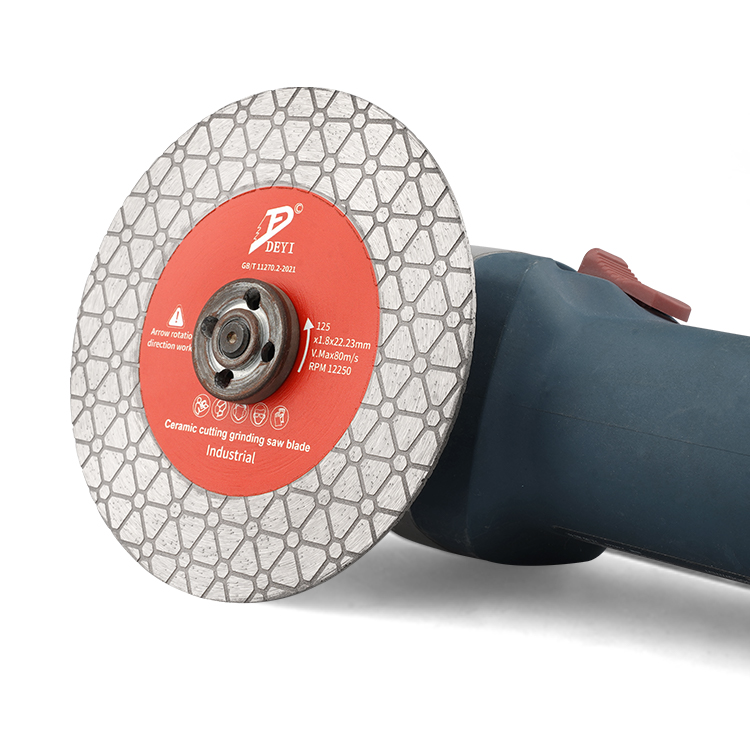
Environmental and Resource Challenges of Cobalt in Diamond Cutting Discs
Toxicity and Cost Issues of Cobalt in Cutting Tools
The role of cobalt as a binder material in diamond cutting discs has come under serious scrutiny lately, mainly because it's now listed as a carcinogen according to EU REACH guidelines from 2023 plus the fact that market prices keep going up. When workers handle these discs during grinding operations, they run real risk of breathing in harmful cobalt dust. This has forced many manufacturing facilities to install expensive air filtration systems just to protect their staff. We're talking about additional costs ranging between forty-five and ninety dollars for every square meter of workshop space. Looking back at recent trends, cobalt prices have shot up around 60% over the last five years according to the latest Metal Commodities Report from 2024. With all this pressure mounting, companies are scrambling to find reliable substitutes that won't put either workers or bottom lines in jeopardy.
Cobalt and Tungsten Scarcity in Hardmetal Tool Production
Dependence on cobalt and tungsten carbide creates serious problems for supply chains worldwide. About three quarters of all cobalt comes from areas where political stability is questionable at best. Meanwhile, extracting tungsten takes a lot of energy - around 125 kilowatt hours just to get one kilogram out of the ground. That's way more than what it takes to make synthetic diamonds, which only needs about 89 kWh per kilogram according to last year's Mining Sustainability Index report. Because of these issues with availability and environmental costs, many manufacturers across different sectors are now looking seriously at alternatives made from materials containing more than 90 percent recycled content. Some automotive parts makers have already started switching to these options as part of their sustainability initiatives.
| Material | Energy Use (kWh/kg) | Recycled Content Potential | Geopolitical Risk Index |
|---|---|---|---|
| Tungsten Carbide | 125 | 60% | 8.2/10 |
| Synthetic Diamond | 89 | 92% | 3.1/10 |
Life Cycle Assessment of WC-Co and PCD Tools: Energy and Resource Impact
PCD tools actually reduce energy consumption across their entire life cycle by around 34% when compared to traditional WC-Co alternatives. The main reason? They need much lower sintering temperatures - about 1,450 degrees Celsius versus the 2,200 needed for WC-Co. But there's a catch. Making PCD requires approximately 18% more raw diamond material, which has been a real headache for manufacturers. Fortunately, lab grown diamonds have come to the rescue here since they're just as hard as natural ones but far cheaper to work with. When it comes to recycling at the end of their useful lives, WC-Co still holds an edge with roughly 82% being recycled compared to only 68% for PCD. Still, new hydrometallurgical methods are starting to bridge this gap, improving how well we can recover valuable metals from these materials.
Metal-Based Cobalt Alternatives in Eco-Friendly Bond Matrices
Bronze, Copper, and Nickel as Alternative Metallic Binders
Using bronze, copper, and nickel alloys cuts down our reliance on cobalt by around 40 to 60 percent without sacrificing key mechanical traits like hardness levels ranging from about 6.5 to 8.0 on the Mohs scale, plus good thermal conductivity somewhere between 70 and 400 watts per meter Kelvin. When we control the porosity during the sintering process to keep it at two percent or below, these materials show wear resistance that stacks up pretty well against standard cobalt bonds. Some testing done on granite cutting showed copper-nickel matrices actually had about 15% better fracture toughness compared to those old cobalt based bonds according to research published in the Journal of Materials Engineering back in 2017. Plus there's this nice self lubricating effect which helps manage heat when doing dry cutting operations, making them quite practical for real world applications.
Iron-Nickel-Copper (FeNiCu) Green Bonds for Sustainable Sintering
FeNiCu bonds enable sintering at 850—950°C—significantly lower than the 1,200—1,400°C required for cobalt—achieving 98.5% theoretical density with 25% less energy. This reduction translates to 0.8 fewer tons of CO₂ emissions per 1,000 discs produced (Sustainable Materials and Technologies, 2022). The alloy system offers:
- 30% lower thermal expansion mismatch with diamond particles
- 20% cost savings over cobalt-tungsten matrices
- REACH-compliant composition with only 0.01% heavy metal leaching
Low-Cobalt Alloys: Nickel-Cobalt and Copper-Cobalt-Iron Formulations
Hybrid alloys containing â¸% cobalt balance performance and sustainability:
| Property | Ni-5Co-10Fe | Cu-6Co-4Sn | Traditional Co Bond |
|---|---|---|---|
| Density (g/cm³) | 7.8 | 8.2 | 8.9 |
| Sinter Temp (°C) | 920 | 890 | 1,250 |
| Bond Strength (MPa) | 410 | 380 | 450 |
Nickel-cobalt-iron formulations deliver 85% of pure cobalt’s bond strength and are compatible with standard hydrometallurgical recycling (Resources, Conservation & Recycling, 2021), serving as a transitional solution while fully cobalt-free options are developed.
Biobased and Non-Toxic Matrix Innovations for Cobalt-Free Diamond Discs
The push for cobalt alternatives in eco-friendly diamond cutting discs has accelerated innovation in biobased binders and non-toxic metal matrices. These materials eliminate cobalt’s environmental and health risks without compromising cutting precision.
Development of Biobased and Non-Toxic Metal Matrices in Abrasive Tools
Lignin and other plant based polymers are increasingly being used instead of synthetic resins for diamond tool matrices these days. They stick just as well but cut down on those nasty VOC emissions by about 73 percent according to the Materials Innovation Initiative from last year. When it comes to bio resin bonded discs, they still manage to keep around 98% of what traditional cobalt tools can do in terms of cutting power. Some manufacturers have started mixing iron nickel alloys with biopolymers too. This combination actually helps with heat management, something that regular organic binders struggled with when things got really hot during operation.
Compliance with REACH and RoHS: Driving Cobalt Reduction in Manufacturing
The EU's REACH regulations and RoHS rules are getting tougher, which is pushing companies to stop using cobalt in their products. According to a recent study from 2023, about 8 out of 10 European tool makers have switched to materials that comply with REACH standards just to dodge those extra charges for hazardous substances, which can cost around $580 per ton. Copper tin zinc alloys actually fit within the RoHS safety requirements and can be completely recycled too. This matters a lot since nearly two thirds of industrial purchasing managers care deeply about circular economy principles these days, according to the Sustainable Manufacturing Report released last year.
Key Achievements:
- 40% lower aquatic toxicity in biobased matrices vs. cobalt systems
- 100% REACH/RoHS compliance in third-party tested prototypes
- 12—15% cost reduction through avoided regulatory fees
This shift supports global sustainability goals while maintaining the performance standards demanded by industrial users.
Performance and Environmental Comparison of Cobalt vs. Cobalt-Free Bonds
Cutting Efficiency and Durability: Cobalt vs. Cobalt-Free Bond Performance
In granite processing, cobalt bonded diamond discs typically cut about 12 to maybe even 15 percent faster compared to those made with iron nickel copper blends, based on recent findings from the abrasive tech industry in 2023. But wait there's progress happening too. The newer versions of FeNiCu green bonds are getting pretty close to cobalt performance now, hitting around 92% of its wear resistance thanks to better sintering techniques developed over time. What makes these cobalt free options really interesting is their ability to hold up structurally when things get hot during operation, usually between 600 and 700 degrees Celsius. That kind of heat tolerance means they work well for tough jobs like cutting through porcelain tiles or reinforced concrete structures where standard tools would struggle.
Environmental Impact: PCD vs. WC-Co Tools in Industrial Machining
Studies from the 2024 Footwear Materials Report indicate that polycrystalline diamond (PCD) tools cut down on carbon emissions throughout their life cycle by around 40% when compared to traditional tungsten carbide-cobalt (WC-Co) options. Looking at energy consumption numbers gives us another perspective: WC-Co requires about 18.7 kilowatt hours per kilogram while PCD needs only 9.2 kWh/kg. This difference highlights serious environmental concerns related to mining operations heavy in cobalt, particularly in places such as the Democratic Republic of Congo where extraction practices have long been problematic. When companies switch to using cobalt free bonding materials instead, they manage to remove roughly 83% of those substances regulated under REACH standards. Such changes not only help meet requirements set forth by the European Union's Circular Economy Action Plan but also position manufacturers better within markets increasingly focused on sustainability across all sectors including construction tooling applications.
Recycling and Recovery of Critical Metals from Cobalt-Containing Tool Scrap
Recovery of Cobalt, Tungsten, and Precious Metals from Diamond Tool Waste
Today's recycling setups manage to pull out around 92 to almost 97 percent of cobalt along with tungsten carbide from those old diamond cutting tools. This process turns roughly 8 to maybe 12 tons worth of scrap each year into materials that can be used again according to what was published in the Circular Materials Report for 2023. To separate these valuable components, companies often rely on mechanical methods like eddy current separators and density based sorting systems which work pretty well at getting those cobalt bonded diamond parts away from their steel backing. The result? Metal purity levels hitting close to 99.5%. For specialty tools containing precious metals including various platinum group elements, electrostatic separation does the job with minimal losses, typically under 3% of the material going to waste during recovery.
| Recovery Method | Metal Recovery Rate | Energy Consumption | Output Purity |
|---|---|---|---|
| Mechanical Separation | 85—92% | 15—20 kWh/ton | 98—99.5% |
| Pyrometallurgical | 95—98% | 800—1,200 kWh/ton | 89—93% |
| Hydrometallurgical | 97—99% | 120—150 kWh/ton | 99.3—99.8% |
Hydrometallurgical Processing Techniques for Sustainable Metal Reclamation
The industry has started leaning toward hydrometallurgical approaches when it comes to recovering cobalt these days. These methods typically employ citrate based leaching solutions which actually manage to reduce chemical waste by about 40 percent compared with older acid leaching techniques. There was this new closed loop system rolled out back in 2023 that manages to pull out nearly all the cobalt from scrap tools at around 99.1% efficiency rate. And as if that wasn't good enough, it produces roughly three quarters less wastewater than conventional methods. When separating out cobalt along with tungsten and iron through selective precipitation processes, contamination levels stay extremely low at just 0.02 parts per million. This means we get really pure materials that can be put right back into making those alternative cobalt products used in environmentally friendly diamond cutting discs without compromising quality.
FAQ
Why is cobalt considered a hazardous material in diamond cutting discs?
Cobalt is considered hazardous due to its classification as a carcinogen by EU REACH guidelines. Handling these discs can result in breathing harmful cobalt dust.
What are some cobalt alternatives in diamond cutting tools?
Alternatives include bronze, copper, nickel alloys, and biobased binders, which reduce reliance on cobalt without compromising mechanical properties.
How do FeNiCu bonds contribute to sustainability?
FeNiCu bonds enable lower sintering temperatures, reduce CO2 emissions, and offer cost savings while maintaining mechanical performance standards.
Table of Contents
- Environmental and Resource Challenges of Cobalt in Diamond Cutting Discs
- Metal-Based Cobalt Alternatives in Eco-Friendly Bond Matrices
- Biobased and Non-Toxic Matrix Innovations for Cobalt-Free Diamond Discs
- Performance and Environmental Comparison of Cobalt vs. Cobalt-Free Bonds
- Recycling and Recovery of Critical Metals from Cobalt-Containing Tool Scrap