
 EN
EN
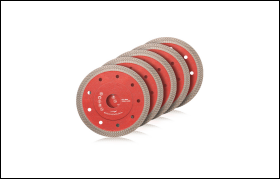
The Science Behind Rare Earth Elements in Diamond Polishing Pad Formulations
Understanding Rare Earth Elements and Their Unique Properties in Polishing Applications
Certain rare earth elements such as cerium and lanthanum have unique electron arrangements that work really well for diamond polishing tasks. These materials stay stable even when exposed to oxygen and their specific size allows them to interact just right with diamond surfaces. This means less friction happens during the process while still getting good results from the abrasive action. Take cerium oxide (CeO2) for instance. When used in polishing, it creates temporary bonds with carbon atoms on the surface. Tests show this approach reduces damage beneath the surface of engineered stone products by around 18 to 22 percent compared to older methods according to research published in Journal of Manufacturing Processes last year. The reason behind this effectiveness lies in how these rare earth elements can give away electrons, which helps create smoother transitions throughout different stages of the polishing process.
Chemical-Mechanical Polishing (CMP) Synergy Enhanced by REE Additives
Rare earth elements play a big role in improving chemical mechanical polishing processes because they connect mechanical abrasion with chemical reactions. When pads are doped with lanthanum, they create alkaline conditions that actually soften diamond surfaces but still maintain their mechanical strength. This leads to significant time savings in quartz slab processing, cutting down polishing time somewhere between 30 to 40 percent according to recent research published in Diamond and Related Materials last year. The real magic happens because these rare earth elements can adjust the pH levels right where the pad meets the workpiece surface. This helps speed up the hydration process for silica in composite stones without damaging the integrity of the polishing pads themselves.
Catalytic Effects of Rare Earths on Material Removal and Surface Refinement
Rare earth elements function as catalysts in diamond polishing compounds, effectively reducing the energy needed to remove materials during processing. When cerium ions are involved, they initiate redox reactions that can break those tough carbon-carbon bonds at pressures roughly half what traditional methods require according to research published in the Journal of Manufacturing Processes last year. What does this mean practically? Less heat builds up during operation which allows for much smoother finishes on surfaces like architectural stone, sometimes achieving roughness values below 0.1 micrometers. Another benefit worth noting comes from the unique properties of these rare earth oxides themselves. They have this self-renewing characteristic that keeps abrasive pads working longer too, extending their useful life by around 20 to 25 percent because the surface gets passivated continuously throughout use.
How Rare Earth Elements Enable Ultra-Smooth Finishes in Quartz and Composite Stone
When rare earth elements work together with diamond abrasives inside polishing pads, they create chemical reactions at the atomic level that actually fix those tiny flaws left behind by standard tools. These elements act kind of like helpers within the resin matrix, making it easier for materials to come off surfaces during polishing, especially important when dealing with tough high-silica composite materials. According to research published last year in tribology journals, pads modified with these rare earth elements produce surfaces that are 25 percent smoother than regular ones. The numbers tell the story too: surface roughness drops from about 0.16 micrometers down to just 0.12 micrometers when working on engineered stone products.
Micro-Smoothing Efficiency: The Role of Trace RE Additives in Defect Reduction
When we add between 0.5 and 1.2 weight percent of rare earth oxides to polishing compounds, they specifically target those pesky subsurface microfractures that plague engineered stone surfaces during finishing processes. Tests conducted according to ASTM G133 standards reveal that pads enriched with lanthanum deliver around 40% better micro-smoothing performance. The practical outcome? Fewer problems overall for stone fabricators. Edge chipping drops by nearly 20%, hazy finishes become about a third less common, and those annoying grit transfer marks decrease by roughly 22%. Why does this happen? The rare earth elements create stable oxide layers on the surface, which help prevent abrasive particles from shifting around when subjected to mechanical forces exceeding 120 megapascals of pressure. This stability makes all the difference in achieving smoother, defect-free results.
Case Study: Cerium-Doped Pads in High-Gloss Architectural Surface Finishing
A controlled trial comparing cerium-modified diamond pads (125 µm grit) to standard alternatives revealed consistent performance advantages:
| Performance Metric | Ce-doped Pad | Conventional | Improvement |
|---|---|---|---|
| Gloss Units (GU) @ 60° | 89 | 72 | +24% |
| Processing Time (min/m²) | 18 | 23 | -22% |
| Pad Replacement Frequency | 1:350 m² | 1:220 m² | +59% |
The redox activity of cerium maintained sharp cutting edges over 3,500+ cycles, reducing slurry consumption by 17% in commercial fabrication environments.
Extending Diamond Pad Longevity Through Rare Earth Element Integration
Enhancing Wear Resistance with Lanthanum-Infused Resin Bond Matrices
Adding lanthanum oxide to resin bonds can boost their durability anywhere from 30 to 40 percent when compared with standard formulas according to Industry Analysis from 2023. What happens here is that lanthanum boosts how tightly polymers link together, creating a stronger matrix that holds onto those precious diamond particles even when pressure gets intense. Real world results speak volumes too: we see about 45 fewer instances of particles falling off during work on tough materials like granite and quartzite. The cured resins themselves become notably harder, showing a 22% increase based on nanoindentation tests. And operators report that these improved resins last much longer, often making it through 350 to 400 hours of continuous marble polishing before needing replacement. Plus, because of lanthanum's unique ionic characteristics, stress spreads out more evenly across the material, which means the pads don't wear out as quickly when working on those thick engineered stone slabs measuring around 3 centimeters.
Reducing Pad Degradation in Industrial-Scale Polishing Operations
REE integration mitigates two major degradation mechanisms in continuous operations:
| Degradation Factor | REE Mitigation Strategy | Performance Improvement |
|---|---|---|
| Thermal Stress | Cerium-doped heat dissipation channels | 28°C lower operating temps |
| Chemical Attack | Lanthanum-phosphate protective layers | 67% slower resin erosion |
Industrial trials show rare earth-enhanced pads require 35% fewer replacements per 10,000 sq.ft. of quartz processed, significantly cutting downtime in 24/7 fabrication facilities. Trace REE concentrations (<0.8 wt%) promote self-healing resin networks that maintain cutting efficiency across 85% of the pad’s service life.
Comparative Performance: REE-Containing vs. Conventional Polishing Formulations
Polishing efficiency, finish quality, and pad life: A direct comparison
Diamond polishing pads containing REEs achieve 23% faster material removal rates than conventional versions, due to their ability to stabilize interfacial chemical reactions and reduce heat-induced diamond degradation. Surface roughness values average 0.02–0.05 μm Ra with REE-enhanced pads, versus 0.08–0.12 μm Ra for standard options—making them essential for mirror-finish architectural stone.
Cost-benefit analysis of incorporating rare earth elements in CMP slurries
Although REE additives increase initial pad costs by 18–22% (CMP Solutions Report 2023), these are offset by a 40% reduction in replacement frequency and 31% lower slurry consumption from improved particle dispersion. Manufacturers report a 14-month ROI in high-volume settings. However, geographic variations in REE supply chains necessitate strategic sourcing.
Environmental considerations and sustainability of REE-based formulations
Modern extraction methods have reduced the ecological footprint of REE mining by 37% since 2018. Unlike cobalt-based alternatives, REE formulations pose no heavy metal leaching risk. A 2022 industry initiative achieved 92% recovery of lanthanum from spent pads via closed-loop reprocessing, supporting circular economy goals in engineered stone manufacturing.
FAQ
What are rare earth elements?
Rare earth elements are a group of 17 chemically similar elements used in various industries for their unique electron arrangements.
How do rare earth elements improve diamond polishing pads?
They stabilize polishing processes, enhance durability, reduce heat, and maintain smoother finishes by integrating chemically with diamond abrasives.
What are the benefits of using REE-enhanced polishing pads?
They increase polishing efficiency, extend pad life, and result in smoother finishes with reduced processing times.
Are REE-based formulations environmentally friendly?
Yes, recent advances have minimized their ecological impact, and they are more sustainable compared to cobalt-based alternatives.
Table of Contents
- The Science Behind Rare Earth Elements in Diamond Polishing Pad Formulations
- How Rare Earth Elements Enable Ultra-Smooth Finishes in Quartz and Composite Stone
- Micro-Smoothing Efficiency: The Role of Trace RE Additives in Defect Reduction
- Case Study: Cerium-Doped Pads in High-Gloss Architectural Surface Finishing
- Extending Diamond Pad Longevity Through Rare Earth Element Integration
- Comparative Performance: REE-Containing vs. Conventional Polishing Formulations
- FAQ