
 EN
EN
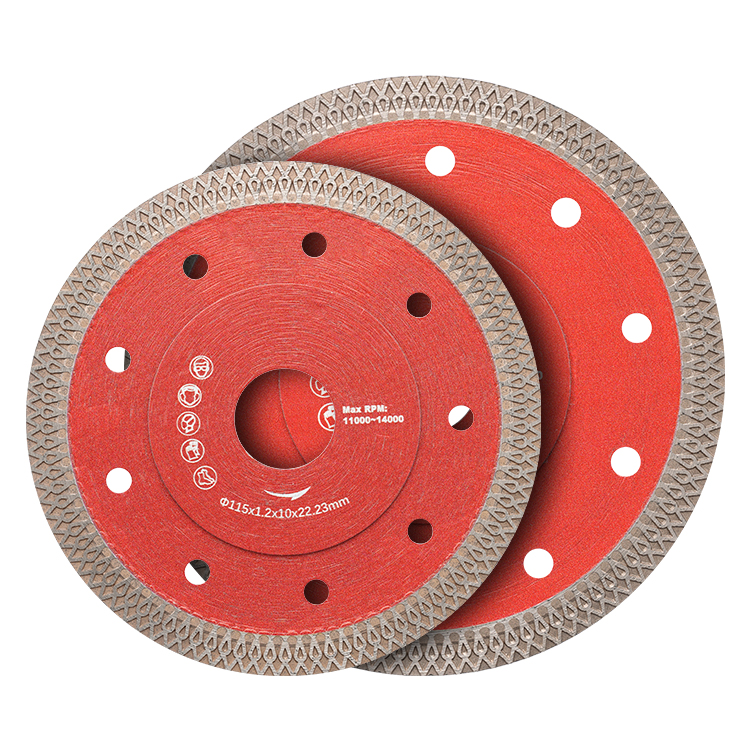
Understanding Diamond Concentration and Its Role in Blade Performance
Definition and Measurement of Diamond Concentration in Hot Pressed Blades
When talking about diamond concentration in hot pressed blades, we're basically looking at how densely packed those diamond particles are inside the metal bonding material. Most folks measure this either as a volume percentage (vol%) or sometimes even in carats per cubic centimeter. For granite work and other tough stone cutting jobs, the industry generally agrees on somewhere between 15% and 30% vol being ideal. Now when concentrations go up into that 25-30 vol% range, sure it gives more cutting points which is great, but there's a catch. The diamonds need to be spread out just right across the blade surface otherwise some areas will wear down faster than others, leading to all sorts of problems during cutting operations.
| Concentration (vol%) | Cutting Speed | Blade Life | Thermal Stress Risk |
|---|---|---|---|
| 15-20 | Moderate | Standard | Low |
| 20-25 | High | Extended | Moderate |
| 25-30 | Peak | Variable | High |
How Diamond Concentration Influences Cutting Efficiency and Wear Resistance
When there are more diamonds packed into the blade, the cutting gets better because there are simply more active points doing the work. However, if we go overboard with density, the bonding material starts struggling to hold onto those precious stones properly. Research shows that blades containing between 22 and 25 volume percent diamonds perform best when cutting through granite, and they tend to last about 30 percent longer compared to ones with fewer diamonds according to a study published in Materials Science Review back in 2023. Going beyond 28% concentration usually leads to problems where the bonds break too soon since there isn't enough metal surrounding each diamond particle to provide proper structural support during operation.
The Relationship Between Diamond Density and Thermal Stress During Cutting
When diamond density goes up, it creates more friction heat while cutting, which can boost thermal stress by around 50% when compared to blades with average concentrations. The result? Faster breakdown of the bonding material holding everything together and tiny cracks forming in the diamonds themselves. Research from last year's thermal imaging tests showed something interesting too. Blades packed with 30 volume percent diamond concentration hit dangerous temps about 40% quicker than their 20% counterparts. This means these high density blades just don't last as long before they start failing due to all that repeated heating and cooling.
Optimal Diamond Concentration for Maximizing Hot Pressed Blade Life
Performance Analysis of 15-25 Vol% Diamond Concentration in Granite and Hard Stone Cutting
Diamond blades containing between 15 to 25 volume percent concentration work best when cutting through granite and other tough stones. These blades cut about 23 percent faster than those with lower diamond content while still holding together structurally. Real world testing indicates they retain around 82% of their original sharpness even after cutting through 150 meters of granite. This happens because the diamonds stick out just enough from the blade surface and wear evenly across the cutting edge. The sweet spot for performance lies in having enough abrasive grit to do the job without packing too much into the bonding material. This balance helps prevent problems like thermal fatigue that can occur in high temperature cutting situations, making these blades reliable choices for professional stone cutting operations.
Diminishing Returns: Why Concentrations Above 30% Reduce Blade Longevity
When diamond concentration goes above 30 volume percent, things start going wrong pretty quickly. The friction gets worse and heat builds up a lot more than it should be. At 25%, we're looking at around 480 degrees Fahrenheit, but push it to 35% and temperatures jump to about 620 degrees. This extra heat really speeds up how fast the bonding material breaks down. A study published by Manufacturing Technology Insights last year showed something interesting too. Blades with 35% diamond concentration wore out segments 41% faster when cutting marble compared to those with just 25%. Why? Because there's simply not enough room between all those diamonds for them to work properly. Without proper spacing, the blade can't sharpen itself naturally anymore. Instead of clean cutting, it ends up grinding away with lots of friction, which isn't good for either efficiency or tool life.
Finding the Balance: Ideal Concentration Ranges for Different Industrial Applications
| Material Type | Recommended Concentration | Key Benefit |
|---|---|---|
| Soft Sandstone | 12-18 vol% | Minimizes material tear-out |
| Reinforced Concrete | 20-25 vol% | Balances abrasion resistance & speed |
| High-Quartzite Stone | 24-28 vol% | Maximizes edge retention |
For asphalt and recycled materials, a lower 10-15 vol% concentration prevents excessive matrix hardening, which accounts for 62% of blade failures in these applications (Advanced Materials Processing Journal, 2021).
Bond Matrix and Self-Sharpening Dynamics in Relation to Concentration
Interaction Between Bond Hardness and Diamond Retention at Varying Concentrations
How hard the bond matrix is plays a big role in keeping diamonds in place during operation. When we look at harder bonds in the Rockwell C 55 to 65 range, they stand up better against abrasion and work their best around 20 to 25 volume percent concentration. On the flip side, softer bonds between Rockwell C 30 and 45 let diamonds come out faster which makes them good for heavy duty cutting tasks. Medium hard bonds falling somewhere between Rockwell C 45 and 50 paired with about 22 to 24 volume percent actually cut down on diamond loss by roughly 13 percent when compared to systems where these parameters don't match up properly. This kind of matching improves tool life significantly.
Soft vs. Hard Bonds: How They Affect Exposure and Wear in High-Concentration Blades
When working with soft stone materials, blades featuring soft bond matrices tend to allow diamonds to protrude more quickly, which works well for those high concentration blades around 28 to 32 volume percent. But there's a tradeoff here too - these softer bonds actually reduce blade lifespan significantly, sometimes cutting it down by nearly half because they wear out so fast. On the flip side, when using harder bonds along with concentrations over 25 volume percent, the diamonds don't get exposed enough and end up dulling much sooner than expected. What do most operators do? They typically apply more pressure to try and maintain cutting efficiency, but this just speeds up the heat damage process across the entire blade surface.
Over-Concentration Risks: Poor Self-Sharpening and Matrix Clogging in Metal-Bond Systems
When blades go beyond about 35 volume percent concentration, they start experiencing serious problems with self-sharpening capabilities. What happens is that the matrix becomes too saturated, meaning there simply isn't enough bonding material left to allow for even wear patterns. As a result, roughly between sixty to eighty percent of those precious diamonds get trapped underneath the actual cutting surface instead of doing their job. This kind of clogging leads to significantly higher friction temperatures, sometimes spiking by as much as one hundred fifty to two hundred degrees Celsius. These extreme conditions then cause segments to warp and bonds to become brittle over time. Most manufacturers will tell anyone working with these tools that staying within the recommended range of eighteen to twenty eight volume percent for metal-bond systems makes all the difference when it comes to maintaining good chip clearance and avoiding thermal issues down the line.
Material and Manufacturing Factors That Modulate Concentration Effectiveness
Impact of Material Hardness and Abrasiveness on Optimal Diamond Concentration
The characteristics of different materials really affect what makes for the right diamond concentration. Take granite, which falls around Mohs hardness 6 to 7. For this stuff, most professionals find that concentrations between 18 and 22 volume percent work pretty well because it keeps things from breaking too easily while still resisting wear over time. When dealing with softer stones like sandstone that tend to be more abrasive, going up to 25-28 vol% helps maintain cutting power through the job. A study published in the International Journal of Refractory Materials back in 2023 showed something interesting about quartzite cutting. Blades operating at 24% concentration lasted nearly 38% longer than those running at 30%. Turns out having too many diamonds actually weakens the bond holding them in place, so there's a sweet spot manufacturers need to hit.
Importance of Uniform Diamond Distribution and Manufacturing Precision
Getting distribution accuracy within ±2% can extend blade life by around 60% in hot pressing applications because it reduces those pesky thermal stress points that shorten tool life. When the distribution isn't uniform, we end up with what some call dead spots in the matrix where diamonds bunch together instead of spreading evenly across the surface. This clustering causes premature wear and warping issues down the line. The newer electrostatic methods are really changing the game here, delivering about 95% consistent particle spread compared to old school mechanical mixing which only hits around 78% according to industry reports from last year. And let's not forget, anything over a 5% deviation starts cutting into service life pretty dramatically, often knocking it down by roughly 40% before major repairs become necessary.
Why High-Quality, Moderately Concentrated Blades Outperform Over-Saturated Low-Grade Alternatives
According to recent industry reports from 2024, diamond blades containing around 22 volume percent premium diamonds (with TI ratings of at least 120,000) last three times longer than their economy counterparts which typically have 30% diamond concentration and TI values below 80,000 when cutting through marble. Low quality blades that are too saturated tend to form tiny cracks in their matrix structure after just about 15 hours of operation because the bonding between materials isn't strong enough. On the flip side, blades with moderate diamond concentrations that use those chunkier 45/50 mesh diamonds actually stay sharp for roughly 40 percent more time compared to blades with either inconsistent diamond distribution or excessive concentrations.
FAQ
What is diamond concentration in hot pressed blades?
Diamond concentration refers to how densely packed the diamond particles are within the metal bonding material of a blade. It's typically measured as a volume percentage or in carats per cubic centimeter.
Why is the diamond concentration important for blade performance?
The diamond concentration affects the cutting efficiency, wear resistance, and lifespan of the blade. Higher concentrations provide more cutting points but can lead to uneven wear and thermal stress if not properly distributed.
What are the risks of over-saturating blades with high diamond concentration?
Over-saturating blades can lead to poor self-sharpening, matrix clogging, increased friction temperatures, and reduced blade longevity as the bonding material struggles to maintain structural support.