
 EN
EN
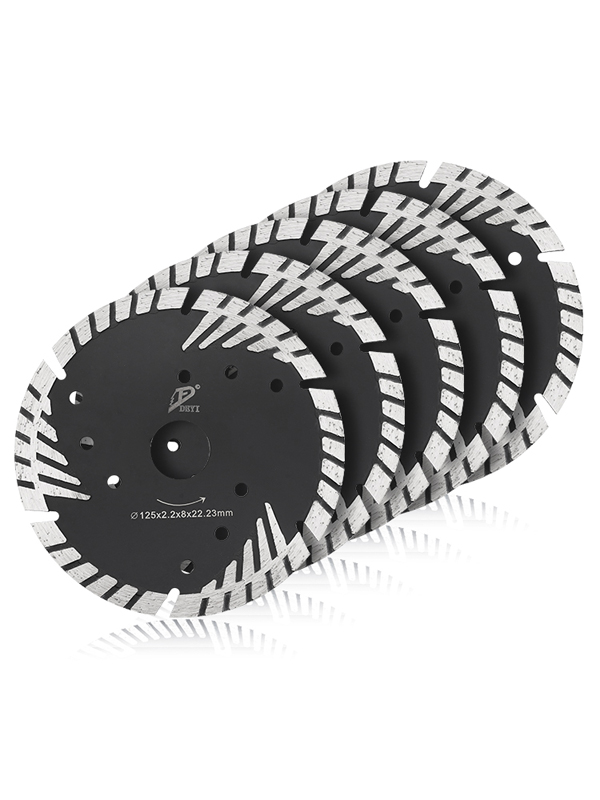
Understanding Vacuum Brazed Diamond Blade Segment Wear
What Defines Vacuum Brazed Diamond Blade Segment Wear
Vacuum brazed diamond blade segment wear occurs when diamond particles detach from their metallic binder due to thermal stress, mechanical friction, or bond degradation. This process is governed by three critical factors:
- Bonding quality between diamonds and matrix (minimum 40–60 MPa shear strength required)
- Operational heat generation (exceeding 650°C accelerates binder softening)
- Diamond particle protrusion geometry (ideal 30–40% exposure depth)
Industry studies (2024) show vacuum brazed segments wear 25% faster than sintered counterparts under identical loads but deliver 2.5x higher precision in hard-material applications.
Key Differences Between Vacuum Brazed and Other Diamond Bonding Techniques
Vacuum brazing forms direct metallurgical bonds at 2,200°F, unlike electroplated tools that mechanically encapsulate diamonds or sintered blades using powder metallurgy. These differences result in distinct performance characteristics:
| Property | Vacuum Brazed | Electroplated | Sintered |
|---|---|---|---|
| Bond Strength | 85–110 MPa | 30–50 MPa | 70–95 MPa |
| Peak Operating Temp | 620°C | 400°C | 750°C |
| Diamond Retention Rate | 82% | 68% | 91% |
This explains the unique wear behavior of vacuum brazed segments—22% faster flank wear but 40% slower corner rounding compared to sintered blades during granite cutting.
The Role of Diamond Particle Size in Wear Characteristics
Diamond grit size influences wear through cutting efficiency, heat management, and material compatibility:
- 40/50 mesh particles (0.3–0.4mm) exhibit 0.12mm/hr wear in concrete but perform poorly on glass-reinforced plastics
- 80/100 mesh (0.15–0.18mm) maintains ≤0.08mm/hr wear in composites at feed rates up to 35 m/min
- Microgrits (200+ mesh) show <0.03mm/hr wear in ceramic tiles but require double the coolant flow
A balanced 70/30 blend of 40/50 and 80/100 mesh reduces segment replacement frequency by 18%, according to abrasives industry benchmarks (2023).
How Diamond Concentration Affects Wear Rate
Higher diamond concentrations provide more cutting points, reducing initial wear. However, exceeding 35 ct/cm³ compromises bond integrity, leading to premature dislodgment. An optimal range of 25–30 ct/cm³ extends segment life by 16% by balancing cutting efficiency with matrix retention.
Binder Hardness and Its Influence on Segment Durability
Binder hardness, measured in Rockwell (HRC), governs diamond shedding and heat generation. Harder binders (HRC 40+) resist wear in abrasive materials like quartzite but delay diamond exposure, increasing cutting pressure demands. Softer binders (HRC 25–35) promote consistent protrusion in concrete, reducing heat buildup by 12–18% (International Journal of Refractory Metals, 2022).
Microstructure Integrity and Uneven Wear Patterns
Non-uniform diamond distribution creates localized stress points that accelerate wear. Clustered diamonds lead to 2.3x faster degradation due to uneven load sharing. Advanced sintering achieves ±5% dispersion consistency, eliminating “hot spots” responsible for 34% of early failures.
High Diamond Concentration vs. Optimal Dispersion: Balancing Performance
While high diamond loads enable aggressive cutting, controlled dispersion ensures longevity. Segments with 30 ct/cm³ and uniform spacing outperform 40 ct/cm³ clustered variants by 28% in granite, avoiding diamond-to-diamond collisions that fragment grains and reduce cutting efficiency.
Cutting Conditions and Operational Practices Influencing Wear
Wet vs. Dry Cutting: Impact on Blade Longevity
According to research from the International Journal of Advanced Manufacturing Technology published last year, wet cutting can actually make blades last about twice as long as when they're used dry. The reason? Coolant keeps things running at safe temps under 300 degrees Celsius. This matters because diamonds in these specialized blades start turning into graphite when it gets too hot, which wears them down fast. When operators skip the coolant and go dry instead, we see something pretty alarming happen. Diamond material starts disappearing at around 35% per hour simply because heat builds up unevenly on those precious bonds between the diamond and the tool. That kind of degradation adds up quickly in production environments.
Cutting Speed and RPM: Effects on Segment Life
Operating above 3,800 RPM generates over 9.2 Gs of centrifugal force, destabilizing the diamond-binder interface. For reinforced concrete, 2,500–3,200 RPM optimizes wear resistance, achieving 1.2 linear meters of cut per gram of diamond consumed (Abrasive Technology Review, 2024). Excessive speeds induce micro-cracks in the braze layer, while low RPM promotes glazing.
Applied Pressure and Feed Rate in Relation to Wear Rate
A feed rate of 15–25 cm/min with 8–12 kg downward pressure minimizes lateral stress on vacuum brazed segments. Deviations increase uneven wear by 40–70%, especially in C450-grade binder alloys. Maintaining a pressure-to-diamond-size ratio of 1.4:1 (kg:mesh) ensures stable particle retention and prevents binder phase separation.
Material Compatibility and Brazing Quality as Critical Wear Factors
How Base Material Being Cut Influences Vacuum Brazed Segment Wear
Material hardness and abrasiveness directly affect wear rates. Cutting ultra-hard ceramics generates three times more friction heat than reinforced concrete (Diamond Tooling Journal, 2023), accelerating diamond graphitization. Using asphalt-optimized blades on quartzite leads to mismatched wear patterns and matrix fractures.
Matching Blade Specifications to Application Requirements
Optimal diamond concentration (10–35% by volume) balances speed and heat resistance. Granite wet-cutting blades require harder binders (HRC 55–60), while limestone dry-cutting tools use HRC 45–50. Field data shows precise specification matching reduces segment replacements by 60% versus generic alternatives.
Brazing Process Quality and Bonding Integrity Defects
Inconsistent filler metal distribution during vacuum brazing creates weak zones prone to early diamond loss. Key parameters include:
| Brazing Factor | Optimal Range | Failure Risk Beyond Range |
|---|---|---|
| Temperature Uniformity | ±15°C | 32% bond porosity increase |
| Holding Time | 2–5 minutes | 50% shear strength loss |
Data Insight: 40% of Early Failures Linked to Poor Brazing Bonds
The International Brazing Society’s 2023 analysis revealed that 11.4% of segments fail within 50 cuts when voids exceed 5% of bond area. In contrast, those with sub-1% void ratios maintained efficiency beyond 300 cycles in abrasion testing.
FAQ Section
What is vacuum brazing and how does it affect the wear of diamond blade segments?
Vacuum brazing is a process that forms direct metallurgical bonds between the diamond particles and their metallic binder at high temperatures. It affects wear by providing stronger bond strength, making the segments wear faster under stress while delivering high precision.
What are the optimal operating conditions for vacuum brazed diamond blades?
To optimize wear resistance and prolong the life of vacuum brazed diamond blades, it is recommended to use them with coolant for wet cutting, maintain operating speeds between 2,500–3,200 RPM for reinforced concrete, and apply proper downward pressure consistent with the diamond size.
How does diamond particle size influence wear rates?
The size of diamond particles influences wear through cutting efficiency and heat management. Larger particles perform well in concrete, while microgrits are better suited for ceramic materials but require additional coolant for heat dispersion.
Table of Contents
- Understanding Vacuum Brazed Diamond Blade Segment Wear
- How Diamond Concentration Affects Wear Rate
- Binder Hardness and Its Influence on Segment Durability
- Microstructure Integrity and Uneven Wear Patterns
- High Diamond Concentration vs. Optimal Dispersion: Balancing Performance
- Cutting Conditions and Operational Practices Influencing Wear
- Material Compatibility and Brazing Quality as Critical Wear Factors