 EN
EN
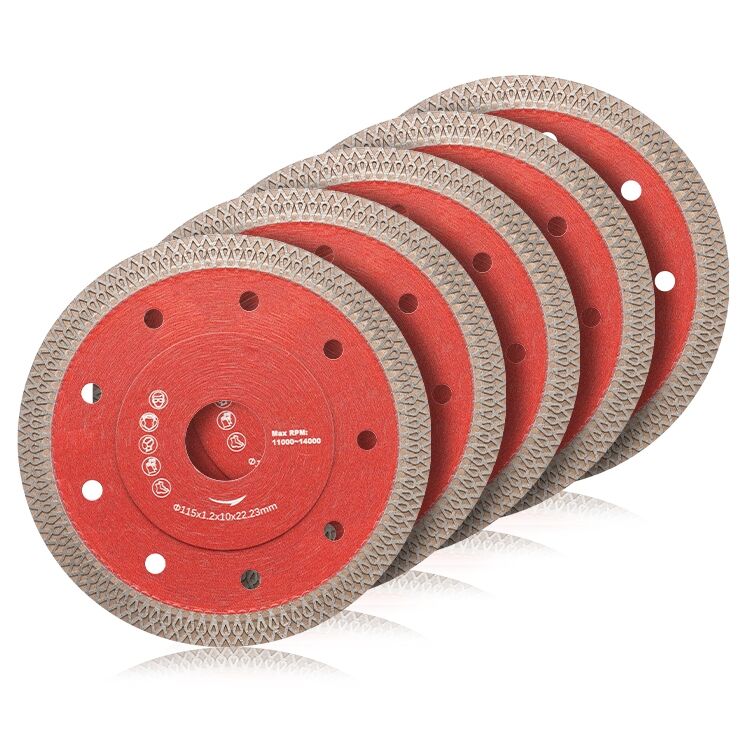
Understanding Electroplated Diamond Saw Blade KPIs
Defining Electroplated Diamond Blade Performance Metrics
When evaluating how well electroplated diamond blades perform, there are several important factors to consider. The main ones include cutting speed measured in sfpm, wear rates expressed as cubic millimeters per minute, surface finish quality rated in Ra microns, how consistently the blade cuts at depth, and most importantly, how well it retains diamonds during use. Recent findings from the abrasives sector in 2023 show that blades keeping at least 85% of their diamonds intact after working on hard ceramics for 50 hours can save around four thousand two hundred dollars each year on replacements alone. These performance indicators really affect day to day operations too. Blades showing just 0.15 mm of flank wear actually consume about 12% more energy according to Abrasive Technology Journal research published last year.
The Role of KPIs in Industrial Cutting Applications
When working on precision tasks such as semiconductor wafer dicing or optical glass processing, key performance indicators help determine which blades to use while maintaining both production speed and accuracy down to about plus or minus 2 micrometers. Take one aerospace company for instance they managed to boost their titanium composite machining speeds by around 22% simply by matching feed rates between 15 and 20 inches per second with how much wear the blades could handle before needing replacement. What makes these KPIs really valuable is their ability to predict problems ahead of time. If the cutting force goes above 40 Newtons per square millimeter, the blade life drops off dramatically, so this basically tells operators when it's time to swap out worn tools before quality issues start appearing.
How Electroplated Diamond Blade KPIs Differ from Sintered Alternatives
| Characteristic | Electroplated Blades | Sintered Blades |
|---|---|---|
| Diamond Layer | Single-layer, fully exposed grit | Multi-layer, matrix-embedded |
| Sharpness | Initial Ra 0.8–1.2 µm | Initial Ra 1.5–2.0 µm |
| Self-Sharpening | None (static edge) | Gradual matrix erosion |
| Lifespan | 60–80 linear ft in granite | 200–250 linear ft |
Electroplated blades deliver instant precision over longevity, making them ideal for brittle materials where chipping must remain below 0.5%. Their wear follows a linear progression, unlike the parabolic curve of sintered blades, enabling predictable performance until sudden failure occurs at less than 20% diamond retention.
Cutting Speed and Rate of Cut as Core Performance Indicators
Measuring Rate of Cut or Cutting Speed in SFPM (Surface Feet Per Minute)
Surface feet per minute (SFPM) measures how rapidly the blade's edge contacts the material. Optimal SFPM for electroplated diamond blades ranges between 4,500 and 12,000, depending on material hardness and blade diameter. Maintaining SFPM within manufacturer specifications improves material removal rates by 18–34% while reducing heat buildup (2023 abrasives industry study).
Influence of Peripheral Speed (SFPM) on Cutting Efficiency
Higher peripheral speeds reduce cycle times but elevate thermal stress from friction. For instance, cutting reinforced concrete at 9,500 SFPM achieves 22% faster throughput than at 6,500 SFPM, yet increases diamond grit fracturing by 40% in nickel-bonded blades. Effective coolant flow is essential to mitigate this effect and extend blade life.
Case Study: Optimizing Feed Rate and Depth of Cut to Maximize Cutting Speed
In precision stone cutting, adjusting the feed rate to 35–45 inches/minute and limiting depth of cut to 0.25” doubled effective cutting speed compared to aggressive 0.5” cuts. This approach reduced blade replacements by 55% over six months while meeting ANSI B7.1 surface finish standards.
Trade-offs Between High Cutting Speed and Blade Wear Rate
| Parameter | High Speed (10,000+ SFPM) | Moderate Speed (7,500 SFPM) |
|---|---|---|
| Material Removal Rate | 28 in²/min | 19 in²/min |
| Blade Life | 120–150 cuts | 220–260 cuts |
| Surface Finish | Ra 150–200 µin | Ra 90–120 µin |
High-speed operations favor productivity but require 2.3x more frequent blade changes. The optimal setting depends on context—high-traffic construction sites may prioritize speed, whereas fabrication shops often emphasize blade longevity.
Blade Life and Wear Rate of Electroplated Diamond Sawblades
Quantifying Tool Life in Electroplated Diamond Blades
When talking about how long blades last, we usually look at either how many hours they run or how many meters of material gets cut through. Electroplated blades have something going for them that other types don't though their ability to regenerate. The diamond coating on these blades can actually get replated when worn down, which means they tend to last around 40 to maybe even 60 percent longer based on what manufacturers report. And if we look at costs over a five-year period, this feature ends up making electroplated blades about a quarter cheaper than those one-time-use options out there according to data from Machining Trends Report 2024.
Wear Rate Under Different Material Hardness Conditions
Material hardness inversely affects wear rate in an exponential relationship. Blades cutting materials above 40 HRC experience 2.3– faster wear than those processing sub-30 HRC composites. Representative averages include:
| Material Type | Hardness (HRC) | Wear Rate (mm³/hour) |
|---|---|---|
| Reinforced Concrete | 35–42 | 18.7 |
| Carbon-Fiber Polymers | 22–28 | 9.3 |
| Granite | 45–55 | 26.4 |
Harder substrates accelerate diamond dislodgement, necessitating more frequent inspection and maintenance.
Controversy Analysis: When Extended Blade Life Compromises Cut Quality
A 2023 study revealed a critical trade-off: blades operating beyond 75% of rated lifespan showed 15% degradation in cut precision despite remaining functional. Worn diamonds create wider kerfs due to micro-fracturing, compromising dimensional accuracy. As a result, manufacturers now recommend replacing blades at 80% of maximum lifespan for high-tolerance applications.
Experimental Evaluation of Sawblade Efficiency Over Lifespan
Controlled tests show electroplated blades maintain 85% of initial efficiency through 80% of their service life, followed by a sharp 25% performance drop in the final 20%. This nonlinear decline supports predictive maintenance models over fixed time-based schedules, improving both quality and cost control.
Diamond Characteristics and Their Impact on Performance Metrics
Effect of Diamond Particle Size on Cutting Efficiency and Surface Finish Quality
The size of grit plays a big role in how fast something cuts and what kind of finish it leaves behind. When working with granite, bigger grit particles ranging from 40 to 60 mesh can actually make the cutting process about 18 to maybe even 22 percent faster. But there's a tradeoff here because these larger grits tend to leave surfaces much rougher than when using the finer 80 to 100 mesh options, sometimes making them around 30 to 40 percent rougher according to some tests. On the flip side, those really small diamond grits between 150 and 200 mesh work wonders for getting that mirror-like finish on materials like glass and ceramics. However, this comes at a cost since cutting speeds drop somewhere between 15 and 20 percent as reported in Abrasive Technology Review last year. Getting the right grit size matched to what needs to be cut makes all the difference. For softer stuff like concrete, going with coarser grit works best while delicate composite materials require those finer grits to avoid damage during the cutting process.
Role of Diamond Concentration in Electroplated Diamond Blade Performance Evaluation
The amount of diamonds packed into a blade, usually expressed as carats per cubic centimeter, creates a tricky balance between cutting power and how long the tool lasts. When blades have around 25 to 35 carats per square centimeter, they slice through marble about 45 percent quicker compared to those with fewer diamonds. But there's a trade-off here too these high concentration blades tend to wear out their bonding material about 20 percent faster. Going beyond 40 carats per cm³ actually makes things worse, cutting down overall efficiency by roughly a quarter because the diamonds can't stick out enough to do their job properly. Finding the right mix really depends on what kind of bonding material we're working with. For softer matrix materials, manufacturers typically dial back the diamond concentration by somewhere between 10 and 15 percent just to keep chips from getting stuck and messing up the cut quality.
Balancing Diamond Quality and Cost in High-Performance Blades
Synthetic diamonds rated at VS-grade clarity can boost blade longevity anywhere from 35 to 50 percent when cutting through quartzite compared to standard industrial grade options. But there's a catch they push production expenses up around 65 percent according to the latest Tooling Materials Report for 2023. Looking at the math makes it clear these top-tier blades only start making financial sense once someone reaches about 12,000 linear feet of cutting work. Anything less than that and mid-grade diamonds actually deliver better returns on investment. What about coatings? Well nickel plating helps diamonds withstand higher temperatures roughly 40 degrees Celsius more than uncoated ones. Titanium coatings meanwhile tack on another 8 to 12 percent to manufacturing costs but rarely justify the extra spend since most real world applications don't see significant performance improvements worth paying for.
This systematic evaluation enables operators to optimize electroplated blade KPIs across diverse materials and budget constraints.
Bond Hardness, Bond Type, and Operational Optimization
How Bond Hardness Influences Wear Resistance and Diamond Retention
The hardness of the bond affects how long diamonds stay attached to tools and their ability to resist wearing down during use. When working with softer materials such as concrete, harder bonds on the R-T scale tend to hold onto diamonds much better according to field tests we've seen. Some reports indicate these can last around 30 percent longer before needing replacement. For tougher jobs involving things like ceramic tiles or granite countertops though, operators usually go with the softer J-L scale bonds. These allow for controlled wear that actually helps expose new cutting surfaces as the tool works through material. While they do wear away about 15 to 20 percent quicker than harder options, this controlled erosion keeps the cutting edge sharp and effective for longer periods between sharpening or replacing segments.
Nickel vs. Composite Electroplated Bonds: Impact on Blade Performance
Most people reach for nickel bonded blades for everyday cutting jobs because they resist rust and hold up well structurally. When working with tricky materials that tend to crack or splinter, like glass or carbon fiber composites, blades made with composite bonds containing either cobalt or copper perform much better. These special blades can flex around those hard to cut surfaces, giving anywhere from 25 to 40 percent more give than standard options. Some recent testing back in 2024 showed something interesting too. The same tests revealed that these composite blades actually cut with less damage to edges, about 18 percent less chipping overall compared to regular nickel blades when tackling those fragile materials.
The Self-Sharpening Paradox: Softer Bonds Outperforming in Hard Materials
Softer bonds outperform harder ones in challenging materials due to a self-sharpening mechanism. When cutting quartz or hardened steel, soft matrices erode at 0.03–0.05 mm/hr, continuously exposing new, sharp diamond edges. This process increases cutting speeds by 12–15 sfpm, even though it requires 20% more frequent blade changes.
Optimizing Depth of Cut, Feed Rate, and Material Compatibility for Peak KPIs
| Parameter | Concrete (30-40 MPa) | Granite (120-150 MPa) | Carbon Fiber |
|---|---|---|---|
| Depth of Cut | ≤40 mm | ≤15 mm | ≤5 mm |
| Feed Rate | 8-12 in/min | 3-5 in/min | 18-24 in/min |
| Bond Hardness | Medium-Hard (P-Q) | Soft (J-K) | Composite |
Matching these parameters to material and bond type extends blade life by 35–50% while maintaining surface finishes under 25 µin Ra. Excessive feed rates in hard materials increase diamond fracture rates by 60%, undermining even well-designed bond systems.
Frequently Asked Questions
What are electroplated diamond saw blades?
Electroplated diamond saw blades are cutting tools that feature a single layer of diamond grit bonded to the blade surface, offering precision in cutting hard, brittle materials.
How do performance metrics affect the use of electroplated diamond blades?
Performance metrics such as cutting speed, wear rate, and surface finish quality help determine the best use scenarios for electroplated diamond blades, optimizing production speed and efficiency.
Why do electroplated diamond blades wear differently compared to sintered blades?
Electroplated blades wear linearly, providing predictable performance until sudden failure. In contrast, sintered blades wear along a parabolic curve, offering longer lifespan but less immediate precision.
What is the impact of diamond size and concentration on blade performance?
The size and concentration of diamonds affect cutting efficiency and the quality of the surface finish. Larger diamonds cut faster but leave a rougher finish, while higher concentrations provide quicker cuts but faster wear.
How can blade life be optimized while maintaining cut quality?
Operators can optimize blade life by matching bond hardness, feed rates, and material compatibility, ensuring efficient use without compromising cut quality.
Table of Contents
- Understanding Electroplated Diamond Saw Blade KPIs
- Cutting Speed and Rate of Cut as Core Performance Indicators
- Blade Life and Wear Rate of Electroplated Diamond Sawblades
- Diamond Characteristics and Their Impact on Performance Metrics
- Bond Hardness, Bond Type, and Operational Optimization
-
Frequently Asked Questions
- What are electroplated diamond saw blades?
- How do performance metrics affect the use of electroplated diamond blades?
- Why do electroplated diamond blades wear differently compared to sintered blades?
- What is the impact of diamond size and concentration on blade performance?
- How can blade life be optimized while maintaining cut quality?