
 EN
EN
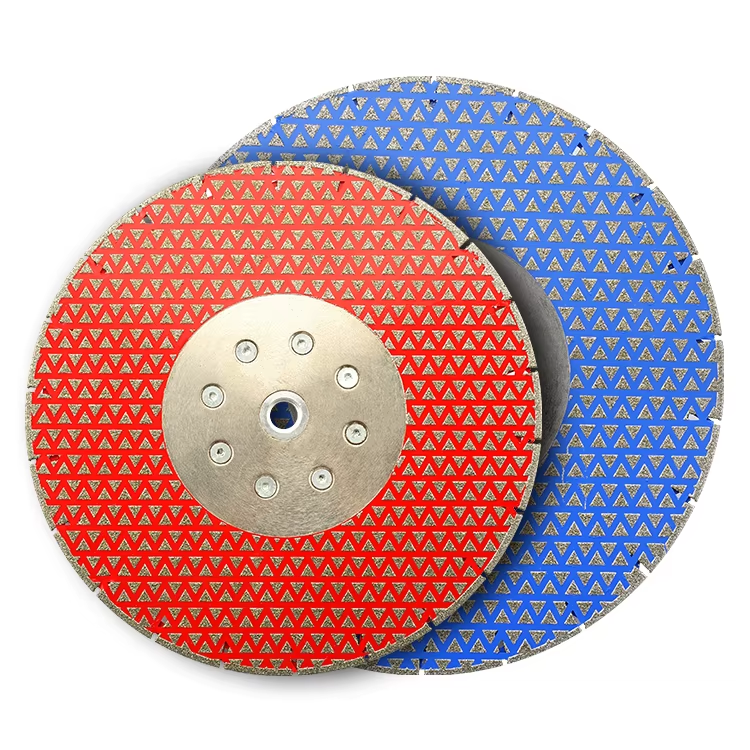
Foundations of Wear Simulation for Diamond Polishing Pads
Getting good simulations going really depends on picking the right kind of model first. Physics based wear models basically recreate things that happen at a microscopic level, stuff like when tiny bits of material break off (grain fracture) or bonds between particles start wearing away (bond erosion). These kinds of models give researchers detailed looks inside how diamond polishing pads actually work when they're smoothing out those porcelain tiles. They can show exactly where stresses build up in both the diamonds themselves and the surrounding bonding material. But there's a catch - running these simulations takes serious computing power and time. On the flip side, empirical models take a different route. Instead of all that complicated math, they look back at old test results from lab experiments and find patterns between what gets put into the system versus what comes out in terms of wear rates. This lets engineers tweak their designs quicker since they don't have to wait for lengthy calculations. Physics models definitely shine when dealing with completely new types of tiles nobody has seen before, but empirical ones tend to fall flat once we step outside the exact conditions they were originally tested under.
Key Input Parameters: Diamond Grain Geometry, Bond Matrix Properties, and Tile Hardness Profiles
Three parameters critically shape wear simulation fidelity in ceramic polishing R&D:
- Diamond grain geometry (size, shape, protrusion height) dictates localized stress concentrations
- Bond matrix properties (elastic modulus, toughness) determine retention strength against abrasive forces
- Tile hardness profiles, measured via micro-indentation mapping, reveal phase-specific abrasion resistance
Models incorporating these inputs achieve ±15% accuracy in predicting material removal rates. Tile hardness variability—particularly from quartz/mullite inclusions—can alter simulated wear depths by over 30%, underscoring the need for microstructure-aware boundary conditions.
Modeling Porcelain Tile Microstructure to Inform Wear Simulation Accuracy
Phase-Specific Abrasion Resistance: Linking Quartz/Mullite/Glass Distribution to Simulated Wear Depth
Porcelain tile microstructure directly dictates wear simulation accuracy through its heterogeneous composition. Quartz phases exhibit 20–30% higher abrasion resistance than the surrounding glass matrix, creating localized stress concentrations during polishing. Advanced wear simulation incorporates phase distribution maps to predict:
- Differential material removal rates at quartz/glass interfaces
- Fracture propagation patterns in diamond grains near mullite clusters
- Depth prediction errors exceeding 15% when ignoring phase boundaries
This phase-aware approach reduces pad wear miscalculations by correlating mineral dispersion with simulated depth deviations.
Hardness Heterogeneity Mapping as a Boundary Condition in Wear Simulation
Microhardness variations within porcelain tiles—ranging from 5–7 Mohs—serve as critical boundary conditions in wear simulation. Quartz clusters elevate localized hardness by 1.5–2 Mohs units compared to feldspathic regions, accelerating diamond grain microfracture. By integrating:
- Micro-indentation hardness grids
- Phase-specific elastic modulus data
- Thermal expansion differentials
Simulations achieve ≈12% error in predicting pad degradation hotspots. This granular mapping prevents under- or overestimation of bond matrix fatigue in diamond polishing pads.
Validating Wear Simulation with Tribological Testing Protocols
Accelerated Wear Testing Under Reproducible Load, Speed, and Coolant Conditions
Tribology testing methods that speed things up help check if our wear simulation models are actually working right when we run them in labs. When researchers set up tests with reproducible conditions like contact pressures ranging from about 5 to 30 psi, rotational speeds between 100 and 300 rpm, plus coolant flowing at around half a liter to two liters per minute, they create pretty standard scenarios for studying abrasion. Monitoring these parameters so closely allows us to see how well our simulations match what really happens when diamond polishing pads work on porcelain tiles. According to industry studies, this kind of controlled testing cuts down on the time needed for validation by somewhere between 40% and 60%, which is quite a difference compared to doing all the testing out in real world situations.
Correlating Simulated Grain Fracture Patterns with Post-Test SEM Analysis
Post-validation Scanning Electron Microscopy (SEM) provides critical verification of wear simulation accuracy. Researchers analyze real-world diamond grain fracture modes—comparing cleavage planes, micro-fracture networks, and bond matrix detachment against predicted patterns. Key focus areas include:
- Grain pull-out depth matching tile hardness heterogeneity maps
- Edge chipping geometries versus simulated stress concentrations
- Fracture propagation paths relative to crystallographic orientations
Labs achieving >85% correlation between simulation outputs and SEM observations do so when tile microstructure variables are properly parameterized—strengthening R&D confidence in predictive models.
Translating Wear Simulation Insights into Pad Design Optimization
When it comes to diamond polishing pads used for porcelain tiles, wear simulation takes all that raw data and turns it into real-world design changes that actually work. Engineers look at how stress spreads across the pad surface and then figure out where to strengthen those parts that wear down fastest. They do this by adjusting where the diamonds are placed and changing the mix of materials in the bonding matrix. The result? Better material removal rates without so many diamonds breaking too soon. These simulation based tweaks make a difference too. For instance, changing how dense the segments are around the edges can extend the useful life of these pads anywhere from 18 to 22 percent when tested under accelerated conditions against older methods. What's more, once these models are proven, they let manufacturers quickly test different shapes for coolant channels, keeping temperatures stable throughout long polishing sessions. And here's what really matters: this whole process connects lab testing with actual products coming off the assembly line. Companies report cutting down on prototype builds by about 40%, yet still meeting those tight specifications needed for top quality tile finishes.
FAQ Section
Why are physics-based wear models important in diamond polishing pads?
Physics-based wear models provide a detailed insight into the microscopic processes such as grain fracture and bond erosion, which helps in understanding stress points in diamond polishing pads.
What is the advantage of using empirical models in wear simulation?
Empirical models are beneficial for quickly adjusting designs based on past lab experiment data, as they eliminate the need for time-consuming calculations inherent in physics-based models.
How does porcelain tile microstructure impact wear simulation accuracy?
The heterogeneous composition of porcelain tiles, with varying abrasion resistance in different phases like quartz, significantly affects wear simulation accuracy, influencing stress concentrations and material removal rates.
What role does tribological testing play in validating wear simulations?
Tribological testing helps validate wear simulation models by recreating standardized conditions in the lab to match simulated parameters against real-world results, significantly reducing validation time.