
 EN
EN
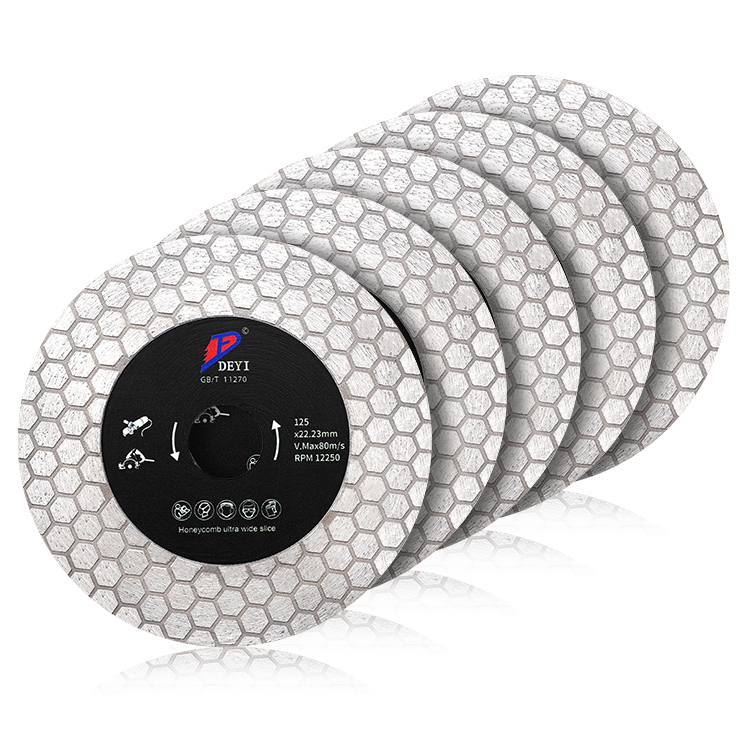
Fundamentals of Vacuum Brazed Diamond Saw Blade Segment Technology
The vacuum brazed diamond saw blade segment marks a significant advancement in cutting tool technology, blending modern metalworking techniques with strategically placed diamonds for optimal performance. Traditional sintering approaches simply don't compare since vacuum brazing involves heating in specialized furnaces around 1000 to 1200 degrees Celsius. During this process, diamonds actually form chemical bonds with the steel base material using special alloys that include elements like nickel, chromium and sometimes titanium as well. According to research published in the Journal of Manufacturing Processes back in 2023, these bonds reach strength levels above 400 megapascals. That means most blades retain about 85 to 90 percent of their diamonds even under intense cutting conditions where other blades would lose significant portions over time.
How Vacuum Brazing Enhances Interfacial Bonding in Diamond Tools
Working in a vacuum stops oxidation from happening and lets those alloy components actually bond with the diamond surface through carbide formation. According to some recent studies published in Materials Science Forum back in 2024, these brazed connections hold up really well, keeping around 92% of their original strength even after running non-stop for 120 hours during granite cutting operations. What makes this so valuable is that the metal bonds prevent diamonds from falling out too early, which is exactly what happens with those electroplated options most people complain about. Plus, there's better control over how much the diamonds stick out, leading to more predictable results when removing material consistently across different applications.
Key Advantages of Vacuum Brazed Segments in Precision Cutting Applications
- 2–3X longer tool life compared to sintered segments in marble processing (PCE Instruments 2023 field tests)
- ±0.1 mm cutting accuracy in critical applications like semiconductor wafer dicing
- 50% reduction in thermal damage to workpiece surfaces through optimized heat dissipation
The technology's single-layer diamond arrangement enables 92% material utilization versus 60–70% in multi-layer electroplated tools, making it ideal for aerospace composites and advanced ceramics machining.
Optimal Diamond Concentration for Maximum Cutting Efficiency
Defining Diamond Concentration in Vacuum Brazed Blade Design
The diamond concentration found in vacuum brazed saw blade segments basically means how densely packed those diamond particles are inside the metal matrix. Industry folks typically measure this in carats per cubic centimeter. For reference, when we talk about 100% concentration, that's around 4.4 ct/cm³ according to standard practices. If it drops down to 3.3 ct/cm³, we're looking at about 75% density instead. What makes this measurement interesting is that it actually covers two aspects: weight distribution and space taken up. To put numbers on it, 4.4 carats equals roughly 0.88 grams worth of diamonds. And when talking about space, full concentration means diamonds take up about a quarter of the whole segment volume. Pretty neat how all these factors tie together in practice.
Research-Based Ranges for Ideal Diamond Density in High-Performance Blades
Studies reveal distinct concentration ranges optimize performance across materials:
| Concentration Range | Material Hardness | Performance Outcome |
|---|---|---|
| 30–40% (1.3–1.8 ct/cm³) | Granite, Quartz | Extended tool life, smoother finish |
| 15–25% (0.7–1.1 ct/cm³) | Concrete, Asphalt | Faster cutting, reduced heat buildup |
Higher densities provide more cutting points for wear resistance in hard materials, while lower concentrations allow efficient debris clearance in abrasive applications.
Balancing Tool Life and Cutting Speed Through Concentration Optimization
Getting maximum performance out of diamond tools means finding the right balance between how densely packed the diamonds are and what the job actually needs. When there's too much concentration, say 40% or higher, the tool wears down faster because all those diamonds are working at once and generating extra heat. On the flip side, if the density drops below about 20%, segments tend to wear away sooner even though cutting happens faster initially. Real world testing has demonstrated something interesting though. Blades tailored specifically for certain materials can boost productivity by around 12 to 18 percent compared to standard blades designed for everything under the sun. This makes sense since different materials respond differently to diamond interactions.
Orderly Diamond Arrangement: Advancing Beyond Random Distribution
Limitations of Conventional Random Diamond Placement
The old way of randomly distributing diamonds across saw blade segments just doesn't work well enough for consistent cutting results. According to recent research from the 2023 abrasive tools industry report, about 58% of all blade failures come down to this problem with how abrasive particles are spread out. When diamonds cluster together, they wear through the bonding material much faster than normal. And those empty spots where there aren't enough diamonds? They actually cut materials at only around 60% efficiency compared to properly distributed blades. What's worse, these irregular patterns create hotspots that can reach temperatures over 800 degrees Celsius in certain areas of the blade. This intense localized heating speeds up the process where diamonds turn into graphite, which nobody wants when trying to get good cutting performance out of their equipment.
Principles and Benefits of Orderly Diamond Arrangement Technology
Precision-engineered diamond patterns in vacuum brazed diamond saw blade segments enable:
- ±5% cutting force variation (vs. ±32% in random layouts)
- 15–25% longer tool lifespan through optimized load distribution
- 0.03mm cutting accuracy in granite processing applications
A 2024 diamond tool optimization report confirms structured layouts reduce thermal stress fractures by 47% compared to conventional methods.
Laser Positioning and Automation Techniques for Precision Diamond Layout
Modern laser-guided systems achieve 2¼m placement accuracy using:
| Technology | Capability | Impact |
|---|---|---|
| Computer Vision Mapping | Real-time diamond position tracking | 99.8% particle detection rate |
| Robotic Micro-Arm | 0.5mm diameter diamond manipulation | 3x faster layout creation |
This automation enables custom diamond density gradients (25–45 carats/cm³) along blade segments, crucial for cutting reinforced concrete where impact forces vary across the blade profile.
Real-World Applications in Wire Saws, Cutter Heads, and Gang Saws
Structured diamond arrangements now power:
- Tunnel boring machines requiring 200+ hour continuous operation
- Multi-wire granite cutting systems achieving 1.2m³/hr production rates
- 1200mm gang saws maintaining ±0.5mm thickness tolerance over 8-hour shifts
These advancements improve process stability and reduce consumable waste in high-throughput environments.
Interfacial Bonding and Wear Management in Diamond Tool Performance
Wear Mechanisms of Diamond Grains Under High-Stress Cutting Conditions
Diamond grains in vacuum brazed diamond saw blade segments experience micro-fracture and graphitization when cutting speeds exceed 30 m/s, generating localized temperatures above 700°C (Springer 2022). This thermal-mechanical stress accelerates attrition wear, reducing tool lifespan by up to 40% in granite cutting applications compared to low-speed operations.
Strengthening Diamond-Matrix Bonding Using Active Filler Alloys
Recent advances employ nickel-chromium filler alloys with 3–5% titanium to create chemical bonds between diamonds and steel matrices. These alloys reduce interfacial porosity by 62% while maintaining diamond integrity at 850°C brazing temperatures. The optimized matrix achieves 18% higher pull-out resistance in concrete drilling tests compared to conventional silver-based bonds.
Managing the Trade-Off Between Bond Strength and Thermal Damage to Diamonds
When working with different materials, engineers need to find the right mix between bond hardness, typically around HRB 85 to 100, and how much of the diamond is exposed, usually between 0.15 and 0.3 millimeters. This helps maintain good cutting performance overall. Marble cutting blades generally use softer bonds at around HRB 75 with about 25% diamond content because this setup allows them to stay sharp longer through the cutting process. On the other hand, asphalt cutting needs harder bonds at HRB 95 to stop the diamonds from wearing away too quickly. Getting these details right makes a big difference. The careful adjustment actually triples the lifespan of blade segments when dealing with all sorts of materials during demolition projects.
Key Principle: Effective wear management in vacuum brazed diamond saw blade segments requires synchronized control of interfacial chemistry, thermal thresholds, and mechanical exposure—a trifecta ensuring consistent performance across abrasive workloads.
FAQ
What is a vacuum brazed diamond saw blade?
A vacuum brazed diamond saw blade is an advanced cutting tool that uses modern metalworking techniques to bond diamonds to a metal base, significantly enhancing cutting performance and durability.
How does vacuum brazing improve diamond tool performance?
Vacuum brazing enhances diamond tool performance by forming strong chemical bonds between the diamond and metal base, preventing early diamond loss and offering better control over diamond protrusion for consistent material removal.
What are the key advantages of vacuum brazed segments?
Key advantages include longer tool life, high cutting accuracy, reduced thermal damage, and improved material utilization, making them ideal for various high-performance applications.
What is the optimal diamond concentration for vacuum brazed blade design?
Optimal diamond concentrations vary but generally range from 15% to 40% depending on material hardness, balancing tool life, cutting speed, and debris clearance.
How does orderly diamond arrangement benefit cutting applications?
Orderly diamond arrangement reduces thermal stress, increases cutting accuracy, and extends tool lifespan by optimizing diamond distribution and load distribution during cutting.