
 EN
EN
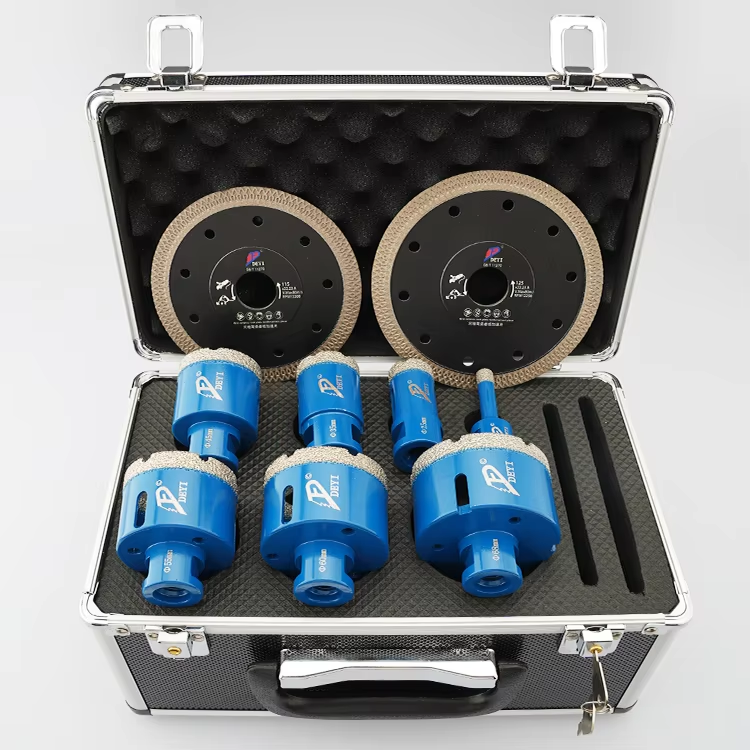
How Batch-to-Batch Consistency Ensures Raw Material Quality in Diamond Drill Bits
Phenomenon: Performance variability in diamond drill bits due to inconsistent raw materials
When there are small changes in the chemical makeup or purity from one batch of materials to another, diamond drill bits start acting unpredictably. The size of tungsten carbide grains matters too. If these vary even slightly between 1 and 5 micrometers, it affects how well they resist breaking apart, which means the wear on the tool isn't consistent when working. According to industry research, tools made from inconsistent batches tend to last about 30% less time when drilling into concrete. Another issue comes from the way diamonds are distributed throughout the material. When raw materials aren't uniform, this leads to all sorts of problems with how fast the drill goes through surfaces and creates holes that don't meet specifications. This is especially frustrating for anyone doing precise construction work. Testing facilities have found something else interesting: around 18% of batches that don't meet quality standards end up failing much sooner than expected during regular use.
Principle: The impact of material properties–hardness, density, chemical composition–on drilling performance
The performance of diamond drilling depends heavily on how well we control different material properties such as hardness levels, density characteristics, and overall chemical makeup. When it comes to density specifically, this factor plays a big role in how heat gets dispersed. If there are inconsistencies in the way materials get sintered together, we end up with these annoying thermal hot spots that actually speed up diamond wear over time. We've seen cases where differences in hardness measurements beyond about 50 Vickers points can seriously impact how tough the material is against fractures. And don't even get me started on those tiny changes in cobalt binder content. Even small variations above plus or minus half a percent start to compromise the structural integrity holding all those diamond particles together. What's really interesting though is what happens when trace amounts of impurities sneak in. Just think about sulfur or phosphorus contamination at concentrations as low as 0.01%. These minute impurities throw off the whole sintering process, creating microscopic flaws that eventually lead to cracking under stress conditions. Most experienced manufacturers understand this connection between consistent materials and reliable drilling results, which is why they implement statistical process controls right from the beginning stages of powder metallurgy production.
The Effect of Raw Material Inconsistency on Drill Bit Lifespan and Performance Reliability
Reduced drill life, poor surface finish, and compromised tolerances from material variability
When raw materials aren't consistent, diamond drill bits don't last nearly as long and their performance drops off fast. We've seen carbide hardness vary around 5% from one batch to another, which can boost cutter wear anywhere from 30% to maybe even 50% when working through really abrasive rock formations. The binder content is another problem area that fluctuates quite a bit too. These changes create tiny cracks that get worse over time as drilling continues. What happens next? Surface finishes suffer badly, often going past those 12.5 micrometer Ra standards, and dimensions start drifting out of spec by more than 0.2 millimeters. For mid sized drilling operations, all this inconsistency means replacing equipment way too soon. Contractors in the field tell us they're spending roughly seven hundred forty thousand dollars every year just because of material variations according to Ponemon's latest research. Maintaining consistent diamond concentrations and proper matrix compositions helps avoid all these headaches by distributing stress evenly across the cutting surfaces during operation.
Challenges in predicting performance due to inconsistent input materials
Unpredictable raw materials make performance forecasting unreliable. When carbide grain size falls outside the optimal 2–15¼m range or cobalt binder content varies by more than 1.5wt%, identical drilling parameters produce vastly different outcomes:
| Consistent Batches | Inconsistent Batches |
|---|---|
| ±5% lifespan deviation | 40–60% lifespan variation |
| Predictive maintenance possible | Unplanned downtime 3x higher |
| Repeatable hole quality | Surface defects in 30% of operations |
This unpredictability forces operators to adopt conservative drilling speeds–reducing them by 25%–to avoid catastrophic failure. Without strict quality control over raw materials, manufacturers cannot guarantee reliability, a critical concern when drilling operations exceed $500/hour. The resulting operational caution directly impacts project timelines and profitability.
Microstructural Homogeneity and Sintering Consistency in Diamond Bit Manufacturing
Role of raw material composition in achieving optimal density and hardness through powder metallurgy
Getting consistent raw materials from batch to batch matters a lot if we want our sintering process to give the same results every time. When it comes to metal powders, keeping tight control over things like cobalt to nickel ratios and how much bronze filler goes in makes all the difference for getting that even density during high pressure sintering. If there are fluctuations in element purity levels or differences in how big the particles are, this creates problems with compaction. What happens then is the delicate balance between hardness and density gets thrown off track, which affects both how well the material penetrates rock formations and manages heat buildup. We've found through experience that running at around 730 degrees Celsius with about 350 megapascals works best, but only if everything coming into the system stays exactly the same from one production run to the next.
Carbide grain structure, binder distribution, and the need for microstructural uniformity
Microstructural homogeneity is key to drill bit durability and cutting efficiency. Consistent raw materials ensure:
- Even carbide grain growth, eliminating localized wear points
- Uniform binder phase distribution, preventing weak interfacial bonds
- Stable diamond-matrix integration, minimizing diamond pull-out during operation
Variations in materials often lead to problems like binder pooling and carbide clusters forming, and these spots typically become where micro cracks start growing. Take diamond wettability for instance it gets all messed up when the surface chemistry of metal powders changes around, and this can actually cut down on how well abrasives stick by about 40% according to some real world testing. That's why getting consistent quality from one batch to another matters so much if we want reliable results at the microscopic level. Manufacturers need to watch this closely because even small differences can cause big headaches later on during production runs.
Quality Assurance Strategies for Achieving Batch Consistency in Production
Raw material testing and process controls to ensure manufacturing repeatability
Quality control procedures play a vital role in maintaining consistent batches when producing diamond drill bits. Before any actual manufacturing takes place, companies perform thorough tests on raw materials. They check chemical compositions through spectrometry and analyze particle sizes to eliminate inconsistencies right from the start. Modern Statistical Process Control (or SPC) systems keep an eye on things like sintering temperatures that need to stay within about 5 degrees Celsius plus or minus, along with monitoring pressure levels throughout production. Recent studies in powder metallurgy show these controls bring down density variations to around 0.3 grams per cubic centimeter between different batches. At each key point during production, automated vision systems double check dimensions to make sure everything stays within a tight margin of error, roughly 0.01 millimeters either way. All these steps help manufacturers produce repeatable results and cut down on defects that cause problems for industries relying on their drill bits. Industry reports indicate such quality measures actually address about 17 percent of all failure cases seen in industrial drilling operations.
| QA Method | Impact on Consistency | Implementation Frequency |
|---|---|---|
| Raw Material Assay | Prevents compositional drift | Per supplier batch |
| SPC Monitoring | Controls sintering variables | Real-time |
| Automated Inspection | Ensures geometric precision | 100% of production |
Resolving the paradox: High diamond concentration vs. inconsistent raw materials undermining quality
High diamond concentration (25–40% by volume) enhances cutting performance but increases failure risk if raw materials are inconsistent. Variability in carbide grain structure or binder distribution creates stress concentrations that accelerate diamond detachment. Leading manufacturers mitigate this through microstructural homogeneity protocols:
- X-ray diffraction mapping to confirm uniform diamond dispersion
- Standardized binder alloy formulations with â¤2% composition tolerance
- Crucible sintering under inert atmospheres to prevent oxidation
This systematic approach maintains optimal diamond retention while ensuring batch consistency. Facilities using these methods report 90% fewer performance deviations between batches, resulting in predictable drilling speeds and extended tool life.
FAQs
What causes performance variability in diamond drill bits?
The performance variability in diamond drill bits is often due to inconsistencies in the raw materials used, including changes in chemical makeup, tungsten carbide grain size, and the distribution of diamonds within the material.
How do impurities in raw materials affect drill bit performance?
Even minute amounts of impurities such as sulfur or phosphorus can disrupt the sintering process, leading to microscopic flaws and eventual cracking under stress, compromising the structural integrity of diamond drill bits.
What role does density play in diamond drill bit performance?
Density significantly affects heat dispersion and stress distribution within the diamond drill bits. Inconsistent density can result in thermal hotspots that accelerate diamond wear.
How can manufacturers ensure batch consistency in drill bit production?
Manufacturers can maintain batch consistency through quality control measures such as raw material assays, Statistical Process Control (SPC) systems for monitoring sintering conditions, and automated inspections for geometric precision.
Why is microstructural homogeneity important in diamond drill bit manufacturing?
Microstructural homogeneity ensures even carbide grain growth, uniform binder phase distribution, and stable diamond-matrix integration, which are crucial for the durability and cutting efficiency of drill bits.
How do manufacturers handle the challenge of maintaining high diamond concentration while ensuring raw material consistency?
Manufacturers use protocols such as X-ray diffraction mapping and standardized binder alloy formulations to ensure the microstructural homogeneity necessary for maintaining high diamond concentration without compromising quality.
Table of Contents
- How Batch-to-Batch Consistency Ensures Raw Material Quality in Diamond Drill Bits
- The Effect of Raw Material Inconsistency on Drill Bit Lifespan and Performance Reliability
- Microstructural Homogeneity and Sintering Consistency in Diamond Bit Manufacturing
- Quality Assurance Strategies for Achieving Batch Consistency in Production
-
FAQs
- What causes performance variability in diamond drill bits?
- How do impurities in raw materials affect drill bit performance?
- What role does density play in diamond drill bit performance?
- How can manufacturers ensure batch consistency in drill bit production?
- Why is microstructural homogeneity important in diamond drill bit manufacturing?
- How do manufacturers handle the challenge of maintaining high diamond concentration while ensuring raw material consistency?