
 EN
EN
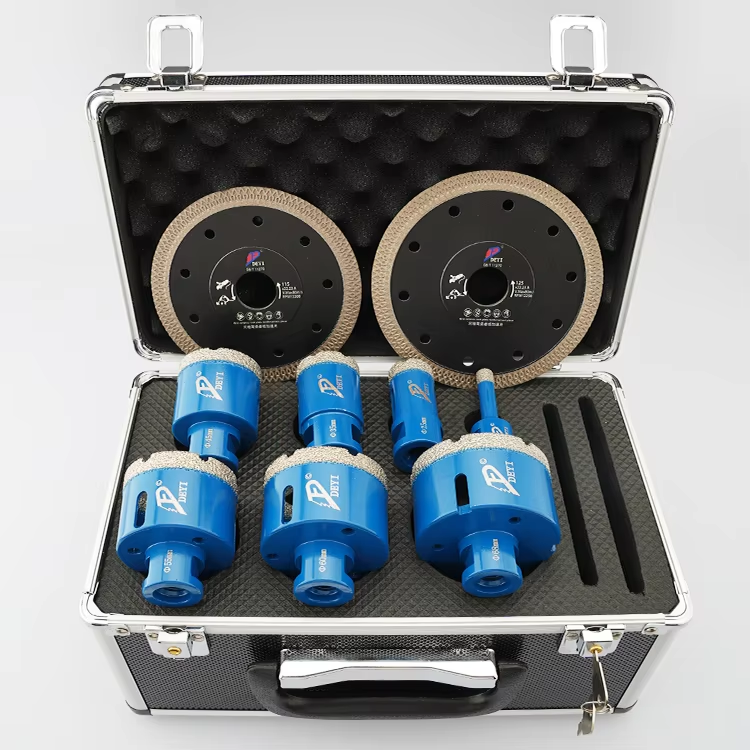
Applying Design for Disassembly (DfD) to Recyclable Core Bit Design
Why DfD Is Critical: Addressing Construction Waste from Single-Use Diamond Core Bits
Regular diamond core bits create a lot of construction waste because their welded parts and bonded materials make it impossible to recover valuable metals such as cobalt. Most old bits just get thrown away whole, which fills up landfills fast and makes companies dig for new raw materials instead of recycling what's already there. The Design for Disassembly concept fights against this throwaway mentality by letting workers separate out the different components without special tools. We're talking about cleanly taking apart those diamond segments, steel cores, and carbide backing layers so they can be reused. This kind of thinking helps manufacturers build better products using recycled materials rather than constantly mining fresh cobalt. Plus, it cuts down on the energy needed to produce these tools from scratch, making everything greener in the long run.
Core DfD Principles for Recyclable Core Bit Design: Reversible Joints, Material Tagging, and Geometric Decoupling
Three interdependent principles define effective DfD implementation in core bit engineering:
- Reversible Joints: Replace high-temperature brazing with precision mechanical interlocks (e.g., dovetail or snap-fit) or low-melting-point solders (<200°C), preserving segment integrity and eliminating iron contamination during detachment.
- Material Tagging: Laser-etched resin codes identify alloy grades and coating types, enabling automated sorting without manual inspection or destructive testing.
-
Geometric Decoupling: Physically isolate dissimilar materials through standardized interfaces, achieving >95% material purity in recovered streams.
Together, these principles reduce downstream processing costs by 40% versus conventional shred-and-sort methods, while supporting scalable remanufacturing and reuse.
Enabling High-Purity Metal Bond Recovery Through Segment Attachment Innovation
The Brazing Problem: Why Conventional Methods Limit Cobalt Recovery to <35% Purity
Silver brazing at high temps over 600 degrees Celsius forms strong permanent connections between diamond parts and steel bases. But here's the catch: when these components come apart, iron and copper get mixed into the cobalt rich metal bonds. According to findings from the 2023 Recycling Efficiency Report, this contamination brings down the purity level of recovered cobalt below 35%. That means manufacturers can't just reuse it straight away for making new tools without going through expensive refining processes first. And there's another problem too. When trying to separate segments by force, thermal stress causes cracks. This wastes around 40% of valuable tungsten carbide material and weakens the overall structure. All these issues point to why traditional brazing methods simply don't work well with modern circular economy principles in manufacturing.
Hybrid Attachment Solution: Mechanical Interlock + Low-Melting-Point Solder for Intact Matrix Recovery
The problem gets solved with a clever two-part attachment approach. First, there are those precision cut dovetail joints that hold everything steady during actual drilling operations. Then comes the tin-bismuth solder stuff (melts around 200 degrees Celsius) acting like a backup bond that can be undone when needed. When heated to about 180 degrees, this solder melts away safely without harming any diamonds or weakening the metal connection, so parts can be taken apart without damage. What makes this work so well is that it recovers nearly all the cobalt (we're talking close to 98% purity here), lets those carbide backing plates get used again right away, and keeps the segments structurally sound after removal. The big advantage? This hybrid method actually triples the material purity compared to traditional brazing techniques. Instead of viewing metal bond recovery as just another expense, manufacturers now see it as something that adds real value to their operations.
Modular Architecture for Efficient Material Separation and Resource Recovery
Overcoming Mixed-Material Barriers: How Welded Assemblies Disrupt Automated Recycling Streams
Welded assemblies combine steel, carbide materials, and diamond infused matrices down at the molecular level, making them practically impossible to separate once joined. These combinations really mess up automated sorting systems in recycling plants. After shredding, what comes out is just fragments mixed together in contaminated batches. According to Ponemon's research from last year, cobalt purity drops below 35% in these situations. This forces recyclers to either send everything to landfills or go through expensive hydrometallurgical processes that eat up lots of energy. The problem gets worse when looking at recovery rates for metal bonds. We're talking about losses exceeding 60% compared to products made with modular designs. That means significant hits to both bottom lines and green credentials for anyone trying to develop truly recyclable core bits.
Layered Modular Design: Steel Body, Snap-Fit Carbide Backing, and Detachable Diamond Segments
The layered architecture replaces permanent welds with three functionally distinct, physically dissociable layers:
- A corrosion-resistant, standardized steel body designed for multi-cycle reuse
- Tungsten carbide backing plates secured via self-aligning snap-fit interlocks
- Diamond segments attached using thermally reversible low-melting-point solder
This configuration enables full disassembly in under 90 seconds&ac legally; without tools or thermal degradation. Critically, each layer separates into discrete, high-purity streams: steel enters direct smelting; carbide plates feed remanufacturing lines unchanged; and diamond segments retain intact matrices for >95% cobalt reclamation. Eliminating shredding and chemical separation cuts recycling energy demand by 40%, while enabling industrial-scale resource recovery.
Supporting Circular Lifecycle Management with Standardized Interfaces and Digital Traceability
When manufacturers adopt standardized mechanical interfaces like ISO snap-fit geometries and universal torque specs, their automated disassembly machines can actually work across different brands and even older models. Recent studies from 2024 show that these standardized parts cut down processing times and save around 40% on labor costs compared to old fashioned welded designs. On top of that, companies are starting to implement blockchain technology for digital product passports. These passports contain permanent records about what materials were used, how they were treated thermally, and any previous refurbishments. Anyone can access this info through simple QR codes or RFID tags. The combination works wonders too. We're seeing verified recovery rates for valuable metals like cobalt and tungsten hit over 92% purity levels. Plus there's all the paperwork needed for green certifications comes automatically. And let's face it, most industrial buyers want proof these days. About three out of four require some sort of third party verification regarding circular economy metrics before making purchases. So when we combine proper geometric standards with good digital tracking, those once throwaway diamond core bits become valuable assets that fit neatly into our circular resource management systems.
FAQ
What is Design for Disassembly (DfD)?
Design for Disassembly is an approach that focuses on designing products in a way that allows for easy separation of components, facilitating recycling and reuse of materials.
Why is the traditional brazing method problematic for recycling core bits?
Traditional brazing creates strong, permanent bonds that lead to contamination of cobalt with iron and copper during dismantling, reducing the purity of recovered cobalt to below 35%.
How does the hybrid attachment solution aid in recycling?
The hybrid solution uses mechanical interlocks and low-melting-point solder that allow components to be separated without damage, ensuring higher purity levels of recovered materials.
What is the role of modular design in recyclable core bits?
Modular design allows for easy disassembly of core bits through distinct, detachable layers, facilitating efficient material separation and high-purity recovery.
How does digital traceability support the circular economy?
Digital traceability, through product passports using blockchain, ensures transparency of material origins and treatments, aiding in responsible recycling and certification processes.
Table of Contents
- Applying Design for Disassembly (DfD) to Recyclable Core Bit Design
- Enabling High-Purity Metal Bond Recovery Through Segment Attachment Innovation
- Modular Architecture for Efficient Material Separation and Resource Recovery
- Supporting Circular Lifecycle Management with Standardized Interfaces and Digital Traceability
- FAQ