
 EN
EN
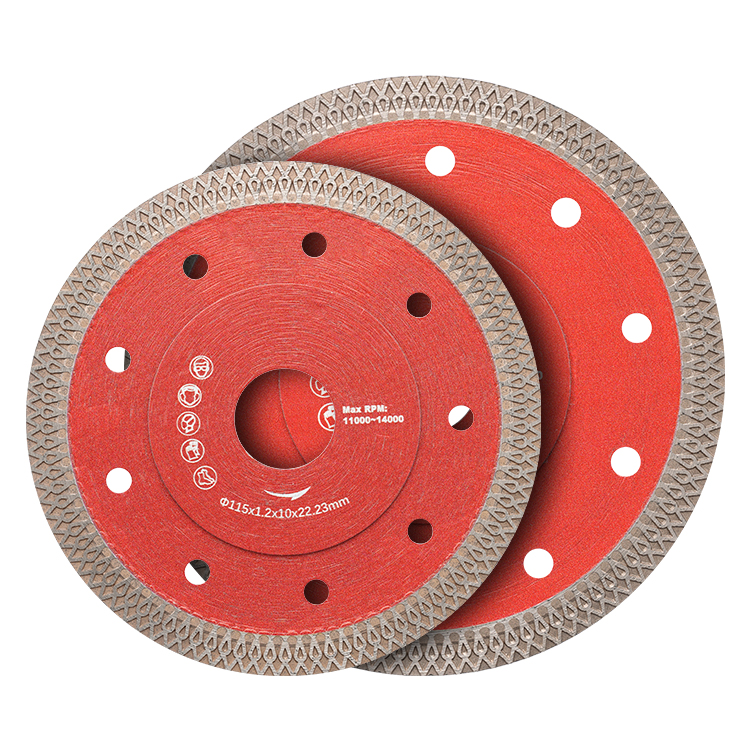
Legal Framework: How VOC Emissions Regulation Targets Diamond Disc Manufacturing
EPA NESHAP and EU REACH thresholds triggering compliance for thermal curing processes
The release of Volatile Organic Compounds (VOCs) during production of resin bonded diamond discs faces strict regulation both in the United States under the EPA's National Emission Standards for Hazardous Air Pollutants (NESHAP) and across Europe through the Registration, Evaluation, Authorisation and Restriction of Chemicals framework known as REACH. Plants that employ thermal curing processes where temperatures typically range between 120 and 220 degrees Celsius to set those resin bonds need to follow these rules when their yearly VOC output goes over 10 tons in America or hits certain thresholds defined by REACH based on specific chemical quantities from 2023 onwards. When facilities fall into this category, they're required to install proper emission control equipment like thermal oxidizers or catalytic converters to trap dangerous airborne contaminants before they escape into the atmosphere. The reason behind this requirement makes sense too since heating materials to such high temps really speeds up VOC creation, which means continuous monitoring becomes absolutely necessary not just for staying within legal limits but also for steering clear of potential fines or other regulatory consequences down the road.
Classification of resin-bonded disc curing as a 'coating and adhesive application' under VOC emissions regulation
The U.S. Environmental Protection Agency along with the European Chemicals Agency considers resin bonded diamond disc curing as part of coating and adhesive applications according to VOC emission regulations. This classification matches what's outlined in the Clean Air Act regarding coatings. The reason behind this lies in how thermosetting resins actually work when they bond abrasive diamonds onto metal surfaces or fibers. These materials behave chemically similar to industrial coatings during heating processes. When heated, solvent based and reactive resins tend to break down and release volatile organic compounds such as formaldehyde, glycidyl ethers, and N methyl 2 pyrrolidone, commonly known as NMP. Because of these emissions concerns, factory operators need to put certain measures in place. They should install better local exhaust systems for ventilation, switch to lower VOC or completely solvent free resin options whenever possible, and keep detailed records about worker exposures following both OSHA guidelines and European Union occupational safety standards.
Technical Root Cause: Resin Chemistry and Thermal Curing Drive VOC Emissions
VOC release mechanisms: solvent evaporation vs. thermal decomposition (pyrolysis) at 120–220°C
In diamond disc manufacturing, volatile organic compound (VOC) emissions come mainly from two sources: when solvents evaporate at first, and later through what's called thermal decomposition or pyrolysis. The solvent stuff tends to disappear pretty early during the curing process, but things change when temps hit around 120 to 220 degrees Celsius, which is basically the normal temperature range where resins start to cross link. At these hotter temperatures, the polymer chains actually break apart, releasing dangerous chemicals like benzene, acrolein, and formaldehyde into the air. Studies indicate that this pyrolysis process produces about three to five times more VOCs compared to just the solvent evaporation alone for each unit of resin being worked on. That explains why factories need proper thermal oxidizers instead of relying solely on regular ventilation systems if they want to stay within environmental regulations.
Resin type impact: phenolic (formaldehyde), epoxy (glycidyl ethers), and polyimide (NMP) as primary VOC precursors
Resin chemistry dictates both emission composition and regulatory risk profile:
| Resin Type | Key VOC Precursors | Peak Emission Temperature | Regulatory Significance |
|---|---|---|---|
| Phenolic | Formaldehyde, methanol | 150–180°C | Classified as carcinogenic under IARC Group 1; subject to strict REACH authorization and NESHAP HAP controls |
| Epoxy | Glycidyl ethers, bisphenol A | 130–160°C | Glycidyl ethers are respiratory sensitizers (EU CLP); require exposure monitoring per OSHA 1910.1200 |
| Polyimide | N-Methyl-2-pyrrolidone (NMP), toluene | 170–220°C | NMP listed as reproductive toxin under REACH Annex XIV; subject to use restrictions and substitution mandates |
Phenolic resins—used in an estimated 65% of commercial diamond discs—present the highest formaldehyde burden during curing. Their widespread use makes them a focal point for both compliance planning and reformulation efforts across the abrasives industry.
Compliance Imperative: Health, Safety, and Operational Consequences of Uncontrolled VOC Emissions
Occupational health risks—benzene, acrolein, and formaldehyde exposure in grinding wheel production facilities
Uncontrolled VOC emissions pose acute and chronic threats to workers in diamond disc manufacturing. NIOSH (2023) reports that formaldehyde exposure alone contributes to respiratory distress in 23% of abrasive production staff. Thermal curing consistently emits three priority hazardous air pollutants:
- Benzene, a known human carcinogen (IARC Group 1), linked to leukemia;
- Acrolein, a potent pulmonary irritant causing bronchoconstriction and epithelial damage at low concentrations;
- Formaldehyde, associated with nasopharyngeal cancer and allergic sensitization.
Chronic exposure correlates with a 40% increase in work-related asthma incidence and measurable deficits in neurocognitive performance—violating OSHA’s permissible exposure limits (PELs) and EU Directive 2017/164/EU on carcinogens and mutagens.
Ventilation failures and indoor air quality violations leading to regulatory enforcement actions
Inadequate or poorly maintained ventilation during thermal curing creates immediate indoor air quality hazards—and swift regulatory consequences. When local exhaust or general dilution systems fail:
- Indoor VOC concentrations routinely exceed EPA reference concentrations by 8–12%, triggering mandatory reporting under 40 CFR Part 63;
- Violations of ambient air quality standards may incur civil penalties up to $37,500 per day under the Clean Air Act;
- Repeated noncompliance often results in production stoppages while facilities undergo third-party remediation audits.
A 2022 EPA enforcement review found that 78% of abrasive manufacturing sites with multiple VOC-related violations faced either permanent operational limitations or mandated process redesigns—highlighting why proactive engineering controls and continuous emission monitoring are not just compliance tools, but strategic operational safeguards.
Frequently Asked Questions
What are volatile organic compounds (VOCs)?
Volatile organic compounds are compounds that have high vapor pressure and may contribute to air pollution when released into the atmosphere.
What is thermal curing?
Thermal curing is a process where resin-bonded diamond discs are manufactured by bonding abrasive diamonds onto surfaces at high temperatures to set materials.
Why is VOC regulation significant in diamond disc manufacturing?
VOC regulation is significant due to potential adverse health and environmental impacts. Manufacturing processes involving VOCs need to comply with regulations like EPA's NESHAP and EU's REACH to avoid harmful emissions.
What equipment is necessary for emission control?
Facilities may need to install emission control systems such as thermal oxidizers or catalytic converters to manage VOC emissions during production processes.