
 EN
EN
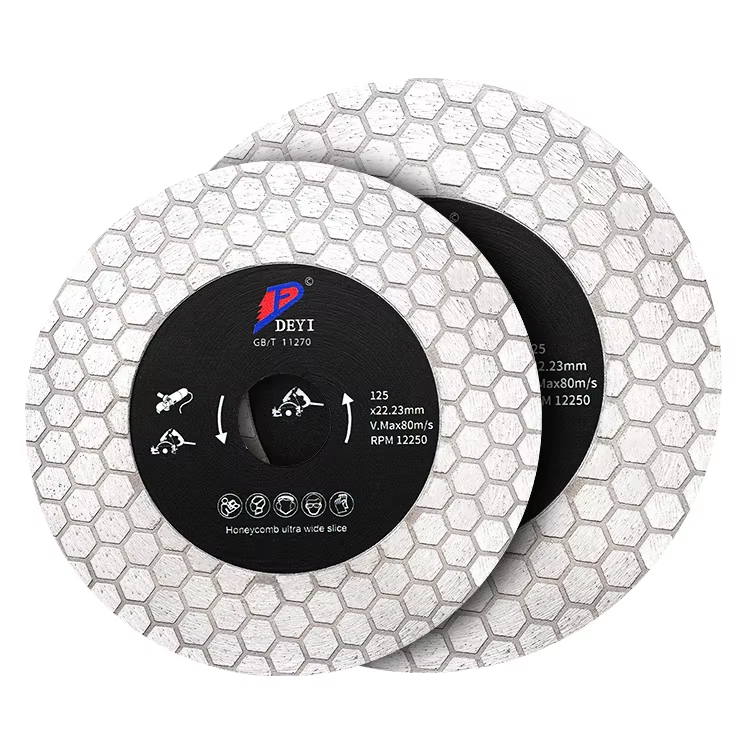
China's Cost Efficiency in Diamond Saw Blade Manufacturing
Labor productivity and wage arbitrage in provincial manufacturing hubs
The reason Chinese diamond saw blades remain so competitively priced has everything to do with how manufacturers operate in specific regions. Take Jiangsu and Shandong for instance. Workers there earn around 30 to 40 percent less than similar workers in developed countries. At the same time, these factories manage to get about 15 to 20 percent more productivity out of their operations thanks to streamlined processes and standardized methods. Industry reports from 2023 show this combination cuts production costs by roughly 18 to 22 percent when compared to what happens in Europe. What really helps maintain this advantage is the concentration of manufacturing in certain areas. When all the tooling experts are working nearby, they share knowledge quickly, spend less time on training new staff, and constantly tweak their workflows. Even as minimum wages rise, these efficiencies help keep prices down without sacrificing quality.
Economies of scale from concentrated production in Henan, Fujian, and Guangdong
The heartland of China's diamond saw blade industry lies in Henan, Fujian, and Guangdong provinces. Henan is where they get their synthetic diamond grit, Fujian does all the precision work on those segments through brazing techniques, and Guangdong takes care of putting everything together before shipping it out. The fact that these regions are so close to each other really helps the whole supply chain work smoothly. About 90 percent of the raw materials needed for production travel less than 50 kilometers from one stage to another. Companies benefit from shared facilities, buying materials in bulk, and working closely with subcontractors across different parts of the process. These advantages cut down individual blade costs by around 27% when factories produce over 50 million units annually. With this kind of scale, manufacturers can keep profit margins between 8% and 12% even while setting prices that compete globally. Most foreign competitors simply don't have what it takes to match this level of efficiency.
High output volume and its impact on profit margins
When companies crank out products at scale, those tiny profit margins on each item actually start adding up to something substantial. Take blade manufacturing facilities making around 100k blades every month. These plants can spread their fixed costs like expensive sintering machines and research expenses across so many more units. The math works out better for these big operations. They typically see about a quarter higher return on investment compared to smaller shops, despite charging maybe 15 to 20 percent less per unit. What happens next creates kind of a snowball effect. Cheaper prices help land bigger international orders, which then lets manufacturers invest in newer automated systems. These upgrades often push daily production up by somewhere between 30 and 40 percent. The bottom line stays healthy not because they keep raising prices, but thanks to smarter ways of cutting waste, saving energy, and getting just a little bit more output from each batch they run through the factory floor.
| Cost Factor | Impact of High Volume | Margin Preservation Strategy |
|---|---|---|
| Equipment Depreciation | Distributed across 3–5— more units | 24/7 production scheduling |
| Raw Material Procurement | 12–18% bulk discount advantage | Just-in-time inventory systems |
| Quality Control | Automated inspection reduces rework by 40% | Statistical process control protocols |
| Energy Consumption | kWh per blade drops 25% at scale | Off-peak production scheduling |
Integrated Supply Chain and Regional Production Advantages
Vertical integration: From synthetic diamond powder to blade sintering
The Chinese manufacturing sector has built significant cost advantages by controlling every step of production from start to finish. They make their own synthetic diamond powders all the way through to the final blade sintering process. When companies produce their own raw materials internally, they cut out those extra costs from suppliers, avoid paying import duties, and don't have to deal with inconsistent quality issues that plague businesses relying on outside imports. The way these operations are set up actually speeds things up when it comes to developing new products. For instance, when engineers tweak the diamond grit formulations, they can immediately see how it affects the bonding matrix development. Industry reports suggest this kind of integrated approach cuts down research and development time by about 35-40%. Having complete control over the entire production chain means manufacturers can quickly adapt their products for different international markets without breaking the bank on overhead costs, plus they maintain reliable performance standards across all their metal components.
Regional clustering in Zhejiang and Hubei: Access to tooling and metallurgical resources
The concentration of manufacturing activity near Zhejiang's precision tooling centers and Hubei's metalworking regions gives companies significant supply chain benefits. Being close to tungsten carbide suppliers and heat treatment experts means transportation expenses drop somewhere between 15% and 20%, compared to scattered operations elsewhere. Local supplier networks make it possible for steel cores to arrive right when needed and keep machinery running smoothly, which cuts down on spare parts stockpiles and production stoppages. When new techniques like laser welding or high frequency brazing emerge, they spread quickly among nearby plants. This creates real advantages in the marketplace because manufacturers can offer better prices while still maintaining tight control over metal quality standards, something that used to require compromises.
Innovative Cost Reduction Strategies in Blade Production
Automation adoption vs. labor substitution: Insights from 2023 MIIT industrial survey
Factories across China are rolling out automation not as a complete replacement for workers, but focusing it on those tricky areas where mistakes happen often and results vary too much. According to recent data from the Ministry of Industry and Information Technology's 2023 report, around two thirds of major manufacturing centers have started using semi automatic systems for tasks like sintering materials and welding parts together. These setups cut down on hands on work by about 40 percent while still keeping measurements spot on and welds strong enough. The whole mixed method works because Chinese companies benefit from both cheaper wages compared to other countries and better understanding of how robots can fit into production workflows. For things that need special touches or adjustments, human workers stay involved since machines just aren't good enough there yet. Take automotive parts makers for instance they keep certain final assembly steps manual so they can handle last minute changes without compromising product quality.
Additive manufacturing for segmented blade cores: Reducing waste and improving yield
What additive manufacturing is doing to core production right now is pretty revolutionary. It lets manufacturers create shapes that just weren't possible with old school methods. When we talk about metal bonded cores printed layer by layer, these components come out almost finished shape wise, using around 92% of the material compared to only 60% wasted when using subtractive machining techniques. According to what the industry has seen so far, this approach cuts down on diamond grit waste by about 31%. That matters a lot since raw materials make up nearly half (around 55%) of all production expenses. Another big plus? These new manufacturing techniques allow for built-in coolant channels inside wet cutting cores. Plus there's faster design changes tailored specifically for different applications. All of this gives Chinese diamond blade manufacturers a real edge when competing in global export markets.
Balancing Price and Performance in Global Markets
Tiered product lines: Economy, standard, and premium offerings for diverse export markets
Chinese manufacturers catering to diverse international markets have developed a tiered approach that works well across different customer needs. At the basic level, they offer economy blades designed specifically for budget-conscious construction projects, featuring optimized sintered segments. Standard grade products strike a balance between lasting power and reasonable pricing for everyday cutting tasks. For those willing to pay more, premium options come loaded with features like advanced diamond distribution patterns, laser welded segments, and specialized metallurgy tailored for specific materials such as reinforced concrete, granite, or tough aggregates. What's interesting is how these formulations get adjusted based on location requirements too. Blades sold near coastlines often include better corrosion protection, while mining areas receive versions with tougher matrix structures to withstand impacts. Recent industry data shows that around 70 percent of industrial purchasers are looking at performance versus price rather than just going for the cheapest option according to the latest global tooling report from 2024. This means companies now factor in things like blade longevity, cutting efficiency, and machine downtime when making purchase decisions instead of focusing solely on initial cost. Looking at export figures makes this trend clear - mid range Chinese blade sales jumped by 17% last year even though raw material prices for tungsten and nickel were climbing. Market dynamics have changed significantly. Economy grade blades actually perform better economically in softer material applications, whereas premium models turn out to be the most economical choice when dealing with really abrasive conditions.
FAQ Section
Q: Why are Chinese diamond saw blades competitively priced?
A: Chinese diamond saw blades are competitively priced due to regional manufacturing efficiencies, economies of scale, high output volume, and integrated supply chain advantages.
Q: How do regional clusters benefit blade manufacturing in China?
A: Regional clustering in places like Zhejiang and Hubei allows manufacturers direct access to vital tooling and metallurgical resources, reducing transportation costs and enhancing production efficiencies.
Q: How does automation impact blade production in China?
A: Automation in Chinese factories focuses on reducing errors and variability in production, enhancing productivity while maintaining the need for skilled human input for intricate tasks.
Q: What role does additive manufacturing play in blade production?
A: Additive manufacturing allows for significant material use efficiency, reducing waste and improving yield in the production of segmented blade cores.