
 EN
EN
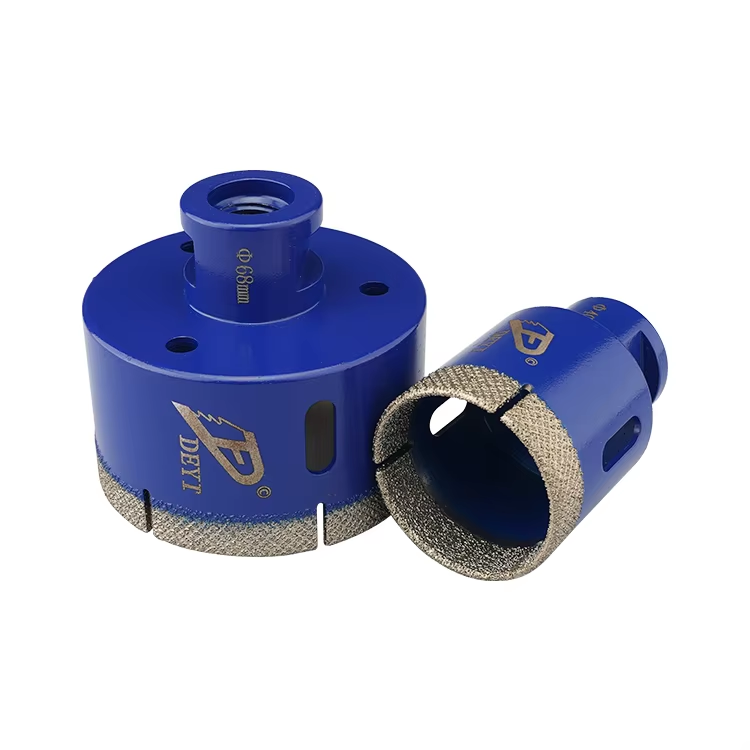
Accelerating R&D Through OEM Vacuum Brazed Partnerships
Joint development of active brazing alloys for superior diamond retention
When original equipment manufacturers work closely together, they can speed up major advances in how we make diamond tools. These partnerships lead to the development of special nickel based alloys that actually stick better to diamonds. Tests show these new materials hold onto diamonds about 40 percent tighter compared to what was used before. Working together on research and development cuts down on wasted time making prototypes over and over again. It also helps get the right match between the tool base material and the diamond coating, which is really important when dealing with tough cutting jobs. Companies share knowledge about things like setting up vacuum furnaces properly and mixing the right metals. This sharing of know how means fewer broken tools when workers are doing intense cutting tasks where heat and pressure build up quickly.
Real-time feedback loops between toolmakers and end-users driving iterative innovation
When field data comes back about how vacuum brazed diamond tools perform, it starts this whole process of getting better all the time. Big tool makers get their hands on real time info straight from construction sites and mines, which lets them tweak things like how fast furnaces heat up and what kind of pressure they apply during manufacturing. The back and forth between problems in the field and fixes in the lab actually makes these tools last longer when they're subjected to those crazy temperature swings we see in concrete demolition work and cutting through composites. Companies keep making small changes based on what breaks down in actual use, and this approach really speeds up bringing out new cutting segments that are way ahead of what was available before.
Enhancing Performance: Bond Strength and Thermal Stability
When manufacturers partner with OEMs for vacuum brazed solutions, they open doors to some serious improvements in metal bonding technology, especially when it comes to how well diamonds stay attached under intense stress conditions. By working together on fine tuning both the metal alloys used and the actual brazing process itself, these collaborations create bonds that can withstand over 450 MPa of tension force. This results in roughly 30% less diamond loss during cutting tests compared to what we see with traditional approaches. Some of the latest advancements include using layered materials between the diamond and base metal, along with techniques that minimize temperature differences during heating. These changes help achieve better coverage where the diamond meets the metal surface, which means fewer weak spots that typically shorten tool lifespan in real world applications.
Breakthroughs in bond strength via metallurgical optimization in OEM vacuum brazed partnerships
Computational models are now playing a key role in developing new alloys by figuring out just the right mix of elements like titanium and chromium to boost carbide stability on diamond surfaces. What this means is stronger bonds between materials that can actually handle shear forces above 680 Newtons per square millimeter when drilling through rock formations. That's roughly 27 percent better than what most manufacturers typically see in their standard operations. When companies align their heating processes with how diamonds break down under heat, they end up creating joints free from pores and graphitization issues. This results in longer lasting segments that perform well even when cutting through tough concrete or working with composite materials in industrial settings.
Thermal stability gains enabling high-speed, dry machining of advanced materials
When manufacturers work closely with original equipment makers to develop custom alloy systems, these materials can hold their shape even when temperatures exceed 800 degrees Celsius. That means diamond cutting tools can spin 25 percent faster in situations where no coolant is used. The ability to withstand such intense heat removes the need for cooling fluids altogether. For each production line running non-stop, this saves around 40 thousand liters of water every year. Plus it stops those tiny cracks from forming as tools go through repeated heating and cooling cycles. What makes these alloys really valuable is how they keep their properties stable under extreme conditions. This stability ensures that cutting edges stay sharp when working on tough materials like aerospace grade titanium or carbon fiber composites. As a result, manufacturing processes take 18 percent less time overall, all while maintaining excellent surface finishes on finished parts.
Test data derived from controlled industrial machining trials, 2024
Enabling Customization: From Application-Specific Design to Production
OEM vacuum brazed partnerships fundamentally transform tool customization by bridging application-specific challenges with tailored manufacturing solutions. This co-engineering approach enables rapid prototyping and production of diamond segments optimized for extreme conditions�whether machining aerospace-grade composites requiring flawless edge integrity or slicing EV battery materials demanding minimal thermal damage.
Co-engineering vacuum brazed diamond segments for aerospace composites and EV battery materials
Cutting through aerospace composites often leads to quick wear on tools because of the epoxy resins used in these materials. Industry partners work together to create cutting segments with specific diamond grit sizes around 40/50 U.S. mesh and special braze filler metals that help keep the material from separating during dry machining operations. On another front, when dealing with lithium-nickel-manganese-cobalt oxide (NMC) cathodes, things get really hot - sometimes over 600 degrees Celsius. This requires specialized copper based alloys along with strategically placed layers of diamonds to stop contamination issues with the anode. When tool manufacturers share their secret application knowledge with original equipment manufacturers, it actually speeds up product development time by nearly two thirds. And getting input from people who actually use these tools in the field cuts down on failures by almost half compared to traditional methods.
These collaborative workflows ensure tools meet three critical metrics:
- Material-specific bond strength exceeding 350 MPa
- Heat deflection thresholds aligned with workpiece tolerances
- Segment geometries engineered to resist vibration harmonics
This symbiotic innovation directly supports manufacturing shifts like lighter aircraft structures or faster battery production�without compromising precision.
Scaling Innovation: Technology Transfer and Process Standardization
When OEMs partner effectively in vacuum brazing, they turn lab discoveries into real world applications by sharing knowledge consistently and following repeatable methods. The tech transfer process basically writes down those metalworking innovations like active brazing alloys so everyone can access them easily, which means production teams worldwide can replicate results reliably. At the same time, standardizing processes creates uniform steps for making diamond segments, controlling temperatures properly, and checking quality standards. This two pronged strategy cuts down training needs around 40%, and makes sure that tools perform just as well when moving from small test runs to full scale manufacturing. Companies get the ability to scale up production without losing that crucial thermal stability or bond strength needed for cutting composite materials and working with batteries. When manufacturers actually put those joint research findings into their day to day operations manuals, they end up with predictable large volume outputs while still keeping the kind of precision that matters most for advanced diamond tool development.
Frequently Asked Questions (FAQ)
What are the advantages of OEM vacuum brazed partnerships?
OEM vacuum brazed partnerships facilitate accelerated R&D, improved tool customization, enhanced bond strength, and thermal stability, enabling better performance in demanding applications such as concrete demolition and aerospace composites.
How do vacuum brazed solutions enhance diamond retention?
By developing special nickel-based alloys and refining brazing processes, OEM partnerships have achieved superior diamond retention with approximately 40% tighter attachment compared to previous methods.
Why is real-time feedback important in this context?
Real-time feedback allows manufacturers to make iterative improvements based on actual field data, helping to extend tool lifespan under extreme temperature swings and cutting conditions.