 EN
EN
Regulatory Mandates Driving Noise Emission Testing
OSHA Permissible Exposure Limits and Workplace Hearing Conservation
OSHA has established a permissible exposure limit of 90 decibels A-weighted (dBA) for an entire 8 hour workday. Employers must put hearing protection programs in place when workplace noise hits or goes above 85 dBA. For companies making powered diamond cutting tools, noise testing isn't something they can skip over it's basically required for staying compliant. When manufacturers have solid acoustic test results, they can better design equipment with noise reduction features, know what personal protective gear workers need, and even steer clear of buying noisy machines upfront. Not following OSHA's rules comes at a cost too fines can go as high as $15,600 for each violation according to their 2023 guidelines. But beyond the money, failing to control noise puts employees at risk of permanent hearing loss that cant be undone later on.
EU Machinery Directive (2006/42/EC) and Acoustic Emission Compliance
The EU Machinery Directive requires manufacturers to tackle noise risks right from the design phase rather than treating it as something to fix later. Companies need to provide documented sound power levels (LWA) along with measurements for peak sound pressure when dealing with impact sources. They also have to include guidance about how to mitigate any remaining risks. All this has to be done following standard tests like ISO 3744 or ISO 9614. Machines that don't comply simply won't get the CE mark and will be kept out of the whole European Economic Area market. Because of these requirements, top makers of diamond cutting systems start testing for noise emissions during their research and development process. This influences choices about what kind of vibration damping materials to use, how blades should be mounted, and even the shape of housing components. The goal is to balance machine performance with acceptable noise levels for worker safety.
Technical Sources of Noise in Diamond Cutting Systems
Mechanical Noise: Vibration, Imbalance, and Drive System Dynamics
Noise problems in machinery mostly come down to three main things: vibrations in structures, when parts aren't balanced right during rotation, and how the drive systems work. When machines run above 3,000 RPM, small flaws in diamond blades start causing these harmonic vibrations that turn into low frequency sounds around 85 to maybe 95 decibels. The middle range noises we hear typically come from gear trains, motor bearings wearing out, and those torque transfer parts knocking against each other. What really gets people complaining though? Those unbalanced centrifugal forces shaking up the whole machine frame. We've seen this happen in about four out of five noise complaints related to cutting equipment on factory floors.
Aerodynamic and Segmentation-Induced Noise During High-Speed Cutting
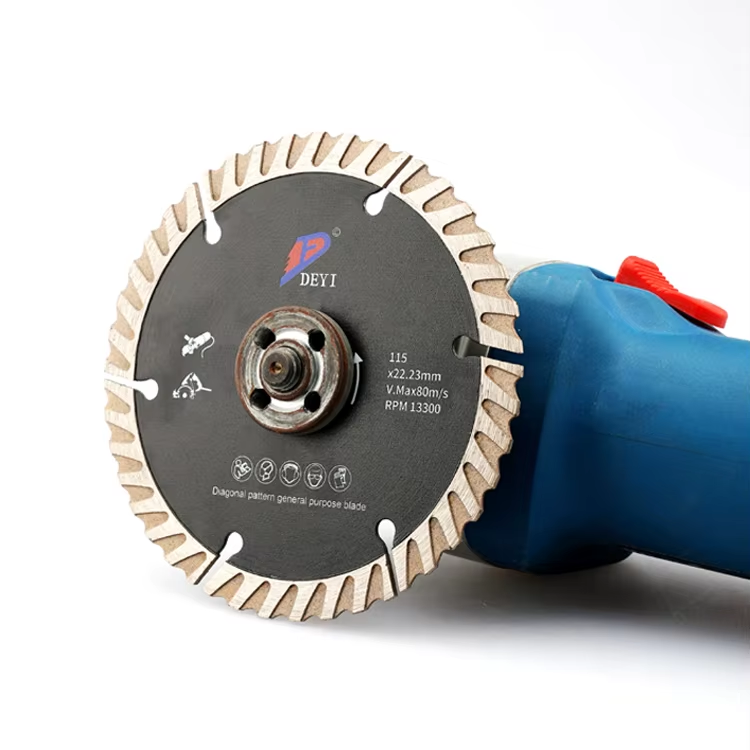
When diamond cutting tools spin above 4500 RPM, most of what we hear is actually aerodynamic noise making up around 60 to 70 percent of all emissions during these operations. As those segmented blades slice through materials, tiny air vortices keep forming and popping off in each gullet area, creating that distinctive high pitched whistle we typically measure between 100 and 110 decibels. How the blades are segmented makes a big difference here too. Deeper gullets tend to cut down on pressure differences across the blade face, but they also make the sound more pronounced and musical sounding. Working with tough stuff like granite just makes everything worse because it causes the blades themselves to start vibrating against the substrate, turning movement energy right into noise we can hear. Testing how much noise gets emitted helps spot these issues pretty accurately, so manufacturers can tweak their blade designs accordingly. These adjustments usually bring down the overall noise level somewhere between 15 and 20 decibels, which matters a lot when workers need to operate near these machines day after day.
Occupational Health Consequences and Preventive Value of Noise Emission Testing
Cumulative Hearing Loss and Non-Auditory Health Risks for Operators
The noise generated by diamond cutting systems does more damage than just to our ears. Around 20 percent of workers who are constantly exposed experience noise-induced hearing loss, which tends to sneak up on them before they notice problems with communication, awareness of surroundings, and overall job performance. Long term exposure doesn't stop at hearing issues either. Workers face higher chances of developing high blood pressure by about 23%, plus added strain on their hearts, ongoing stress, and tinnitus affecting roughly 8% of those working near sounds exceeding 85 decibels. Constant background noise leads to mental exhaustion that makes mistakes and accidents far more likely. Testing for noise levels gives managers the actual numbers they need to take action early on. Some companies have redesigned their equipment, others changed work schedules, while many simply improved their protective gear options. Factories that make regular sound checks part of their routine see a drop of more than 60% in hearing loss cases after just three years, showing why this kind of monitoring should be central to any serious workplace safety program.
Standardized Noise Labeling and Informed Equipment Selection
When manufacturers follow standardized noise labeling based on tests such as ISO 11201 or ISO 3746, they actually give plant managers and procurement teams something useful to work with when making buying decisions. The numbers matter because they help identify machines that run quieter than 85 dB(A), which is where OSHA starts requiring ear protection programs. Companies that include these verified noise measurements in their equipment selection process tend to face fewer legal issues down the road, keep their workers happier, and stay compliant with international safety rules from places like the EU and WHO. What this all means is that what used to be just background noise becomes something measurable and controllable throughout how equipment gets selected, installed, maintained, and eventually replaced.
FAQ
What are the OSHA permissible exposure limits for noise?
OSHA has set a permissible exposure limit of 90 decibels for an 8-hour workday, requiring hearing protection programs when noise levels reach or exceed 85 decibels.
Why is noise emission testing important for diamond cutting tools?
Noise emission testing is crucial for compliance with regulations. It helps manufacturers design quieter equipment, determine necessary protective gear, and avoid costly fines for non-compliance.
How does the EU Machinery Directive affect noise emission compliance?
The EU Machinery Directive requires manufacturers to address noise risks from the design phase, ensuring machines meet sound power levels and peak sound pressure standards.
What are the health risks associated with noise exposure from cutting equipment?
Noise exposure can lead to hearing loss, high blood pressure, stress, tinnitus, and mental exhaustion, increasing the likelihood of mistakes and accidents in the workplace.
How do standardized noise labels assist in equipment selection?
Standardized labels provide clear noise levels measured by ISO tests, aiding plant managers and procurement teams in selecting quieter and compliant machinery for workplace safety.
Table of Contents
- Regulatory Mandates Driving Noise Emission Testing
- Technical Sources of Noise in Diamond Cutting Systems
- Occupational Health Consequences and Preventive Value of Noise Emission Testing
- Standardized Noise Labeling and Informed Equipment Selection
-
FAQ
- What are the OSHA permissible exposure limits for noise?
- Why is noise emission testing important for diamond cutting tools?
- How does the EU Machinery Directive affect noise emission compliance?
- What are the health risks associated with noise exposure from cutting equipment?
- How do standardized noise labels assist in equipment selection?