
 EN
EN
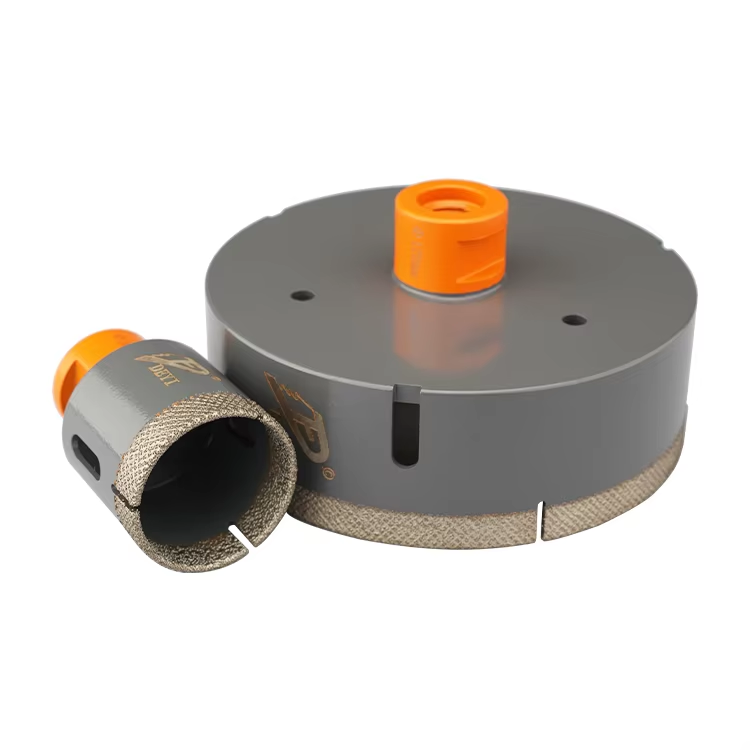
The Critical Contamination Challenge After Welding Diamond Tools
Flux residues, metal oxides, and grinding slurry: how sub-5µm contaminants compromise bond integrity
The welding process brings along all sorts of tiny contaminants like flux residue, metal oxides, and grinding slurry particles that get stuck deep inside cracks and pores after the parts are joined together. These little guys are often under 5 microns in size, and they end up creating weak spots at the interface where diamonds meet the metal matrix. Studies on how materials stick together suggest this can cut down bond strength anywhere from 30-40%, though results vary depending on conditions. What happens next? Well, when operational stresses start spreading through those contaminated areas, diamonds just fall off completely. Standard wiping techniques don't work for getting rid of stuff buried beneath surfaces in complicated sintered shapes. And using solvents tends to leave behind thin films that actually mess up later brazing operations or other bonding processes down the line.
The consequences are measurable and operational:
- Premature diamond pull-out during cutting or grinding
- Reduced thermal conductivity at critical diamond−matrix interfaces
- Accelerated matrix wear around compromised bonds
When particulate contamination falls below 10 microns, diamond segments show around 30% less tensile strength retention compared to cleaner samples. This matters a lot for expensive equipment such as polycrystalline diamond drill bits or wire drawing dies since even tiny impurities lead to unexpected breakdowns during operation and require expensive repairs down the line. Proper cleaning after welding operations isn't just good practice anymore it has become absolutely essential for determining how long these tools will last before needing replacement. The consistency of cuts remains compromised otherwise, affecting production quality in various manufacturing settings from automotive parts fabrication to precision metalworking industries.
How Ultrasonic Cleaning Targets Microscale Contamination with Precision
Cavitation physics: microjet formation and localized energy delivery at diamond−matrix interfaces
Ultrasonic cleaning works by using those really high frequency sound waves, usually somewhere between 20 to 40 kHz, which create tiny little bubbles in special water based or partially water based cleaning solutions. When these bubbles pop close to dirty surfaces, they actually create small jets of force that can hit spots with pressure over 10,000 psi right where diamonds meet their matrix material. The whole process physically knocks away particles smaller than 5 microns from the surface. Think about stuff like leftover flux or metal oxides getting cleaned off without harming the actual diamond structure or breaking any metal connections. This makes it possible to clean very sensitive materials without causing damage during the process.
Chemical methods alone just can't reach those tough spots like blind holes or undercuts in parts with intricate designs. Cavitation works differently by getting into these hard to access areas where residue tends to stick around the longest. Tests done by labs certified under ISO/IEC 17025 standards show that ultrasonic cleaning removes about 98 to 99 percent of contaminants from complicated shapes. This makes ultrasonic cleaning stand out as the best option for reaching those tiny gaps between surfaces where leftover welding material can really weaken how strong a part is overall.
Why traditional methods (brushing, solvent soak, vapor degreasing) fail on complex geometries and sintered bonds
Traditional cleaning approaches just don't cut it when dealing with diamond tool assemblies. Take manual brushing for instance it simply can't reach those internal channels found in segmented tools and there's always the risk of knocking loose precious diamonds during the process. What about solvent soaking? Well, let's face it, this method doesn't generate enough mechanical force to clear out that stubborn grinding slurry stuck inside porous sintered bonds. Research indicates around 40 percent of contaminants still linger in those tiny matrix pores after treatment. Vapor degreasing presents another challenge altogether. It tends to leave behind those pesky thin oxide films on materials sensitive to heat changes, plus works terribly in blind hole setups. And here's the kicker none of these conventional methods actually provide the targeted, localized energy required to lift those microscopic contaminants off textured or irregular surfaces. Instead, what happens is that particles get pushed around rather than properly removed, which defeats the whole purpose of cleaning in the first place.
For diamond tool manufacturing requiring weld quality assurance, only ultrasonic cavitation provides the spatial and energetic precision necessary to maintain surface contamination thresholds below critical failure levels.
Ultrasonic Cleaning Validation for High-Value Diamond Tools
Non-destructive verification: tensile strength retention and interfacial adhesion testing (ISO 13485-compliant protocols)
To check if ultrasonic cleaning works properly, we need methods that don't damage components but still show they function correctly. Standards following ISO 13485 typically involve tensile strength tests to make sure those diamond-matrix connections keep at least 95% of their original strength after going through the cleaning process. Testing how well these surfaces stick together measures whether diamonds stay put when subjected to forces similar to what happens during actual operation. This helps confirm that removing contaminants like flux and oxides doesn't actually weaken the bond between materials, which is critical for maintaining product quality over time.
Peer-reviewed data from the Journal of Materials Processing Technology (2024) shows 99.2% adhesion retention in ultrasonically cleaned tools versus 84% in solvent-treated controls−demonstrating that validated ultrasonic processes sustain structural reliability without compromising high-value substrates.
Residue detection thresholds using XRF and SEM-EDS − defining pass/fail criteria for production release
Post-cleaning verification relies on X-ray Fluorescence (XRF) and Scanning Electron Microscopy with Energy Dispersive Spectroscopy (SEM-EDS). XRF detects metallic residues at concentrations >0.1% mass fraction across bulk surfaces, while SEM-EDS maps elemental distribution with sub-micron resolution−especially at diamond−steel interfaces where grinding slurry or iron oxides concentrate.
To get products out the door, manufacturers must hit specific residue limits. For regular industrial tools, the threshold is under 50 mg per square meter, but it drops to just 5 mg per square meter when dealing with medical grade items or those super precise diamond components. Keeping an eye on these standards throughout production stops tools from breaking down early because of hidden dirt particles stuck inside the sintered bonds. This kind of quality control isn't optional for companies making parts for planes, computer chips, or medical equipment. The industry simply won't accept anything less when lives and high tech systems depend on flawless performance.
Optimizing Ultrasonic Cleaning Parameters to Preserve Diamond Matrix Integrity
Precise calibration of ultrasonic cleaning parameters is essential to eliminate sub-micron contaminants while preserving diamond−matrix bond integrity. Key variables−including frequency (25−130 kHz), power density (W/L), solution chemistry, temperature (50−65°C), and cycle duration−must be balanced to maximize cavitation efficacy without inducing microstructural damage.
Higher frequencies (40−130 kHz) generate smaller, more numerous bubbles ideal for penetrating intricate sintered geometries and fine-pore matrices. Lower frequencies (25−40 kHz) deliver higher-energy implosions suited for tenacious flux residues. Temperature control enhances solution reactivity without thermal stress, and neutral-pH formulations prevent matrix corrosion or diamond graphitization.
Validation via SEM-EDS confirms residue removal below 0.1% elemental thresholds, while tensile testing verifies bond strength retention exceeds 95% of pre-cleaning baselines. This parametric optimization ensures thorough, repeatable decontamination−upholding the microstructural fidelity required for consistent diamond tool performance across high-stakes applications.
FAQs
Why is ultrasonic cleaning preferred over traditional methods?
Ultrasonic cleaning is preferred because it reaches deep, hard-to-access areas that traditional methods like brushing or solvent soaking cannot. Its cavitation process efficiently removes small contaminants without damaging sensitive materials.
How does ultrasonic cleaning preserve diamond-matrix integrity?
Ultrasonic cleaning uses high-frequency sound waves to generate bubbles that remove contaminants without applying excessive force. This maintains the diamond structure and metal connections intact, preserving bond integrity.
What are key parameters for effective ultrasonic cleaning?
The effectiveness of ultrasonic cleaning relies on precise calibration of frequency, power density, solution chemistry, temperature, and cycle duration to ensure efficient contaminant removal without causing microstructural damage.