
 EN
EN
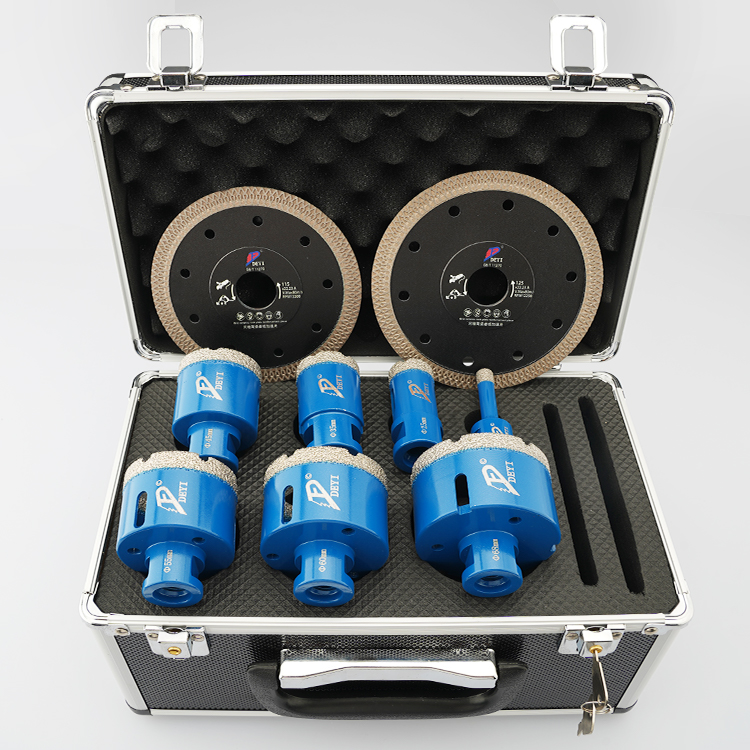
Fundamental Differences Between Synthetic and Natural Diamonds in Electroplated Tools
Crystal Structure and Consistency: How Synthetic Diamonds Offer Uniform Performance
Synthetic diamonds dominate industrial applications due to controlled crystal growth in HPHT (High-Pressure High-Temperature) or CVD (Chemical Vapor Deposition) environments, achieving over 95% structural consistency–far surpassing the 65% average in natural diamonds. This precision eliminates fractures and impurity clusters common in mined stones, ensuring electroplated drill bits deliver:
- Predictable cutting edges across all particles
- Uniform heat dissipation at high RPMs
- Reliable bonding with nickel or cobalt matrices
Manufacturers benefit from a tight 0.1–0.3 micron particle size tolerance, unattainable with natural diamonds. This allows standardization of electroplating bath parameters, reducing tool rejection rates by 18–22% (abrasives industry report 2023).
Why Natural Diamonds Are Unsuitable for Modern Electroplated Drill Bit Manufacturing
Natural diamonds form under unpredictable geological conditions, resulting in significant performance variability:
| Characteristic | Synthetic Diamonds | Natural Diamonds |
|---|---|---|
| Thermal Conductivity | 2000 W/mK (stable) | 1200–1800 W/mK (variable) |
| Internal Defect Density | 50 defects/cm³ | 500–800 defects/cm³ |
| Cost per Carat (40/50 mesh) | $0.15–$0.30 | $1.20–$2.80 |
The problems with bonding result in serious failure issues where natural diamonds come loose about 3.7 times quicker under sideways pressure while drilling through concrete. Most industrial abrasives aren't actually from natural sources these days either - just around 12% or so. That leaves synthetic diamonds handling nearly all the electroplating grade work, covering about 98% of what's needed across industries. Real world testing shows tools last roughly 40% longer when they're made with synthetic grit instead. No wonder why most manufacturers stick with synthetics for their diamond core bits and annular cutters despite the initial cost difference.
Cost-Effectiveness and Supply Stability of Synthetic Diamond Grit
Lower production cost of synthetic diamonds in industrial-scale manufacturing
Synthetic diamond grit for industrial use typically ranges from about $2 to $8 per carat, which makes it roughly 60 to 80 percent cheaper than natural diamonds that cost around $10 to $20 each (Market Business Insights reported this in 2024). High Pressure High Temperature or HPHT tech gives makers better control over how big and strong those diamond crystals get, plus skips the whole 18 to 24 months wait time needed for mining operations. Because of this improved process, factories can actually pack 40 to 50% more diamond bits into their tools without spending extra money. The result? Tools cut faster and last longer before needing replacement.
Reliable supply chain and scalability of synthetic diamond materials
Facilities around the world are now churning out thousands of metric tons of lab grown diamonds every year, free from the limitations imposed by nature or political boundaries. The supply of real diamonds fluctuates all over the place depending on where they come from, but synthetic production just keeps growing alongside factory capabilities. Looking at numbers since 2010 tells a clear story Market Business Insights reported that prices for man made diamonds dropped about 30 percent while natural ones actually went up 22 percent during the same period. For companies making drill bits, this kind of price consistency means they can plan their budgets way ahead of time sometimes as much as a year or even eighteen months before needing materials. That gives them peace of mind when signing those big contracts with aerospace firms and car manufacturers who need steady supplies without unexpected cost spikes down the road.
Performance Advantages of Synthetic Diamonds in Electroplated Drill Bits
Controlled Particle Size and Strength for Optimal Cutting Efficiency
Synthetic diamonds offer uniform particle distribution (20–200 microns) and engineered crystal geometry, enabling optimized cutting matrices where each diamond protrudes at ideal height and spacing. Their ±5% size tolerance reduces blade vibration by up to 40% in rock drilling, compared to erratic performance from flawed natural grit.
Thermal Stability During Electroplating and High-Speed Drilling
CVD synthesis produces ultra-pure carbon structures free of metallic impurities, allowing synthetic diamonds to endure plating temperatures up to 1,200°C without graphitization. During operation, they dissipate heat 12–15% faster than natural diamonds–critical for maintaining dimensional accuracy in hardened steel machining.
Extended Tool Lifespan and Wear Resistance With Synthetic Grit
Engineered crystals exhibit 30% higher compressive strength (6–12 GPa), minimizing chipping during abrasive drilling. Field tests show synthetic bits achieve 250–300 linear feet in concrete versus 80–120 feet for natural diamond tools. Their predictable wear supports condition-based maintenance scheduling, reducing annual replacement costs by 18–22%.
Key advantage synthesis:
- Uniform crystal structure – Consistent cutting performance
- Pure carbon composition – No thermal degradation points
- Isotropic strength – 360° cutting edge utilization
HPHT vs CVD: Types of Synthetic Diamonds Used in Electroplated Tools
HPHT Synthetic Diamonds: Ideal for Metal-Bonded and Electroplated Applications
The high-pressure, high-temperature (HPHT) method leads synthetic diamond production, projected to account for 61.90% of market revenue by 2025 (Future Market Insights). Its ability to generate large, thermally stable crystals makes it ideal for electroplated drill bits requiring efficient heat dissipation. Key benefits include:
- Metal bond compatibility: HPHT diamonds bond reliably with nickel and cobalt matrices, resisting dislodging under extreme rotational forces.
- Controlled particle strength: Crystals can be tailored (10–200 microns) for specific substrates like reinforced concrete or masonry.
- Cost scalability: Industrial-grade HPHT diamonds cost just $0.03–$0.12 per carat, offering unmatched value for mass production.
CVD Diamonds in Niche High-Performance Tools: Benefits and Limitations
Chemical vapor deposition (CVD) diamonds provide ultra-pure carbon lattices suited for precision applications such as aerospace composite drilling. They offer 10–15% higher wear resistance than HPHT variants in dry-cutting environments. However, several limitations restrict broader use:
- Electroplating challenges: Thin CVD layers (2–30 ¼m) risk delamination when exposed to thermal stresses above 600°C during plating.
- Production costs: Slower growth rates make CVD grit 3–5x more expensive than HPHT equivalents.
- Niche optimization: Reserved for sub-5 ¼m precision tools, CVD diamonds represent less than 8% of the global electroplated drill bit market.
While both methods serve distinct roles, HPHT remains the foundation for scalable, cost-effective electroplated tool manufacturing.
FAQ
What are synthetic diamonds?
Synthetic diamonds are artificially created diamonds grown in controlled environments using High-Pressure High-Temperature (HPHT) or Chemical Vapor Deposition (CVD) methods, designed for industrial applications.
Why are synthetic diamonds preferred over natural diamonds in industrial applications?
Synthetic diamonds offer predictable performance, consistent structural integrity, better thermal conductivity, and cost-effectiveness compared to naturally mined diamonds.
How do synthetic diamonds enhance the performance of electroplated drill bits?
Synthetic diamonds provide uniform particle distribution and engineered crystal geometry, resulting in optimized cutting matrices, reduced blade vibration, and extended tool lifespan.
What are the cost advantages of using synthetic diamonds?
Synthetic diamonds are significantly cheaper than natural diamonds due to controlled manufacturing processes, offering up to 60-80% cost reduction while ensuring supply stability.
What is the main difference between HPHT and CVD synthetic diamonds?
HPHT diamonds are known for their thermal stability and cost scalability, ideal for general applications, while CVD diamonds offer higher purity and wear resistance for niche precision tools.
Table of Contents
- Fundamental Differences Between Synthetic and Natural Diamonds in Electroplated Tools
- Cost-Effectiveness and Supply Stability of Synthetic Diamond Grit
- Performance Advantages of Synthetic Diamonds in Electroplated Drill Bits
- HPHT vs CVD: Types of Synthetic Diamonds Used in Electroplated Tools
- HPHT Synthetic Diamonds: Ideal for Metal-Bonded and Electroplated Applications
- CVD Diamonds in Niche High-Performance Tools: Benefits and Limitations
-
FAQ
- What are synthetic diamonds?
- Why are synthetic diamonds preferred over natural diamonds in industrial applications?
- How do synthetic diamonds enhance the performance of electroplated drill bits?
- What are the cost advantages of using synthetic diamonds?
- What is the main difference between HPHT and CVD synthetic diamonds?