
 EN
EN
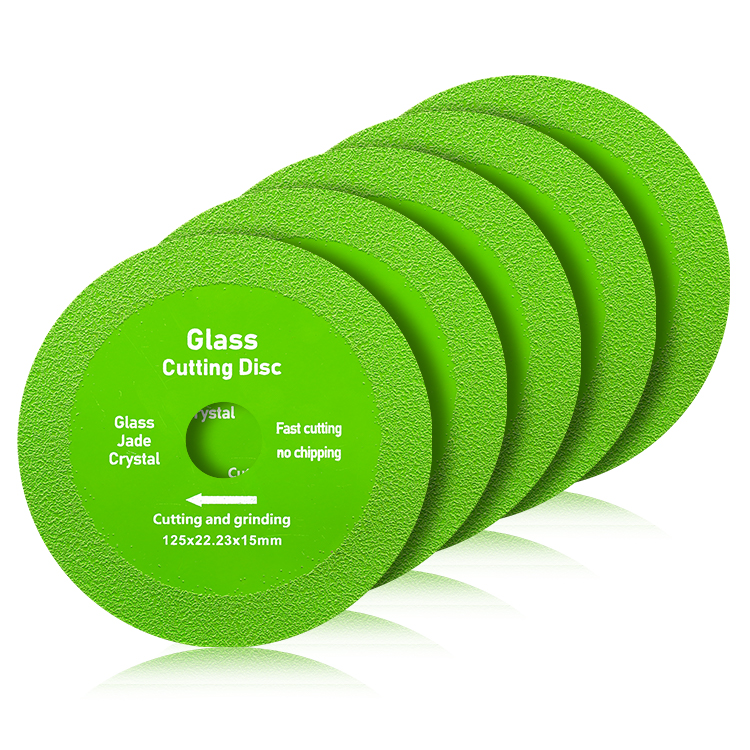
How Quantum Stress Sensing Works Using Nitrogen-Vacancy (NV) Centers in Diamond
Phenomenon: NV Center Spin States and Their Response to Mechanical Stress
Nitrogen-Vacancy (NV) centers are basically tiny flaws in diamonds where a nitrogen atom sits next to an empty spot in the crystal lattice. These little imperfections have some pretty interesting quantum spin characteristics that respond strongly to mechanical stress. Put them inside diamond saw blades and they get squished when the blade cuts through materials. This squeezing messes with their local symmetry, which changes how the electrons in these NV centers behave. Specifically, it shifts those ground state energy levels we talk about as ms equals zero plus or minus one. We can actually see this happening through something called photoluminescence. Shine a green laser on these stressed areas and watch what happens: the light output drops significantly because stress creates alternative paths for energy release instead of just emitting light. In really rough spots where friction builds up, this drop can be as much as 40%. What does all this mean? It lets us detect microscopic strains at resolutions down to nanometers, way beyond what traditional sensors like piezoresistive devices or fiber Bragg gratings can achieve in most industrial settings today.
Principle: Strain-Induced Changes in Crystal Field Splitting and ODMR Signals
Mechanical stress alters crystal field splitting around the NV center, directly modulating Optically Detected Magnetic Resonance (ODMR) signals. Lattice distortion changes electric field gradients and spin-orbit coupling, shifting ODMR resonance frequencies proportionally to applied axial stress—by approximately 14.6 MHz per GPa. The measurement sequence involves:
- Optical pumping: A 532 nm laser initializes the ms = 0 spin state
- Microwave manipulation: Swept microwave frequencies probe spin transitions
- Fluorescence readout: Red emission (637–800 nm) dips at resonance, with strain-induced frequency shifts quantified in real time
Unlike thermal or vibration-based methods, NV centers retain ±0.1% strain resolution even at 600°C—making them uniquely suited for monitoring diamond blade integrity during high-load industrial cutting.
Case Study: In Situ Strain Mapping in Diamond-Embedded NV Layers Under Simulated Cutting Conditions
A controlled experiment subjected diamond-embedded NV layers to simulated granite cutting at 3000 RPM using fiber-coupled microwave antennas and confocal microscopy. Key findings include:
| Parameter | Low-Stress Region | High-Stress Region |
|---|---|---|
| Strain Shift | <0.5 GHz | >3.2 GHz |
| Fluorescence Drop | 12% | 61% |
| Spatial Resolution | 5 µm | 200 nm |
The NV sensor network identified micro-fracture initiation points near blade teeth 8 seconds before visible damage appeared—demonstrating quantum stress sensing’s capacity for predictive failure prevention. Structural health sensing via NV centers reduced simulated blade replacements by 70% compared to vibration-based monitoring systems.
Real-Time Monitoring of Diamond Saw Blades Using Quantum Sensors in Industrial Environments
Technology Integration: Fiber-Coupled Microwave and Optical Readout for Rotating Blades
Industrial sawing applications need solid integration of fiber optic systems to work properly. Excitation lasers and the resulting photoluminescence signals travel through special polarization maintaining fibers right to those spinning diamond segments on the blade. Near the blade's central hub, microwave antennas create localized magnetic fields that help control spin states. At the same time, fast acting detectors pick up on those strain modulated ODMR signals as they happen. The whole system stays connected thanks to slip ring technology which allows wireless data transfer even when blades spin at over 3,000 RPM. This matters a lot during tough cuts through granite or concrete because temperature spikes and sudden mechanical stresses require responses faster than a millisecond to prevent damage.
Noise Mitigation: Ensuring Stable ODMR Detection Amid Thermal and Electromagnetic Interference
Industrial environments challenge quantum sensing with thermal drift, electromagnetic noise, and mechanical vibration. Proven mitigation strategies include:
- Active temperature stabilization using Peltier coolers (±0.1°C precision)
- Mu-metal shielding reducing 50/60 Hz interference by 40 dB
- Lock-in amplification isolating stress-modulated ODMR signals from broadband background noise
Field tests conducted by a leading industrial tool manufacturer achieved 15 µµm strain resolution despite ambient vibrations exceeding 5 g RMS—validating reliable structural health sensing in foundries and demolition sites where conventional sensors fail.
From Quantum-Level Strain Detection to Predictive Maintenance in Saw Blade Operations
Bridging the Gap: High Spatial Resolution vs. Durability in Harsh Machining Environments
Quantum stress sensing can detect micro strains at the nanoscale level, allowing for real time monitoring of blades. This technology catches signs of fatigue buildup and tiny fractures way before any visible damage occurs. Putting NV centers into diamond saw blades needs some serious engineering work. The sensors need protective coatings to guard against abrasive particles during cutting operations. Thermal stability is also crucial since friction generates heat that could disrupt the quantum measurements. Finding this sweet spot between ultra sensitive atomic detection and tough enough construction changes how we monitor structural health. A mining company actually cut their unexpected downtime by 41% when they started using this tech in the field. It shows that quantum magnetometry isn't just lab experiments anymore but something that works in real world conditions. When companies train predictive models on all this detailed strain data, they get better at scheduling replacements, make blades last longer, and keep cuts precise. All these improvements mean lower costs and fewer risks for those big industrial cutting jobs.
FAQ
What are Nitrogen-Vacancy (NV) centers in diamonds?
NV centers are defects in diamonds where a nitrogen atom is adjacent to a vacancy. These centers exhibit unique quantum properties responsive to mechanical stress.
How do NV centers detect stress?
Stress affects the local symmetry of NV centers, causing shifts in their energy levels, which can be observed via photoluminescence.
What is the significance of Optically Detected Magnetic Resonance (ODMR) signals?
ODMR signals provide insights into strain-induced changes in NV centers, allowing precise strain detection even under high temperatures.
How can NV centers improve predictive maintenance?
They enable the detection of micro-fractures before visible damage occurs, leading to reduced downtime and increased equipment life.