 EN
EN
CE Marking Under the Machinery Directive: Mandatory for Interchangeable Equipment
Why Diamond Saw Blades Are Classified as Interchangeable Equipment
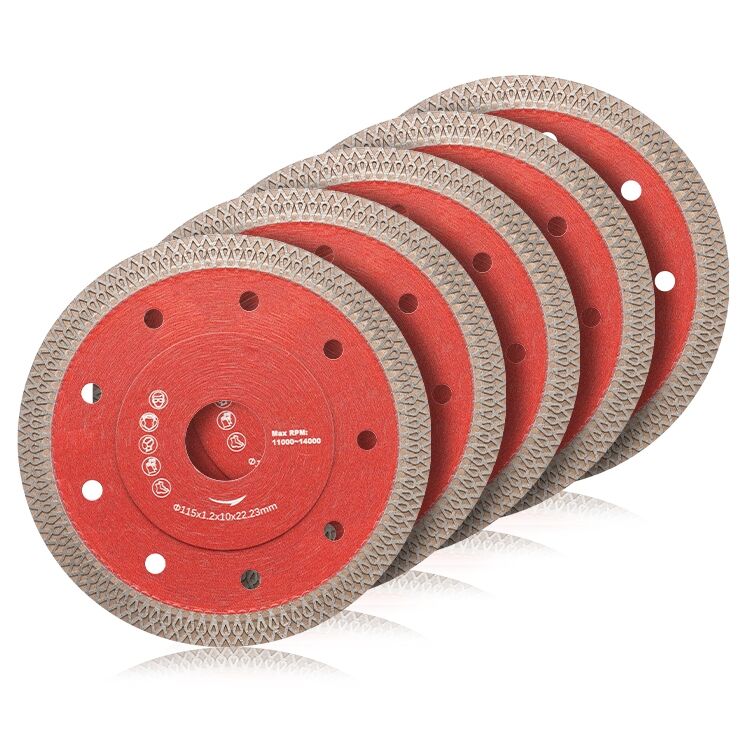
According to the Machinery Directive 2006/42/EC, diamond saw blades fall under the category of interchangeable equipment listed in Annex I. These blades are considered detachable parts that change how machines work, turning regular saws into diamond cutting tools, which fits the legal description provided in the directive. Most often installed after the main machine has been manufactured, these blades have a direct impact on safety during operation, so they need complete CE marking approval. The risks associated with blade failure are serious indeed fragmenting materials, causing kickback incidents, or even sudden ejections from the tool. That's why European regulations require thorough safety testing prior to putting diamond blades on sale. Such measures protect workers and ensure basic health and safety standards are met across the industry.
CE Declaration of Conformity: Key Documentation and Responsibilities
For diamond blade models sold within the EU, manufacturers need to provide a CE Declaration of Conformity (DoC) that confirms compliance with relevant regulations, especially the Machinery Directive 2006/42/EC and standards like EN 13236. The declaration should contain specific information including which product models apply, the standards they meet, how tests were conducted, whether a Notified Body was involved in the process, plus complete contact information for either the manufacturer itself or an authorized representative. Importantly, only the original manufacturer carries legal responsibility for putting together and keeping all technical documentation for a minimum of ten years after production stops. This documentation package needs to cover everything from risk assessments during development to actual design drawings, material specs, and official test results that prove the blades meet basic safety standards required by law.
EN 13236 Compliance: The Core EU Standard for Diamond Blade Safety and Performance
EN 13236 is the definitive harmonized standard governing diamond abrasive products in the EU. Compliance is mandatory for CE marking and serves as the primary benchmark for mechanical integrity, thermal resilience, and operational safety.
Critical Requirements: Burst Strength, Bond Integrity, and Maximum Operating Speed
EN 13236 establishes three non-negotiable performance thresholds:
- Burst strength: Blades must withstand centrifugal forces at 1.5× their maximum operating speed (MOS) without cracking or segment detachment.
- Bond integrity: Diamond segments must remain securely fused to the steel core under repeated thermal cycling and impact loading—validated through shear and thermal shock tests.
-
Maximum operating speed (MOS): Must be permanently marked on the blade (e.g., via laser etching) and verified by testing at 1.2× MOS to confirm stability and dynamic balance.
Manufacturers must submit validated test reports from ISO/IEC 17025-accredited laboratories demonstrating adherence to all three criteria before placing products on the EU market.
Role of Notified Bodies in Type Examination and Production Monitoring
EU-appointed Notified Bodies provide independent verification through two critical stages:
- Type Examination: Comprehensive review of technical files—including design calculations, material certifications, and test protocols—to verify alignment with EN 13236 and the Machinery Directive.
-
Production Monitoring: Ongoing oversight via unannounced factory audits, batch sampling, and periodic retesting (e.g., burst and bond shear tests) to ensure consistent quality across production runs.
These bodies maintain official compliance records and retain authority to suspend or withdraw certification upon detecting non-conformities—acting as a vital safeguard against substandard products entering the construction supply chain.
PPE and System Integration: Ensuring Safe Use Within EU Construction Workflows
Compatibility Certification with CE-Compliant Saws and Dust Suppression Systems
The CE mark isn't just about single parts anymore these days. It actually covers how those parts work together safely in bigger systems too. Take diamond blades for instance they need proper compatibility checks when paired with certain CE certified saws and dust control gear. The whole point of this testing is to make sure the blade doesn't mess up important safety features like emergency stops working right, vibrations getting properly dampened, or dust being sucked away efficiently enough. Companies have to keep records showing their blades work well with specific saw models after all these tests are done. This helps prevent dangerous situations where things might fail because of resonance issues or simply not catching enough harmful silica particles in the air. If manufacturers skip this step, then both the blade itself and whatever machine it goes on could end up violating the Machinery Directive regulations. Worse still, workers would lose track of necessary protective equipment details and exposure limits set by the EU's rules on carcinogens and mutagens.
Beyond CE: Emerging Requirements for Sustainability and Digital Traceability
While CE marking and EN 13236 remain foundational, regulatory expectations are evolving rapidly. Two key developments now shape compliance strategy:
- Sustainability accountability: Authorities increasingly require evidence of low-carbon manufacturing, including energy-use reporting, responsible sourcing of cobalt and synthetic diamonds aligned with the EU Deforestation Regulation (EUDR), and lifecycle assessments supporting circular economy goals.
- Digital Product Passports (DPPs): Under the Ecodesign for Sustainable Products Regulation (ESPR), diamond blades will soon require DPPs—machine-readable, blockchain-supported records documenting raw material origin, production emissions, repair history, and end-of-life recyclability.
These shifts move compliance beyond static certification toward continuous, data-driven stewardship. Early adopters gain competitive advantage—not only meeting evolving regulatory thresholds but also strengthening trust with contractors, insurers, and public-sector procurement bodies committed to Environmental, Social, and Governance (ESG) performance.
FAQ Section
What is CE Marking?
CE marking is a certification mark that indicates conformity with health, safety, and environmental protection standards for products sold within the European Economic Area (EEA).
Why do diamond saw blades need CE marking approval?
Diamond saw blades need CE marking approval because they impact safety during operation and must comply with the Machinery Directive 2006/42/EC regulations and standards like EN 13236.
What is a CE Declaration of Conformity?
A CE Declaration of Conformity is a document that manufacturers provide, confirming a product's compliance with EU regulations and standards.
What is the EN 13236 standard?
EN 13236 is the harmonized standard governing diamond abrasive products in the EU, ensuring mechanical integrity, thermal resilience, and operational safety.
What are Digital Product Passports (DPPs)?
DPPs are machine-readable, blockchain-supported records documenting raw material origin, production emissions, repair history, and recyclability of products.
Table of Contents
- CE Marking Under the Machinery Directive: Mandatory for Interchangeable Equipment
- EN 13236 Compliance: The Core EU Standard for Diamond Blade Safety and Performance
- PPE and System Integration: Ensuring Safe Use Within EU Construction Workflows
- Beyond CE: Emerging Requirements for Sustainability and Digital Traceability
- FAQ Section