
 EN
EN
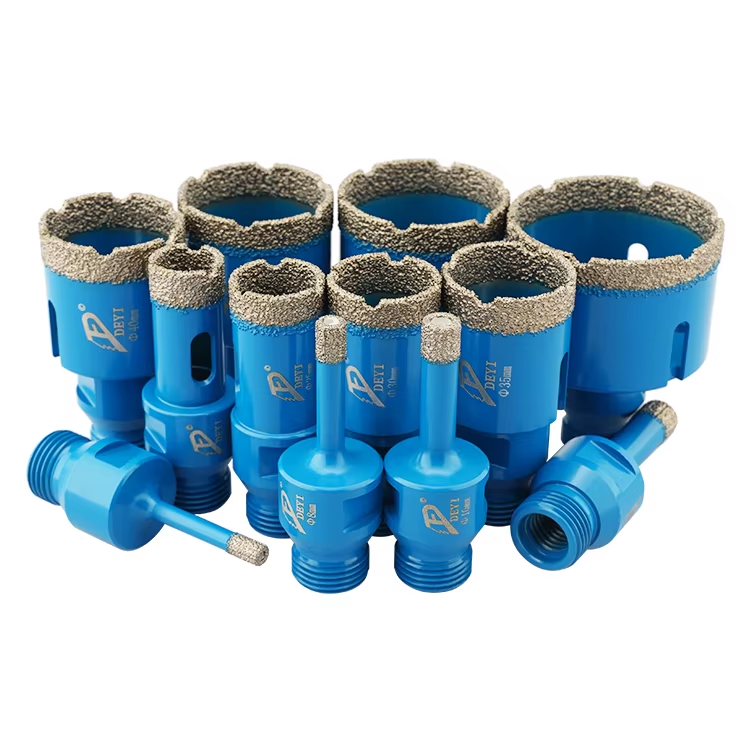
Structural Integrity: How Drill Bit Wall Thickness Influences Rigidity and Load Resistance
Bending and Buckling in Thin-Wall Diamond Drill Bits Under Axial Load
Diamond drill bits with thin walls, especially anything below 1.5mm, tend to lose their structural strength when subjected to axial loads. This makes them prone to bending and buckling problems when working through tough rock formations. The resulting deflection doesn't just wear down the cutting segments faster, it also increases chances of getting the core stuck inside the hole. According to field data from actual drilling operations, these slim wall bits create around 35 percent more side-to-side vibration during deep hole coring compared to their thicker counterparts. That extra movement translates into worse drilling precision and shorter tool lifespan overall, which is why many operators prefer going with sturdier designs for demanding applications.
Application of Euler Buckling Theory to Core Barrel Design (ψ_cr ∝ t²/D²)
Euler's buckling theory forms the basis for designing core barrels, where the critical stress relates to how thick the walls are compared to the diameter. The math shows that if we double the wall thickness, the buckling resistance goes up four times over. This principle gets put into practice all the time when dealing with high torque situations during mineral exploration work. Take a standard 108mm diameter bit for example. To handle those tough granite formations under 900 Newton meters of twisting force, engineers typically specify around 2.4mm thick walls. Cut that down to just 1.2mm though, and the same bit starts failing around 550 Nm instead. Makes sense why proper wall thickness calculations matter so much in field operations.
Field Evidence: 0.8mm vs 3.2mm Wall Thickness in 100MPa Quartzite Shows 42% Higher Failure Rate
Comparative field data from quartzite (100 MPa UCS) confirms the decisive impact of wall thickness on operational reliability:
| Wall Thickness | Drill Depth (m) | Failure Rate | Core Recovery |
|---|---|---|---|
| 0.8mm | 12.8 | 42% higher | 78% |
| 3.2mm | 18.5 | Baseline | 94% |
Thicker walls inhibit fracture propagation under geological stress, reducing catastrophic failures by 27%. This underscores the inverse relationship between wall thinness and structural integrity—especially where formation hardness and loading variability demand robust mechanical response.
Cutting Efficiency: Wall Thickness, Kerf Width, and Material Removal Rate
The thickness of a drill bit's walls plays a major role in how efficiently it cuts rock. This is mainly because wall thickness affects kerf width, which refers to the ring-shaped amount of material taken away with each rotation. Thicker walls create wider kerfs, requiring more torque and generally slower progress. When manufacturers make the walls thinner, they get several benefits at once. The reduced kerf means less mechanical resistance during drilling operations, which cuts down on energy needs. Plus, thin-walled bits can extract cores from formations much quicker than their thicker counterparts. However, there's always a catch. Formation consistency matters a lot here. If the rock layers aren't uniform throughout, those thinner walls might not hold up under stress, compromising structural integrity despite the performance gains.
Reduced Kerf from 3mm to 1.2mm Lowers Torque Demand by 27% (ASTM D5076)
When we narrow down those kerf widths, there's actually less friction happening between the rock and the cutting segment. According to tests done under ASTM D5076 standards on granite samples, going from a standard 3mm cut width all the way down to just 1.2mm makes the whole system require about 27% less torque. That means operators can spin things faster without worrying about losing control or stability during operation. And what happens next? Well, this better efficiency really pays off in terms of material removal rate. We're talking about an improvement of around 32% compared to regular setups, yet still keeping the core quality within acceptable ranges for most applications.
| Kerf Reduction | Torque Decrease | MRR Improvement |
|---|---|---|
| 3mm → 2mm | 12% | 15% |
| 3mm → 1.2mm | 27% | 32% |
Rising Use of 0.5—1.5mm Ultra-Thin Wall Bits in Soft-Rock Exploration (e.g., Weathered Granite)
Bits with ultra thin walls measuring between 0.5 and 1.5mm have become the norm when working through softer to moderately strong rock formations such as weathered granite. The smaller cutting edge creates real benefits in performance metrics too. Field tests show these bits can penetrate materials about 40 percent quicker than traditional thicker walled alternatives while needing around 60 percent less downward pressure during operation. This makes them great for quick sample collection tasks in areas where minimal disturbance is needed, especially during initial site assessments or environmental studies, all while keeping the core samples intact and usable. However, most operators still limit their application to areas with consistent geological makeup. The industry has learned from experience that trying to maximize material removal rates works best when matched properly to what the actual rock conditions can handle.
Thermal Management and Durability: The Trade-off Between Thin and Thick Wall Diamond Drill Bits
Thin Walls Increase Segment Temperature by 35—60°C Due to Poor Heat Dissipation (IR Thermography Data)
Diamond drill bits with thin walls hit serious heat problems when running for extended periods. Thermography tests show that sections of these bits (with wall thickness below 1.5mm) get anywhere between 35 to 60 degrees Celsius warmer compared to their thicker walled versions while working through tough materials such as granite which conducts heat so well. The main issue is simply not enough material there to soak up all that heat generated at the cutting edge, which speeds up the breakdown process of the diamonds themselves and wears down the surrounding metal matrix faster than normal. Field work on quartzite back in 2023 made this painfully clear too. Thin wall drills needed almost twice as many breaks just to stay cool enough, and this extra downtime meant they lasted roughly 30 percent less time overall before needing replacement in really harsh drilling conditions.
| Thermal Characteristic | Thin Wall (<1.5mm) | Thick Wall (>2.5mm) |
|---|---|---|
| Avg. Segment Temp | 185—210°C | 150°C |
| Coolant Demand | High | Moderate |
| Durability Impact | 25—30% reduction | Optimal |
Hybrid Wall Design: 0.9mm at Crown, 2.4mm at Shank for Optimal Heat and Strength Balance
The hybrid wall design tackles the age old problem of balancing cutting speed with how well a tool can handle heat and mechanical stress. When engineers set the crown thickness at 0.9mm they're actually doing two things at once: making sure there's less material wasted during cuts (called kerf reduction) while also getting more material removed per minute (MRR). Then the walls get thicker towards the shank end, going up to 2.4mm. This setup helps dissipate heat better and makes the bit more resistant to twisting forces. Tests on basalt rock over eight hours straight show these bits run about 22 degrees cooler than standard thin wall designs. And because the shank is reinforced, it handles sideways forces much better too, cutting down on breakages by around 18%. What we see here is basically smart engineering that combines solid physics principles with real world testing results to create tools that last longer without slowing down production speeds.
FAQ Section
Why does wall thickness influence drill bit performance?
Wall thickness affects the rigidity, buckling resistance, heating management, and cutting efficiency of drill bits, impacting performance under load and drilling speed.
What are the benefits of using thinner wall drill bits?
Thinner walls often mean reduced kerf width, leading to lower torque requirements and faster drilling speeds, particularly in softer rock formations.
Are there any downsides to having thin-walled diamond drill bits?
Yes, thinner walls can lead to increased heat build-up, quicker wear, higher failure rates, and less structural integrity in variable geological conditions.
How does wall thickness relate to thermal management?
Thick walls distribute and dissipate heat better, maintaining lower segment temperatures and extending drill bit durability.