
 EN
EN
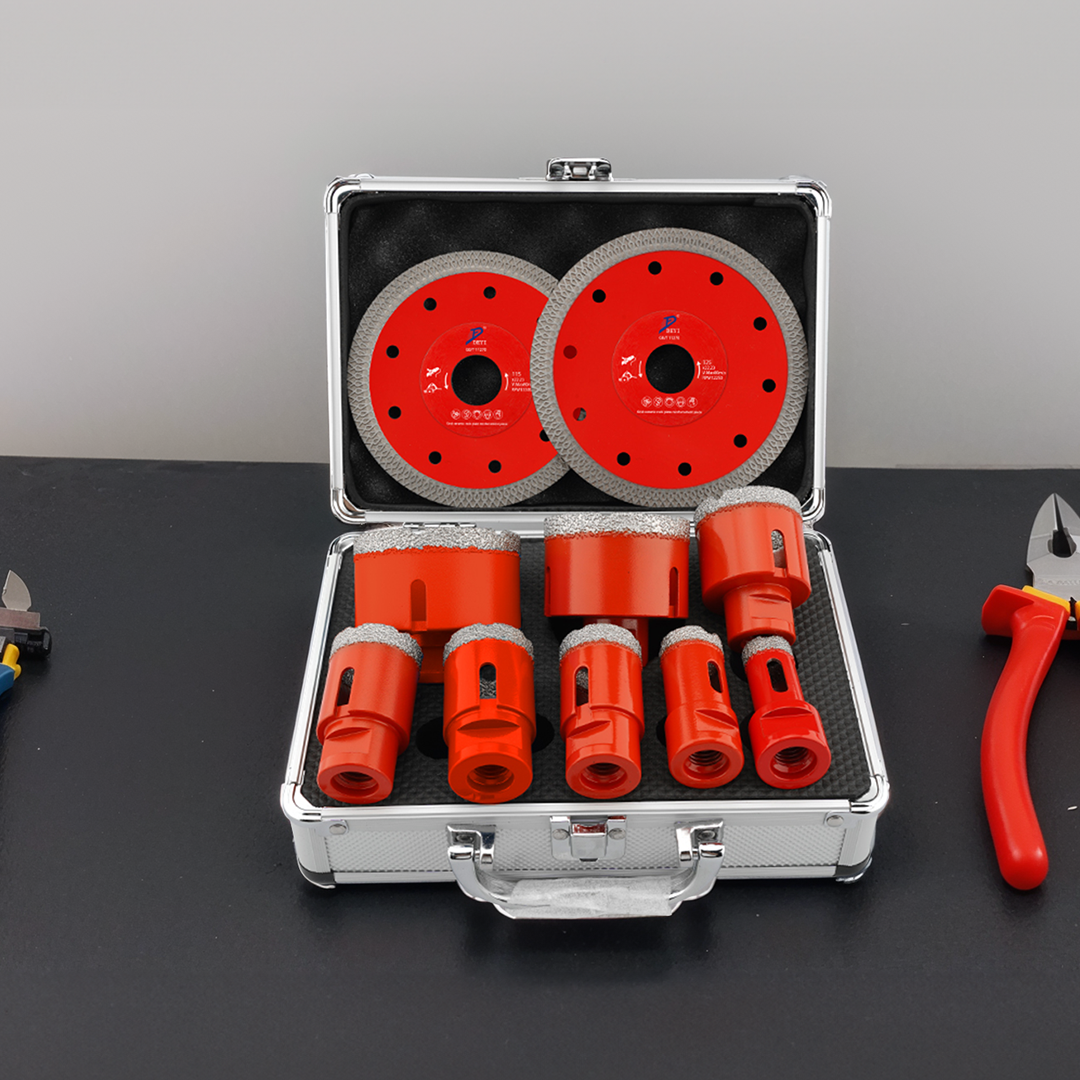
Understanding the Science of Diamond Dispersion in Metal Bond Matrices
The challenge of uneven diamond distribution in sintered metal bonds
Getting even diamond spread in custom core drill bits is no small task because of how materials behave naturally. When these bits go through the sintering process, diamonds tend to move towards spots where there's less pressure, which leads to clumping in some areas and bare patches elsewhere. The result? Two main problems actually happen at once. Bits with too many diamonds in one spot end up losing those gems early on since they don't have enough metal holding them in place. Meanwhile, areas with fewer diamonds wear down much faster because there's not enough protection against friction. Research from around 2021 showed that drill bits showing more than 15 percent difference in diamond concentration across their surface lasted almost 40 percent less time compared to ones where diamonds were spread out evenly throughout.
Why uniform diamond concentration is critical for cutting efficiency and bit life
Precision diamond distribution directly impacts two key performance factors:
- Cutting efficiency: Clustered diamonds cause localized overheating (600°C in granite drilling), leading to glazing and reduced abrasion
- Structural integrity: Sparse zones accelerate matrix erosion, destabilizing surrounding clusters
Optimal dispersion ensures sequential diamond exposure as the matrix wears, maintaining consistent penetration rates and preventing catastrophic segment failure. Tools with <8% density variation achieve 22% faster average cutting speeds in concrete (NIST 2023).
Case study: Performance failure due to diamond agglomeration in dry-blended mixes
A gear manufacturer‘s shift to cost-driven dry blending resulted in 53% faster drill bit wear during cast iron boring. Cross-sectional SEM analysis revealed diamond clusters spanning 200–300μm surrounded by matrix-only regions. Field data showed:
| Metric | Homogeneous Mix | Agglomerated Mix |
|---|---|---|
| Holes per segment | 48 | 29 |
| Avg. cutting speed | 12 mm/s | 8.7 mm/s |
| Segment reject rate | 4% | 19% |
The failed $220k production run underscored how dispersion defects amplify downstream costs through machine downtime and rework. Post-mortem analysis led to adoption of surfactant-enhanced wet mixing, eliminating cluster-related failures.
Optimizing Material Composition for Enhanced Diamond Distribution
Role of metal bond composition in promoting or hindering diamond dispersion
The metal matrix acts as a carrier for diamonds while also controlling wear during operation. Copper based alloys containing around 60 to 70 percent copper and 15 to 25 percent tin offer better dispersion properties when compared with cobalt dominant bonds. This is mainly because they require lower sintering temperatures between roughly 1,150 and 1,250 degrees Fahrenheit, something that minimizes the risk of diamond graphitization. Research indicates that adding more than 5% silver actually increases diamond clustering by about 27%, which has a noticeable impact on drilling speeds particularly when working with granite materials. Getting the right mix of carbide forming elements such as tungsten remains important too. Around 8 to 12% tungsten content works best for keeping diamonds securely in place without forming those problematic brittle intermetallic phases that can compromise tool performance.
Designing diamond-matrix systems for specific drilling conditions and substrates
When making custom drill bits, getting the right mix of diamonds and matrix hardness matters a lot. Soft limestone formations around 3 to 4 MPa generally need about 25 to 30 carats per cubic meter of diamonds embedded in an 85 HRB matrix material. This helps prevent the bits from wearing out too quickly during operations. Quartzite on the other hand presents different challenges. At hardness levels between 8 and 10 MPa, operators typically go for higher diamond content around 35 to 40 ct/m³ combined with harder 95 HRB matrices. The extra reinforcement keeps the bits working efficiently while minimizing those frustrating pull-outs that waste time and money. Real world testing shows these adjustments can boost penetration speeds by roughly 18 percent and significantly extend how long a single bit lasts when moving through different rock types in actual drilling conditions.
Balancing diamond content with dispersion efficiency: Overcoming the high-diamond paradox
Going over 45 carats per cubic meter usually hurts performance. A study from last year showed that when they mixed diamonds at 50ct/m³ instead of 35ct/m³, there was about 40% more clustering happening. What works better? Mixing different sized diamonds together. Most folks find success using both 40/50 and 60/70 US mesh sizes along with some good quality powder flow agents. This combination keeps things running smoothly even when concentrations drop between 32 to 38ct/m³. Recent tests with scanning electron microscopy have shown around 92% uniformity in how these materials spread out during production runs. Makes sense really, since getting the right balance helps avoid those pesky clumps that everyone wants to eliminate.
Advanced Mixing Techniques: Wet Processing vs. Dry Blending
Comparative Analysis: Wet Mixing Versus Dry Blending for Uniform Diamond Distribution
Getting diamonds evenly spread throughout material really comes down to picking the right mixing approach. With wet processing, manufacturers mix the diamonds into a slurry using liquid carriers first, then distribute them through metal powders before drying everything off. This tends to give much better results overall. On the flip side, when companies go for dry blending instead, there's always this issue with static electricity causing clusters to form in the powder bed. Sure, dry methods cost less initially, but that price tag doesn't account for what happens later. According to research published last year, samples made with dry blending ended up showing around 23% greater density differences compared to those processed wet. For many operations, this kind of variability just isn't worth saving a few bucks upfront.
Using Surfactants and Dispersants to Prevent Diamond Clustering in Powder Mixes
Surface-active additives mitigate agglomeration in both systems. In wet processes, surfactants reduce surface tension to prevent diamond flotation. For dry blends, dispersants coat metal particles, neutralizing electrostatic forces that drive clustering. Optimal dosage depends on bond composition—cobalt-rich matrices typically require 0.3–0.5% surfactant by weight to maintain stability.
Data Insight: 40% Reduction in Agglomeration With Optimized Wet Processing (IJRMMP, 2022)
Testing in real industrial settings has shown just how much better advanced mixing techniques can be. When researchers ran controlled tests comparing different methods, they found something interesting. Segments processed with water containing 30 carats of diamonds ended up with about 40 percent less clumping issues compared to those mixed dry under the same conditions examined through scanning electron microscopy. What does this mean practically? Field tests tell the story. Drilling equipment made from these improved wet mixtures managed to spin at around 18% faster revolutions per minute when boring into granite formations without compromising the structural stability of the core barrels during operation.
Precision Manufacturing Processes That Lock in Homogeneous Dispersion
Cold Isostatic Pressing and Sintering: How Parameters Affect Final Diamond Distribution
Cold isostatic pressing, or CIP for short, works by applying even pressure all around to squeeze together mixtures of diamonds and metal into shapes that are almost ready for use, with very few gaps between particles. When pressures go over 300 MPa and the heating happens at just the right speed during the sintering process, this helps keep those precious diamond particles from moving around too much, so they stay where they need to be in the final product. Recent tests have found that getting the timing right on how long materials sit under pressure can cut down on unwanted clustering issues by somewhere between 15 and 20 percent when compared with traditional one-direction pressing methods according to research published last year in the Journal of Materials Processing.
Workflow Integration: From Mix Preparation to Forming for Consistent Quality
Maintaining dispersion requires contamination-free handling throughout production. Automated powder-feeding systems with inert gas purging prevent moisture or debris from disrupting distribution. Integrated cold chain storage (-10°C to 15°C) preserves surfactant efficacy in pre-sintered green bodies, ensuring mix stability before pressing.
Emerging Approaches: Additive Manufacturing vs. Traditional Pressing in Diamond Bit Production
| Method | Diamond Dispersion Homogeneity | Structural Integrity | Geometric Flexibility |
|---|---|---|---|
| Additive Manufacturing | 95%+ via layer-by-layer placement | Lower density (≈85% TD) | High (complex contours) |
| Cold Isostatic Pressing | 92–96% with optimized parameters | High (93–97% TD) | Limited to radial symmetry |
While additive manufacturing enables intricate coolant channels, traditional CIP remains preferred for high-stress applications due to superior sintered density and fatigue resistance.
Validating Uniformity: Testing Methods and Performance Feedback
SEM-based Cross-sectional Analysis for Quantifying Dispersion Homogeneity
Using scanning electron microscopy helps spot diamond distribution patterns that regular inspections just can't catch. According to recent research published in Materials Today last year, tools that don't have at least 85% even dispersion tend to wear out about three times quicker than those with better distribution. When engineers map out these cluster formations on over fifty different bit cross sections, they start seeing problems in how the diamonds were mixed together. This matters a lot for custom diamond core drill bits because if there's variation of plus or minus 5% in concentration somewhere along the mix, it often leads to early breakdowns and wasted materials.
How Poor Dispersion Impacts Drilling Speed, Wear, and Core Integrity
Clustered diamonds create uneven cutting edges, forcing operators to increase downward pressure by 18–22% to maintain penetration (Journal of Drilling Technology, 2024). This accelerates matrix erosion in diamond-free zones while underutilizing intact diamonds. Field trials link poor dispersion to:
- 34% shorter bit lifespan in reinforced concrete
- 12% lower core recovery in abrasive sandstone
- 50% higher risk of catastrophic segment delamination
Closing the Loop: Using Field Data to Refine Mix Design and Processing
More forward thinking manufacturers are starting to feed drill bit breakdown reports and actual field performance numbers into their machine learning systems these days. A mining equipment firm based in Germany cut down on excess diamond usage by around 25% over roughly a year and a half when they matched their wet mixing settings to the stress patterns observed during thousands of hours spent drilling through different rock formations. The whole point of this approach is to keep tweaking those metal bond recipes until they get just right - something that's really tricky because what works perfectly in lab tests often falls apart when scaled up for mass production.
FAQ Section
Why is diamond dispersion important in drill bit manufacturing?
Diamond dispersion affects the durability and efficiency of drill bits. Uneven dispersion leads to faster wear, clumping, and poor cutting performance.
What are the advantages of wet mixing over dry blending?
Wet mixing reduces static-induced clustering and ensures more uniform diamond distribution, resulting in better overall performance and longer-lasting drill bits.
How does metal bond composition influence diamond dispersion?
Different metal compositions affect sintering temperature and diamond clustering. Copper-based alloys with the right mix reduce clustering better than cobalt-dominant bonds.
What is the role of cold isostatic pressing in manufacturing?
Cold isostatic pressing applies even pressure during shaping, minimizing gaps and improving diamond dispersion, which enhances the final product's quality.
How are SEM analyses used in testing diamond dispersion?
Scanning electron microscopy provides detailed images of diamond distribution patterns, identifying dispersion issues that affect the performance and lifespan of drill bits.
Table of Contents
- Understanding the Science of Diamond Dispersion in Metal Bond Matrices
- Optimizing Material Composition for Enhanced Diamond Distribution
- Advanced Mixing Techniques: Wet Processing vs. Dry Blending
- Precision Manufacturing Processes That Lock in Homogeneous Dispersion
- Validating Uniformity: Testing Methods and Performance Feedback
-
FAQ Section
- Why is diamond dispersion important in drill bit manufacturing?
- What are the advantages of wet mixing over dry blending?
- How does metal bond composition influence diamond dispersion?
- What is the role of cold isostatic pressing in manufacturing?
- How are SEM analyses used in testing diamond dispersion?