
 EN
EN
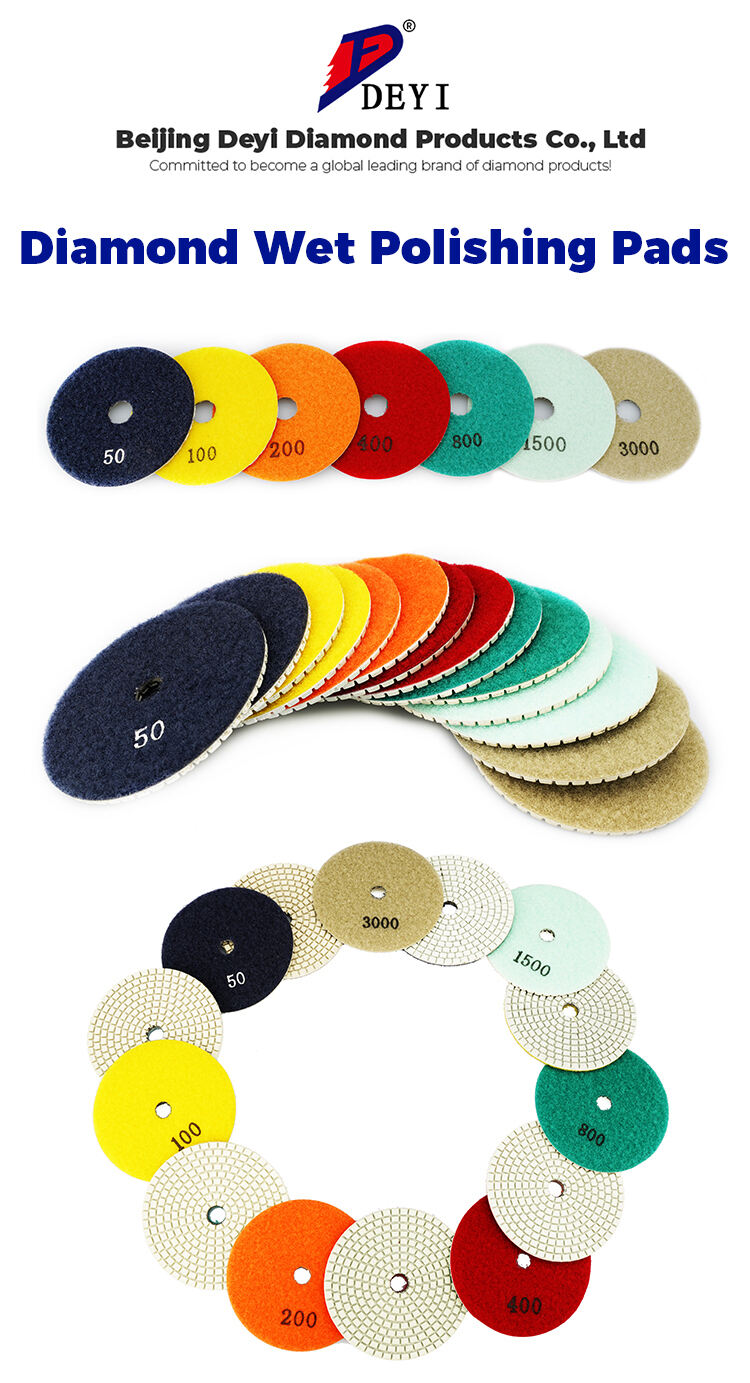
Understanding Sharpness Retention in Diamond Polishing Pads for Marble
What Is Sharpness Retention and Why It Matters in Marble Polishing
When we talk about sharpness retention in diamond polishing pads, we're basically looking at how well these tools keep cutting effectively during the entire polishing job. Marble, which is basically calcium carbonate and sits around 3 to 4 on the Mohs scale, really depends on this characteristic for good results. If a pad starts losing its edge too soon, workers end up spending way more time getting that perfect mirror finish. Some studies from StoneTech back this up showing labor times can jump as much as 35% extra work just because the pad isn't holding up. That makes maintaining sharpness not just important but absolutely critical for anyone wanting to get things done efficiently while keeping costs down.
The Role of Diamond Exposure and Bond Matrix Wear Rates
The sweet spot for performance happens when about 30 to 40 percent of those diamond particles stick out past the bonding material. If they stick out too much, we run the risk of scratching up delicate marble surfaces. Not enough exposure? Then we get glazing - that shiny film that basically stops the cutting action dead in its tracks. Most professionals aim for a wear rate around 2 to 3 microns per hour, which keeps new diamonds coming through as the old ones get worn down. The newer hybrid metal-resin bonds are making waves in the industry right now. According to recent research from Surface Engineering Journal (2023), these composite systems cut down on pad replacements by roughly 22% compared to older single-bond technologies because they erode at just the right pace.
Case Study: Standard vs. High-Retention Pads on Carrara Marble
A six-month field test evaluated standard resin-bond pads against high-retention variants across 1,200 m² of Carrara marble:
| Metric | Standard Pads | High-Retention Pads | Improvement |
|---|---|---|---|
| Avg. coverage per pad | 85 m² | 120 m² | +41% |
| Scratch incidents | 17 | 3 | -82% |
| Final gloss level | 78 GU | 86 GU | +10% |
The high-retention pads used graded diamond concentrations (40–30–20 grit layers) and a magnesium-enhanced bond matrix tailored to marble’s softness. This design extended pad life while maintaining surface flatness within ±0.01 mm, minimizing rework and enhancing finish consistency.
Impact of Diamond Concentration on Sharpness and Material Removal Rate
The amount of diamonds in a cutting tool really makes a difference when it comes to how fast things cut and how long the tool lasts. For tough materials like granite, going with concentrations around 40 to 50 percent works best. But when dealing with something softer like marble, we need to take a different tack altogether. According to what we see in actual field work, keeping diamond concentration between 25 and 30 percent strikes just the right note. This level keeps the cutting going strong while preventing the bonding material from wearing out too quickly. Experience shows this reduces early glazing issues by about 15 to 20 percent. What's great about this sweet spot is that it maintains good diamond contact throughout the life of the pad, which matters a lot when working with those calcium rich stone surfaces.
Balancing Grit Size Progression in Marble Polishing Techniques
Getting the right grit progression right matters a lot if we want to prevent those annoying micro scratches and achieve smooth finishes. When working with marble, start off with the rougher 50 to 100 mesh pads to tackle those deeper flaws first. Work our way up to around 200 to 400 mesh for smoothing things out, then finish with proper polishing techniques. Many folks make the mistake of skipping steps completely, like going straight from 100 to 800 mesh, which actually causes hidden damage beneath the surface that takes about 30 percent extra work to fix later. Stone fabricators who take their time with each transition between grits tend to see benefits too. Their pads last roughly 18 percent longer overall, and projects get done about 25 percent quicker when dealing specifically with Carrara marble, one of the most popular types in the industry today.
Higher Density vs. Risk of Scratching Soft Marbles: Finding the Balance
Too much diamond concentration actually makes things worse for soft marbles since the grit sticks out too far and causes scratches. For dolomitic marbles rated around Mohs 4 to 4.5 like Nero Marquina, the sweet spot seems to be about 30 to 35 percent concentration. At this level, they can remove material at roughly half a millimeter per minute without creating many defects. The story changes though when looking at calcareous stones such as Thassos marble. These work better with concentrations closer to 20 to 25 percent, cutting down on surface scratches by nearly two thirds according to tests. Newer hybrid polishing pads now come with what manufacturers call zoned density patterns where there's more diamond near the middle but less towards the outer parts. Field testing shows these special designs cut edge chipping problems by about 40 percent compared to traditional pads.
Engineering Advanced Bond Matrices to Match Marble's Properties
Why Soft Bond Pads Glaze Quickly on Marble Surfaces
When working with marble, soft bond matrices tend to wear down way too fast actually about two to three times quicker than what we'd really want them to. What happens next is pretty frustrating: the diamonds start falling out prematurely and the stone develops this glazed look that makes cutting almost impossible after just 15 to maybe 20 hours of work. Marble isn't like those tougher stones around though. Because it contains calcium carbonate, this material needs the matrix to wear at a much slower pace so the diamonds stay exposed long enough during the whole polishing process. Otherwise everything gets bogged down and nobody wants that kind of mess when trying to get good results.
Tailoring Bond Hardness to Marble’s Mohs Scale (3–4)
The ideal hardness range for bonding marble typically sits around 90 to 110 on the Vickers scale, which makes it roughly 25 percent softer compared to what's used for granite surfaces. These days, most manufacturers are turning to copper tin mixtures combined with some tungsten carbide additions, resulting in wear rates somewhere between 0.03 and 0.05 millimeters per hour. Getting this right is crucial because if the bond isn't hard enough, the surface gets scratched easily. But go too far in the other direction and the pads just break down faster. Finding that sweet spot keeps everything working smoothly even after months of regular use.
Case Study: Hybrid Metal-Resin Bonds Extend Pad Life by 40%
A 2023 comparative trial pitted traditional nickel-bonded pads against hybrid copper-resin systems:
| Metric | Nickel Bond | Hybrid Bond | Improvement |
|---|---|---|---|
| Effective work hours | 48 | 67 | +40% |
| Surface defects/cm² | 3.2 | 0.9 | -72% |
| Water consumption | 18 L/hr | 12 L/hr | -33% |
The hybrid design combines metal durability with resin’s thermal regulation, reducing heat buildup during high-speed operation. This synergy improves pad longevity and lowers water usage, contributing to both economic and environmental benefits.
Emerging Trend: Nanocomposite Bond Matrices in Diamond Pads
Lab-developed nanocomposite bonds reinforced with graphene demonstrate adaptive wear behavior in response to temperature and stone hardness fluctuations. Early testing on variable-density stones like Statuario marble shows a 50% reduction in pad changeovers, offering promise for future commercial applications.
Matching Diamond Polishing Pads to Specific Marble Types
How Marble Mineral Composition Affects Polishing Performance
The minerals found in marble have a real impact on how well grinding pads work. Marble types rich in calcite, which rates around 3 on the Mohs scale, actually wear down pads faster because they're softer. This means workers need to expose more diamonds in the pad to keep cutting effectively. Then there's dolomitic marble, about 4 to 4.5 on Mohs, like Crema Marfil. These stones need pads that erode more slowly. A recent study from 2023 showed something interesting too when people tried using pads designed for calcite on dolomitic marble instead. The lifespan of those pads dropped by roughly 22 percent. Makes sense why professionals pay attention to what kind of marble they're working with.
Guidelines for Calcareous vs. Dolomitic Marbles
| Marble Type | Diamond Concentration | Bond Hardness | Grit Progression |
|---|---|---|---|
| Calcareous (e.g., Carrara) | 20-25% | Medium resin | 50 – 100 – 3000 grit |
| Dolomitic (e.g., Nero Marquina) | 30-35% | Hybrid metal-resin | 100 – 400 – 1500 grit |
For veined statuario marble, combining 50-grit metal-bond pads on quartz veins with 100-grit resin tools on calcite areas prevents under- or over-polishing, preserving both surface integrity and pad sharpness.
Field Example: Custom Pad Selection for Veined Statuario Marble
A Venetian stone workshop improved pad life by 35% using a targeted strategy on 1,200 m² of statuario slabs:
- Zone-based polishing: Applied 70-grit metal-bond pads on quartz-dense veins
- Transition strategy: Used 150–3000 grit resin sequences on calcite zones
- Cooling protocol: Implemented intermittent water spraying, reducing pad temperature by 18°C
This method minimized glazing and maintained dimensional accuracy within 0.1 mm tolerance, demonstrating how tailored approaches enhance both efficiency and finish quality.
Best Practices in Maintenance and Polishing Technique to Preserve Sharpness
Preventing Premature Wear: Causes and Solutions
Most premature wear happens when workers skip through grit sizes or apply uneven pressure during grinding operations. According to a recent industry study published last year, those who jump between grit stages tend to lose around 35% more diamond particles than they would otherwise. The bond matrix needs protection, so it's best practice to move methodically from coarser grits toward finer ones as part of any proper grinding sequence. Pressure settings matter too – keeping machine force under 15 psi helps avoid hot spots that can crack diamonds, particularly important when working with sensitive limestone or marble surfaces where precision matters most.
Pad Cleaning, Cooling, and Dressing to Avoid Thermal Locking
Thermal locking—where overheated resin encapsulates diamonds—can cut polishing efficiency by 50%. Regular dressing with a tungsten rake restores active diamond exposure, while water cooling keeps operating temperatures under 140°F (60°C). Rinsing pads every 15 minutes during Carrara processing extends usable life by 22%, according to field observations.
Optimal Speed, Pressure, and Lubrication for Consistent Performance
Fine-tuning equipment settings enhances sharpness retention across marble types:
| Parameter | Calcareous Marble (e.g., Statuario) | Dolomitic Marble (e.g., Crema Marfil) |
|---|---|---|
| RPM | 800–1,200 | 1,000–1,500 |
| Pressure (psi) | 10–12 | 14–16 |
| Lubrication Cycle | Every 3 minutes | Continuous misting |
Maintaining a steady water flow of 0.03–0.05 gallons per minute prevents slurry accumulation without diluting cutting action, as validated in trials at Carrara quarries. Proper lubrication also aids heat dissipation, further protecting pad structure and prolonging sharpness.
FAQ
What causes premature wear of diamond polishing pads?
Premature wear often results from skipping grit sizes or applying uneven pressure during grinding operations, causing increased diamond loss.
How does diamond concentration affect marble polishing?
Diamond concentration impacts cutting efficiency and tool longevity. Calcareous marbles require lower concentrations to prevent fast wear, while dolomitic marbles can handle higher densities without causing defects.
What is the best method for preventing thermal locking?
Regular dressing with a tungsten rake and consistent water cooling to keep temperatures below 140°F (60°C) are effective methods to prevent thermal locking.
Table of Contents
- Understanding Sharpness Retention in Diamond Polishing Pads for Marble
- Impact of Diamond Concentration on Sharpness and Material Removal Rate
- Balancing Grit Size Progression in Marble Polishing Techniques
- Higher Density vs. Risk of Scratching Soft Marbles: Finding the Balance
- Engineering Advanced Bond Matrices to Match Marble's Properties
- Matching Diamond Polishing Pads to Specific Marble Types
- Best Practices in Maintenance and Polishing Technique to Preserve Sharpness
- FAQ