
 EN
EN
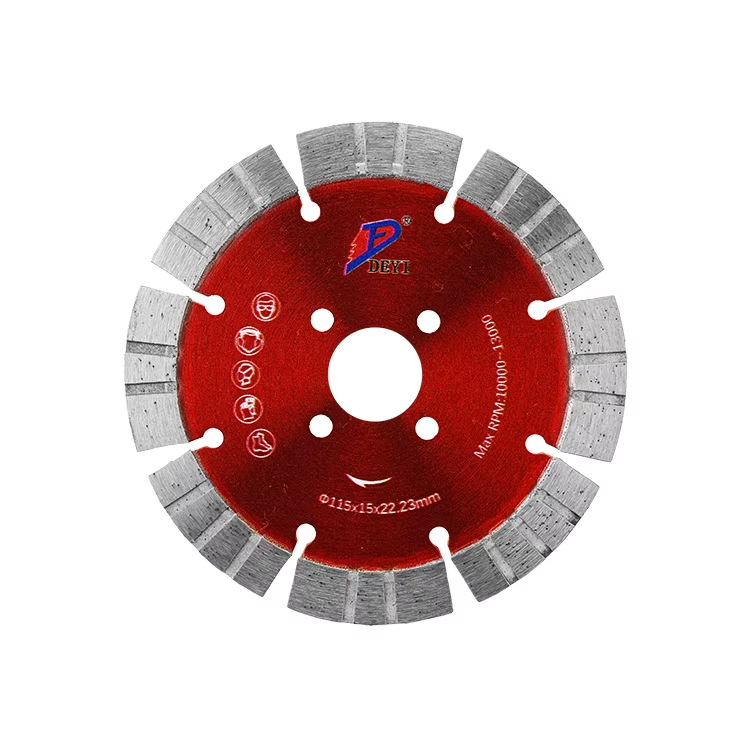
The Critical Role of Thermal Conductivity in Diamond Saw Blade Performance
Heat Accumulation and Thermal Degradation in Sintered Diamond Blades
Excessive heat during cutting accelerates blade wear through matrix softening and diamond graphitization. In copper-based bonds, temperatures above 700°C reduce matrix hardness, leading to premature diamond loss. At the same time, diamonds begin converting to graphite—degrading cutting efficiency by up to 40% in sustained operations.
Why Efficient Heat Dissipation Extends Blade Life and Cutting Efficiency
Blades with superior thermal conductivity maintain effective cutting edges 2–3 times longer by minimizing temperature spikes. Rapid heat transfer from the cutting zone prevents micro-cracking at diamond-metal interfaces, oxidation of bond materials, and stress-induced diamond fracture caused by mismatched thermal expansion rates.
Case Study: Thermal Failure in Copper-Based Hot Pressed Bonds
A 2023 analysis of construction-grade blades found that 68% of copper-bonded tools developed catastrophic cracks near segment joints after 90 minutes of continuous granite cutting. Thermal imaging revealed localized temperatures reaching 850°C—550°C higher than cobalt-based equivalents under identical conditions—highlighting the critical need for improved heat management.
Growing Industry Demand for High-Thermal-Conductivity Bond Materials
These days, manufacturers are really focusing on bond materials with thermal conductivity above 200 W/m·K, stepping away from old fashioned copper-nickel combinations. They're turning instead to newer stuff like tungsten carbide coated diamonds embedded in cobalt chromium matrices. Why? Because this change helps explain why industrial cutting speeds have been going up about 15% each year. Factories need tools that can take 30 to 50 percent more heat before breaking down. The market just keeps demanding better performance from cutting equipment as temperatures rise during operations.
Optimizing Diamond-Metal Interfacial Bonding for Superior Thermal Transfer
How Poor Interface Contact Limits Thermal Conductivity in Cu/Diamond Composites
Weak bonding between copper matrices and diamond particles creates microscopic voids that act as thermal barriers, reducing composite conductivity by up to 60% compared to theoretical values (Zhang et al., 2020). Even 2–5% porosity can decrease heat dissipation efficiency by 30%, accelerating diamond graphitization and blade failure during high-speed cutting.
Diamond Surface Treatments That Improve Interfacial Compatibility
Advanced coatings enhance interfacial adhesion and phonon transfer, significantly improving thermal performance:
| Coating Type | Thermal Conductivity Improvement | Critical Benefit |
|---|---|---|
| Tungsten | 35–40% | Prevents carbon diffusion between Cu and diamond |
| Chromium Carbide | 25–30% | Improves wettability during sintering |
| Scandium Oxide | 20–25% | Reduces interfacial phonon scattering |
Magnetron-sputtered tungsten coatings increased thermal conductivity by 40% in diamond/Al composites by forming continuous conduction pathways (Liu et al., 2023).
Case Study: Tungsten and Carbide Coatings on Diamond Particles
A 45-second tungsten deposition on 150–200 μm diamond particles enhanced interfacial strength by 28% and maintained 580 W/mK thermal conductivity in hot-pressed copper bonds. With an optimal thickness of 50 nm, the coating extended blade life by 3.2 times in granite cutting tests (Alloys Compd., 2018).
Balancing Strong Bonding with Minimal Thermal Resistance at the Interface
Effective interfacial engineering requires precise control of sintering parameters—800–850°C temperature and 35–45 MPa pressure—to promote carbide formation without deforming the matrix. Multi-stage pressure profiles have achieved 94% of theoretical thermal conductivity in Cu/diamond composites by compressing voids while preserving diamond integrity (Compos. Pt. A, 2022).
In-Situ Carbide Formation and Reactive Phases to Enhance Bond Stability and Conductivity
In-Situ Decomposition of Ti3AlC2 and Its Role in Thermal Pathway Development
During sintering, Ti3AlC2 decomposes at 1,200–1,400°C, releasing titanium carbide (TiC) and aluminum. This reaction forms interconnected thermal networks within the matrix, eliminating interfacial voids and increasing thermal conductivity by 23% over conventional additives.
TiC Formation from Precursors: Strengthening Interfaces Without Sacrificing Conductivity
When titanium and carbon react in situ during hot pressing, they form covalent TiC layers on diamond surfaces, reducing interfacial thermal resistance by 35%. However, exceeding 8 wt% titanium promotes brittle intermetallic phases, requiring strict stoichiometric control to balance adhesion and conductivity.
Managing Al4C3 Formation to Prevent Brittleness While Maintaining Thermal Flow
When aluminum is released from Ti3AlC2 material, it actually helps improve how well different substances interact at interfaces, which is good news for manufacturing processes. However there's a catch - when temperatures exceed around 800 degrees Celsius, this aluminum tends to create brittle needle-like structures called Al4C3 that weaken the material over time. Smart manufacturers have developed advanced techniques to keep this problematic phase below about 2% of the total volume. They accomplish this through rapid cooling methods combined with special additives such as cobalt that control carbon activity during processing. What makes these approaches so valuable is that they maintain important mechanical properties like fracture toughness measuring at least 12 MPa square root meter, all while delivering impressive thermal conductivity rates surpassing 450 watts per meter Kelvin. These characteristics are absolutely critical for maintaining stability during high speed cutting operations where heat management becomes a major concern.
Strategic Selection of Metal Matrix and Additives for Maximum Thermal Performance
Comparative Impact of Copper vs. Cobalt in Hot Pressed Bond Conductivity
Copper has pretty good thermal conductivity around 400 W/mK which is why it works so well for getting rid of heat. But when it comes to strength, cobalt actually holds up better. The numbers tell the story too - cobalt can handle about 3.2 GPa before yielding compared to just 2.6 GPa for copper. That means cobalt stays intact longer during those intense cutting operations where pressure builds up. There's been some interesting developments lately though. When manufacturers start mixing tungsten into cobalt matrices, they get materials that reach roughly 83% of what copper does thermally. And these new alloys still keep around 90% of their original hardness too. So there's definitely progress being made toward combining the best aspects of both metals.
Additive Engineering: Balancing Mechanical Strength and Thermal Conduction
When materials scientists add ceramic reinforcements like tungsten carbide (WC) or silicon carbide (SiC), they get better wear resistance plus improved thermal management properties. For instance, mixing just 5 volume percent WC into copper bonding agents boosts wear resistance by roughly 40%, while cutting thermal conductivity losses down to about 12% according to research published in Materials Science Reports back in 2022. These numbers matter a lot in practical situations like concrete cutting operations. Blades used there often encounter spots reaching nearly 800 degrees Celsius during operation, yet still manage to avoid peeling or separating from their substrate material despite those extreme conditions.
Advanced Processing Techniques to Minimize Defects and Maximize Conductivity
Hot Pressing vs. Pressureless Infiltration: Impact on Interfacial Quality
Hot pressing applies simultaneous heat and pressure to produce denser, lower-porosity bonds—reducing void content by 32% compared to pressureless infiltration (Journal of Materials Processing, 2023). This results in fewer interfacial gaps and more efficient thermal transfer.
| Processing Method | Pressure Applied | Key Advantage | Thermal Conductivity (W/mK) | Applications |
|---|---|---|---|---|
| Hot Pressing | 30–50 MPa | Eliminates porosity | 550–650 | High-speed cutting tools |
| Pressureless Infiltration | Ambient | Lower equipment costs | 320–400 | General-purpose abrasives |
Residual porosity (up to 12%) in pressureless infiltration creates thermal bottlenecks, reducing heat dissipation efficiency by 19–27% (Thermal Engineering Review, 2022).
Optimizing Hot Pressing Parameters for Dense, Low-Defect Diamond-Matrix Structures
Three key factors determine thermal performance in hot pressed blades:
- Temperature gradients – Maintaining 850–900°C avoids diamond graphitization while enabling full metal flow
- Dwell time – 8–12 minute cycles ensure complete densification without excessive interfacial reactions
- Cooling rates – Controlled quenching at 15–20°C/min reduces residual stresses
Parameter-optimized hot pressing has been shown to improve thermal conductivity by 38% over standard practices, resulting in 22% longer blade life during granite cutting (Advanced Materials Proceedings, 2023).
FAQ
What is the critical temperature for diamond saw blades?
The critical temperature for copper-based bonds is around 700°C, above which matrix hardness is reduced, leading to premature diamond loss and graphitization.
Why is efficient heat dissipation important for diamond saw blades?
Efficient heat dissipation minimizes temperature spikes, preventing micro-cracking at diamond-metal interfaces and oxidation of bond materials, thus extending blade life and cutting efficiency.
What are wave coatings used for in composite materials?
Advanced coatings such as tungsten, chromium carbide, and scandium oxide improve interfacial adhesion and phonon transfer, significantly enhancing thermal performance.
Table of Contents
- The Critical Role of Thermal Conductivity in Diamond Saw Blade Performance
- Optimizing Diamond-Metal Interfacial Bonding for Superior Thermal Transfer
- In-Situ Carbide Formation and Reactive Phases to Enhance Bond Stability and Conductivity
- Strategic Selection of Metal Matrix and Additives for Maximum Thermal Performance
- Advanced Processing Techniques to Minimize Defects and Maximize Conductivity