
 EN
EN
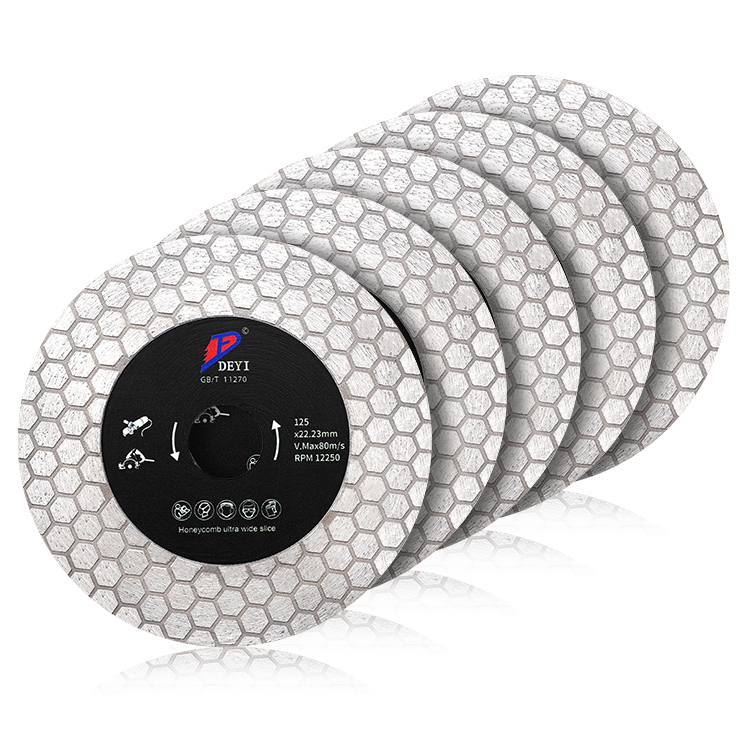
Understanding Porcelain Tile Cutting Challenges
Material properties of porcelain and cutting challenges
Porcelain tiles pack a lot of density, often reaching over 2.4 grams per cubic centimeter and hitting a Mohs hardness scale rating that's right up there with quartz. Because they're so low in porosity, less than half a percent actually, these tiles don't let heat escape easily when being cut. This leads to problems with thermal damage pretty regularly. Plus, porcelain has a tendency to chip because it's inherently brittle material. A recent study published in the Tile Industry Journal back in 2023 found something interesting too. Standard cutting blades create chipping issues around 12 to 15 percent of the time when working with porcelain. That's way worse than what happens with regular ceramic tiles where chipping only occurs about 3 to 5 percent of cuts. These numbers really highlight why professionals need those special tools designed specifically for porcelain work.
Why standard blades fail on dense, brittle porcelain surfaces
Ceramic and concrete cutting blades typically feature coarse diamond grit around 40 to 50 mesh size with softer metal bonding materials meant for general abrasion rather than fine detail work. These same blades struggle when applied to porcelain surfaces because they tend to run hot since there's not enough cooling happening during operation. Tile edges get damaged pretty regularly too from how the diamonds aren't distributed evenly across the segment. Plus, the bonding material breaks down much quicker than the actual diamonds can do their cutting job. Another issue comes from the different ways porcelain expands versus the blade segments when heated, which really speeds up wear and tear. Contractors report needing to replace these general purpose blades about twice as often as specialized porcelain blades would last under similar conditions.
Synthetic vs Natural Diamond: Best Diamond Types for Porcelain Saw Blades
Modern porcelain cutting relies on synthetic diamonds, which outperform natural alternatives in consistency, durability, and cost. Research published in the International Journal of Advanced Manufacturing Technology (2023) found synthetic diamond blades last 43% longer in porcelain applications due to engineered structural control.
Advantages of Synthetic Diamonds in Precision Porcelain Cutting
The synthetic diamond has this really neat property of uniform crystal structure which means they cut materials consistently and leave behind much smoother surfaces. These gems stay stable even when things get hot around 1200 degrees Celsius, so they work great for those fast cutting operations. And according to Ceramic Tech Today from last year, companies can save between 35 to 45 percent compared to using natural diamonds. What makes them special is how they tend to break in predictable ways, minimizing those tiny chips that ruin surfaces. The result? Finishes down to about Ra 2.5 microns, which makes all the difference when installing polished porcelain tiles or similar applications where appearance matters most.
Limitations of Natural Diamonds in High-Speed Tile Applications
Natural diamonds have these irregular crystal formations that result in all sorts of problems. The hardness varies quite a bit between HV 8,000 to around 10,000, which means they cut inconsistently and just don't perform well when feed rates go over 15 meters per second. What really gets manufacturers is how they break down so easily under heat stress during prolonged operations. And let's not forget about cost either. Because real diamonds are so rare, their price tags end up being anywhere from three to four times what synthetics cost per carat. For businesses looking to mass produce porcelain goods on any kind of scale, these factors combined simply make natural diamonds too unreliable and expensive to justify using them regularly.
High-Strength Diamonds Engineered for Ceramic and Porcelain Materials
Top manufacturers now pair synthetic diamonds with nickel-based bonds to optimize performance on hard ceramics. This combination enhances key blade properties:
| Property | Improvement vs Standard Synthetics | Impact on Porcelain Cutting |
|---|---|---|
| Fracture Toughness | +22% | Reduces edge chipping |
| Wear Resistance | +37% | Extends blade life by 60–80% |
| Bond Adhesion | +18% | Maintains grit alignment |
These advancements support dry-cutting of porcelain slabs up to 30 mm thick, meeting contractor demands for versatility and efficiency without coolant.
Diamond Grit Size and Crystal Structure Optimization
Best Diamond Grit Size for Smooth Porcelain Tile Cuts
When it comes to cutting porcelain tiles, fine diamond grit between 120 and 200 mesh works best because it spreads out the cutting pressure more evenly over the whole surface area. According to some tests published in the Ceramic Cutting Technology Report last year, blades with 180 grit diamonds actually cut down on chipping problems by around 63 percent when compared against those old school 80 grit options. What makes this work so well? Simply put, there are just more cutting points along the blade edge. This helps prevent too much pressure from building up in one spot which can damage edges. For anyone working with glazed porcelain where nice clean cuts matter most, avoiding chips and cracks becomes absolutely essential for getting professional looking finishes without having to do constant touch ups later on.
Role of Diamond Crystal Structure in Minimizing Chipping During Cutting
Synthetic diamonds that have angular shapes with clear crystal faces, especially those in octahedral form, generally work better than their rounded natural counterparts. The sharp edges on these synthetic stones don't get polished down as easily when working with porcelain materials that contain lots of silica. Instead, they maintain their cutting power through a process called controlled micro-fracturing. According to research published in Advanced Materials Research last year, this structural advantage cuts down edge chipping problems by around 41%. For professionals in the field, this means less guesswork during operations and consistently better finishes across different projects.
How Uniform Diamond Distribution Enhances Blade Longevity
When done right, electroplating keeps diamond density pretty consistent across different parts of the blade, typically within about 5% variation. This kind of consistency stops those annoying hot spots where wear concentrates so much, which means the blade wears down more evenly overall. Blades treated this way can last nearly three times longer when cutting porcelain continuously according to some recent tests published in Industrial Diamond Review back in 2024. Another benefit? The spacing between diamonds stays regular enough to keep temperatures from climbing above 140 degrees Celsius during operation. That's important because porcelain has this glassy layer that gets damaged easily if exposed to sudden temperature changes.
Bond Hardness and Diamond Concentration in Blade Performance
Matching Bond Hardness to Porcelain Density for Efficient Material Removal
Matching the hardness of the bond to the porcelain's density is essential for getting consistent diamond exposure during cutting operations. When dealing with high density porcelain materials that measure around 2.38 grams per cubic centimeter or higher, softer bonds rated between 10 and 15 on the Mohs adjusted scale tend to work best. These softer bonds wear down at about the same rate as the diamonds themselves, which keeps fresh cutting particles exposed throughout the process. This gradual wear actually helps reduce sideways pressure on the tool and minimizes those annoying edge fractures that can ruin a job. On the other hand, medium hardness bonds in the 16 to 20 Mohs range are generally better suited for glazed ceramic porcelain applications. They strike a nice balance between how fast they wear away and how quickly they cut through material, making them practical choice for many everyday dental lab tasks.
| Porcelain Type | Optimal Bond Hardness | Wear Rate Alignment |
|---|---|---|
| High-density porcelain | Soft (10–15 Mohs) | ≥0.2 mm/min |
| Glazed ceramic porcelain | Medium (16–20 Mohs) | 0.3–0.5 mm/min |
The Impact of Diamond Concentration on Blade Durability and Cut Quality
Diamond concentration—ranging from 15% to 35% by volume—must be carefully calibrated. Higher concentrations (30%+) enhance durability when cutting thick porcelain slabs but generate more heat. Lower concentrations (20%–25%) improve cooling in wet-cutting environments. Stress tests show blades with 25% concentration maintain cutting width within ±0.1 mm over 150 linear meters, ensuring precision and consistency.
Continuous Rim vs Turbo Rim: Segment Design for Porcelain Cutting
Why continuous rim blades deliver smoother porcelain cuts
Continuous rim blades feature an unbroken diamond edge that minimizes vibration and applies uniform pressure, reducing micro-chipping on brittle surfaces. Laser-welded construction supports operation at speeds up to 6,500 RPM, making these blades ideal for polished or glazed porcelain where edge finish is critical.
Turbo rim advantages in heat dissipation and cutting speed
Turbo rim blades integrate segmented ventilation slots into a semi-continuous rim, improving airflow and dissipating heat 28% faster than solid rims. The serrated edge allows 15–20% faster feed rates while maintaining acceptable edge quality, making turbo designs well-suited for production tiling jobs where speed outweighs absolute finish perfection.
Direct comparison: Continuous vs turbo rim performance on glazed porcelain
| Factor | Continuous Rim | Turbo Rim |
|---|---|---|
| Edge Finish Quality | Mirror-smooth (98% chip-free) | Slight striations (85% chip-free) |
| Optimal Material Thickness | ≥12 mm | ≥20 mm |
| Wet Cutting Efficiency | 8-10 linear ft/minute | 12-15 linear ft/minute |
| Blade Lifespan | 500-600 linear feet | 350-400 linear feet |
While continuous rims provide superior edge quality and longevity, turbo rims offer faster throughput and better heat management for thicker materials. For delicate applications like 3D-printed porcelain with fragile decorative layers, continuous rims remain the preferred choice despite lower cutting speed.
FAQ
What are the main challenges when cutting porcelain tiles?
The primary challenges are the tile's density, low porosity, and brittleness, which can lead to chipping and thermal damage during cutting.
Why is synthetic diamond preferred over natural diamond for cutting porcelain?
Synthetic diamonds offer better consistency, durability, and cost-effectiveness than natural diamonds, making them ideal for porcelain cutting.
How does diamond grit size affect porcelain cutting?
Using a fine diamond grit size, between 120 and 200 mesh, helps spread cutting pressure evenly, reducing chipping issues significantly.
What are the differences between continuous and turbo rim blades?
Continuous rim blades provide smoother cuts with minimal chipping, while turbo rim blades offer faster cutting speeds and better heat dissipation.
Table of Contents
- Understanding Porcelain Tile Cutting Challenges
- Synthetic vs Natural Diamond: Best Diamond Types for Porcelain Saw Blades
- Diamond Grit Size and Crystal Structure Optimization
- Best Diamond Grit Size for Smooth Porcelain Tile Cuts
- Role of Diamond Crystal Structure in Minimizing Chipping During Cutting
- How Uniform Diamond Distribution Enhances Blade Longevity
- Bond Hardness and Diamond Concentration in Blade Performance
- Continuous Rim vs Turbo Rim: Segment Design for Porcelain Cutting
- FAQ