
 EN
EN
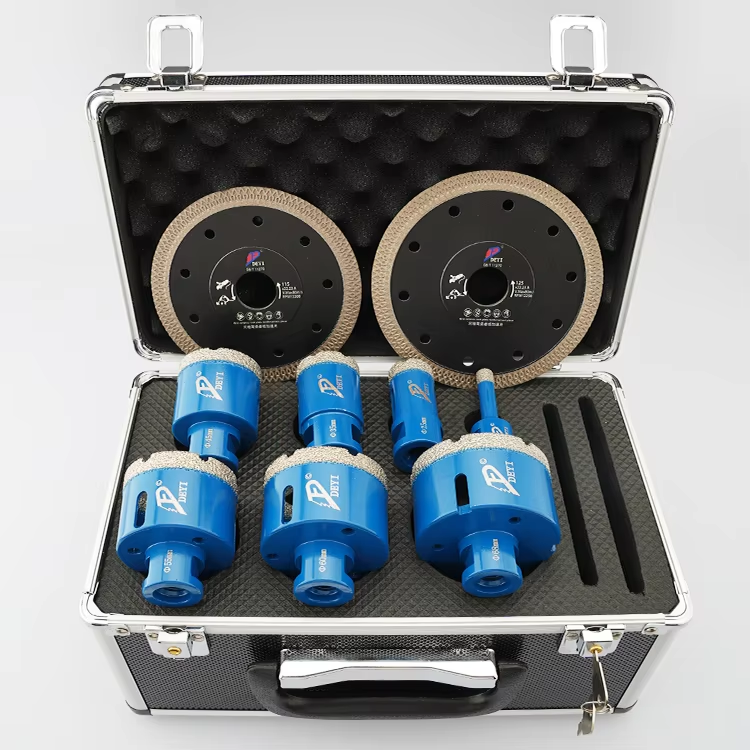
Finite Element Analysis for Structural and Thermal Performance of Diamond Core Bits
Finite Element Analysis (FEA) transforms diamond core bit development by simulating structural integrity and thermal behavior under extreme drilling conditions. This computational approach identifies failure modes before physical prototyping—accelerating design iterations by up to 50% while reducing reliance on costly trial-and-error testing.
Thermal stress modeling during high-speed diamond bit rotation
When tools spin at high speeds, they create friction that heats things up well over 600 degrees Celsius. This intense heat causes parts made with diamonds embedded in them to expand unevenly and develop stress points in specific areas. Finite Element Analysis models help track how temperatures change throughout these materials, showing exactly where problems start to form from repeated heating. Engineers tweak how densely packed those diamonds are placed along with redesigning coolant channels to bring down maximum temperatures around 30 percent. That makes the whole system last much longer before needing replacement. Using this computer-based approach cuts down on actual testing by roughly 70%, which saves time during product development while still getting accurate results about how materials behave under extreme conditions.
Fatigue life prediction using ANSYS Mechanical and Abaqus
Industry-standard FEA platforms—including ANSYS Mechanical and Abaqus—simulate cyclic loading to predict crack initiation and propagation in diamond-impregnated segments. Using validated material properties and site-specific load profiles, engineers:
- Generate stress-life (S–N) curves under variable drilling pressures
- Detect bond matrix weaknesses after 10,000+ simulated cycles
- Refine segment composition to increase mean time between failures by 40%
These simulations correlate with field performance data within 92% accuracy, enabling robust, data-driven design decisions that cut physical validation costs by 60%.
Cutting Force and Material Removal Simulation for Diamond Segment Optimization
Accurate prediction of cutting forces and material removal rates is foundational to diamond segment design. Simulation tools analyze how rock abrasiveness, drill speed, feed rate, and bit geometry influence mechanical loading—identifying failure-prone configurations early in development and reducing physical prototyping costs by up to 30% (ASME 2023).
Parametric optimization of segment geometry and bond hardness
When looking at how different parameters affect performance, engineers run various tests on things like segment height, width, curvature, and how hard the bonding material is. The hardness of this bond plays a big role in how long diamonds stay attached to the tool surface. Softer bonds let worn out grit particles fall off quicker, which means faster cutting action but also causes the tool to wear down sooner. That's why good design needs to find just the right middle ground between being aggressive enough to cut effectively and lasting long enough to be practical. Take tapered segments with varying hardness levels as an example. These kinds of segments keep cutting performance steady even when working through rock layers that change composition. They also help control heat buildup, something that can cause diamonds to turn into graphite too early if not managed properly during operation.
Empirical–numerical hybrid models for abrasive rock cutting force prediction
When it comes to hybrid models, they basically combine actual drilling force measurements taken from the field, like what we see in granite samples, with something called discrete element modeling (DEM). This helps engineers understand how different types of rock behave at a microscopic level since no two rocks are exactly alike. By calibrating these models against real field data, companies can predict cutting forces pretty accurately even when drilling into new areas that haven't been tested before. Take quartz-rich formations for instance, where forces can jump around by over 22% according to recent studies published last year in Geomechanics Journal. Once these models have been properly validated through testing, they become really useful tools for optimizing feed rates during operations. Plus, they help avoid those nasty segment fractures that happen when there's a sudden spike in load during drilling processes.
Digital Twin Integration for End-to-End Diamond Core Bit Prototyping
Closed-loop validation: from CAD to real-world drilling performance
Digital twin technology creates a feedback loop between computer models and what happens on the ground during operations. These virtual copies pull in data from sensors monitoring things like torque levels, vibrations, temperatures, and how fast parts are wearing down during actual drilling tests. They then use this information to tweak the designs and materials used in computer-aided design (CAD) files. Take granite penetration at around 2,500 RPM for example. Simulations run these tough scenarios to check if equipment can handle heat buildup and whether components will last under such stress. When companies constantly compare what their computers predict against what actually happens in the field, they end up cutting design cycles by about 40% and saving money on prototypes. What comes out of all this is something pretty special: digital models that act like blueprints that keep getting better. These models are fine tuned for specific geological conditions and show exactly how much wear and tear equipment experiences over time from friction and heat.
Data-Driven Engineering Platforms for Diamond Core Bit Simulation
Today's engineering platforms bring together all sorts of sensor data like temperature readings, torque measurements, and formation density information with detailed simulations that keep getting better at predicting what will happen. What makes these systems really valuable is how they pass along this operational knowledge straight into those finite element analysis tools and mixed model approaches. This allows engineers to tweak things like segment shapes and bonding formulas way before any actual manufacturing takes place. When companies compare what their simulations predict against what actually happens during drilling operations, they typically see iteration times drop somewhere between 30 to maybe even 50 percent. And let's face it, fewer rounds of physical testing means big savings on materials and time across the board for most projects.
| Simulation Integration | Physical Prototyping Impact |
|---|---|
| Live sensor data feeds | 40–60% fewer test iterations |
| Hybrid empirical-CFD models | 30% shorter development timelines |
| Automated parameter calibration | 25% lower material waste |
These platforms take raw drilling data and turn it into useful information that engineers can actually work with. They help predict cutting forces better, manage how long segments last, and control heat issues during operations. Add machine learning algorithms trained on past performance records to the mix, and the system starts predicting when wear will happen and spotting potential resonance problems before they become major issues. The result? Diamond core bits that drill faster through tough rock layers, last longer between replacements, and keep working reliably even when conditions get really rough underground.
FAQ
What is Finite Element Analysis (FEA) in diamond core bit development?
FEA is a computational method used to simulate structural integrity and thermal behavior of diamond core bits, helping to identify failure modes before physical prototypes are created, thereby accelerating design iterations and reducing costs.
How does FEA help with thermal stress modeling?
FEA models track temperature changes within materials of high-speed diamond bits to identify stress points, allowing engineers to adjust the design for better heat management and longer tool life.
Which platforms are used for fatigue life prediction in diamond core bits?
Industry-standard platforms like ANSYS Mechanical and Abaqus are used to simulate cyclic loading, aiding in the prediction of crack initiation and propagation.
What role do empirical-numerical hybrid models play in diamond core bit design?
These models combine field data with simulation to predict cutting forces accurately, ensuring efficient design even for unexplored geological formations.
What is the role of digital twin technology in the prototyping of diamond core bits?
Digital twin technology creates a feedback loop that uses real-world data to continuously improve the computer-aided designs for better performance and efficiency.
Table of Contents
- Finite Element Analysis for Structural and Thermal Performance of Diamond Core Bits
- Cutting Force and Material Removal Simulation for Diamond Segment Optimization
- Digital Twin Integration for End-to-End Diamond Core Bit Prototyping
- Data-Driven Engineering Platforms for Diamond Core Bit Simulation
-
FAQ
- What is Finite Element Analysis (FEA) in diamond core bit development?
- How does FEA help with thermal stress modeling?
- Which platforms are used for fatigue life prediction in diamond core bits?
- What role do empirical-numerical hybrid models play in diamond core bit design?
- What is the role of digital twin technology in the prototyping of diamond core bits?