
 EN
EN
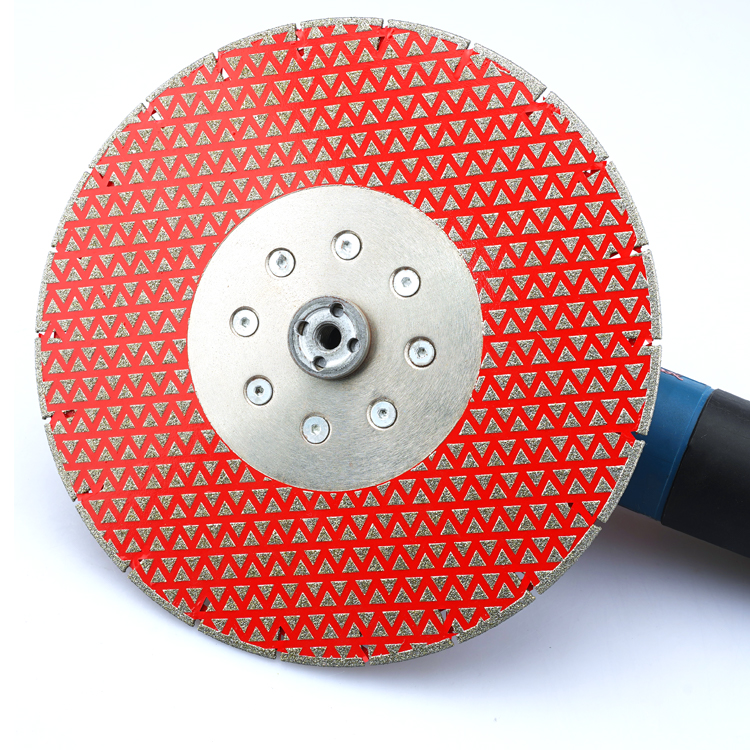
The Role of Oxygen in Iron-Based Powder Matrices for Diamond Saw Blades
Iron-Based Powders as Matrix Materials in Diamond Cutting Tools
Iron based powders have become the go to material for diamond saw blade matrices because they offer good value for money, stay stable at high temperatures, and work well with diamond grits. When these powders are processed, they create metal bonds that hold diamond particles firmly in place even when the blades are subjected to intense cutting forces. The problem comes when there's too much oxygen in the powder mix though. If the oxygen level goes over 0.2%, according to research from PIRA International in 2023, the particles don't stick together properly during the sintering process. This results in weak spots between the materials and ultimately weaker blades overall. That's why most manufacturers now use vacuum sintering techniques along with various methods to control oxygen levels. These approaches help reduce defects caused by oxidation while still taking advantage of what iron has to offer mechanically.
Oxide Layer Formation and Its Effect on Interparticle Bonding
When iron powder is exposed to air, thin oxide layers around 3 to 7 nanometers thick tend to develop on its surface during both handling and the sintering process. These oxide coatings work as barriers that stop particles from bonding properly, which can cut down the strength between particles by about 15 to maybe even 20 percent when compared to situations where there's no oxygen present. Research indicates keeping oxygen content under 300 parts per million while compacting materials leads to better results. The sintered density goes up to approximately 1.8 grams per cubic centimeter, and the shear strength improves by roughly 28 megapascals according to recent experiments. For getting rid of those surface oxides without messing with how the particles look, hydrogen reduction methods have proven effective. This approach maintains consistent diamond distribution across the material and helps build a strong matrix structure throughout the final product.
Contamination Risks During Powder Handling and Storage
Moisture really speeds up oxide contamination problems. Iron powders left in environments with about 50% humidity form oxide layers that are roughly four times thicker compared to powders stored in dry nitrogen for just three days. The industry has started using storage solutions that include iron based oxygen scavengers inside containers that let air through but still keep oxygen levels under 0.1%. These systems help maintain good powder flow properties without compromising protection against oxidation. When companies follow proper handling procedures, they see around a 37% drop in rejected material because of oxide impurities. This makes a big difference in manufacturing efficiency and ultimately leads to better performing blades when cutting tough materials such as concrete or asphalt surfaces.
Sintering Behavior and Oxygen-Induced Defects in Prealloyed Powders
Sintering behavior of prealloyed powders under varying oxygen conditions
The amount of oxygen present plays a big role in how diamond saw blades sinter together. Research from Metallurgical Transactions in 2023 shows that when there's more than 500 parts per million oxygen, those pesky surface oxides form on the iron-based powder particles. These oxides basically cut down the actual contact area between particles by around 20 to 35%, which slows things down during the solid state sintering process. Manufacturers dealing with high oxygen content typically need to extend their dwell time at 1120 degrees Celsius by about 8 to 12% just to get proper neck formation between particles. That means extra energy consumption and longer production cycles compared to batches where oxygen stays below 200 ppm. The difference might seem small on paper but adds up significantly over large production runs.
Oxygen-induced porosity and its effect on sintering density
When metal oxides undergo reduction reactions during processing, they release gases that form tiny pockets beneath the surface. These voids can actually cut down on the final density of sintered parts by somewhere between 5 and 15 percent, particularly in those crucial areas of blades where strength matters most. We've seen cases where pores larger than 10 micrometers at old oxide boundaries weaken the material significantly, dropping transverse rupture strength by about a quarter in cobalt bonded systems. To combat this issue, manufacturers often focus on maintaining strict control over particle sizes (keeping D90 below 45 micrometers works well) while ensuring oxygen levels stay under 0.1 percent during sintering. This combination helps minimize unwanted porosity and gets us close to theoretical maximum density around 98.5%, which makes all the difference when it comes to how reliable these components will be in real world applications.
Role of atmosphere and contamination in diffusion mechanisms
When moisture gets into powders during handling, it brings along hydroxyl groups that start breaking down into reactive oxygen once temperatures go past 800 degrees Celsius. This actually makes oxide formation worse than it would be otherwise. Using hydrogen rich sintering atmospheres cuts down on iron oxide contamination pretty dramatically compared to regular argon environments. Tests show these methods can bring residual oxygen levels down to around 0.08 weight percent in the finished product matrix. But there's a catch here too. If we remove too much oxygen, sometimes we end up losing carbon at those critical diamond interface points which weakens the overall bond strength between components. That's why many manufacturers now opt for staged heating approaches with about 4% hydrogen mixed into nitrogen gas. This allows them to strike a good balance between getting rid of unwanted oxygen while still keeping enough carbon intact to maintain the structural integrity of cutting edges over time.
Impact of Oxygen on Mechanical Properties of Sintered Diamond Blade Matrices
Hardness, Strength, and Wear Resistance of Sintered Metal Matrices
Too much oxygen in the mix really takes a toll on how well sintered materials perform mechanically. Take iron-based alloys for instance when there's more than 0.8 weight percent oxygen present, the hardness plummets around 12 to 15%. Why? Because those pesky non-metallic bits start messing with the metal structure at a fundamental level. Things get even worse as oxygen climbs past 1.2% mark. The sintered material becomes less dense, dropping under 7.2 grams per cubic centimeter. This means the material can withstand only about 72% of the transverse force compared to what we see in samples with less than half a percent oxygen. And don't forget about wear resistance either. Materials loaded with oxygen show off their weakness pretty quickly during tests. They wear down roughly 40% faster when cutting through granite, which obviously cuts down on how long blades last before needing replacement.
Oxide Inclusions and Crack Initiation in High-Stress Cutting Environments
When oxide particles exceed 5 micrometers in size, they become real trouble spots for materials, basically acting like tiny magnets for stress that can start cracks forming when things get loaded during operation. Looking at the microstructure shows something interesting too: areas rich in oxygen tend to show up right where brittle fractures happen, especially those alumina type clusters we call Fe3AlOy. For cobalt bonded blades specifically, these kinds of impurities cut down on how long they last before failing from repeated impacts at around 250 MPa stress levels by about a third. The good news is there's a solution called Hot Isostatic Pressing or HIP for short. This process knocks out nearly all those pesky oxide related pores, sometimes getting rid of as much as 90% of them, which means blades can keep working longer without breaking down in those demanding cutting operations that run non stop.
By maintaining oxygen content below 0.3% through hydrogen reduction, manufacturers achieve an optimal balance between matrix toughness and diamond retention—essential for sustained cutting efficiency in hardened materials.
Oxygen Management Strategies in Diamond Saw Blade Fabrication
Hydrogen Reduction and Protective Atmospheres in Powder Processing
The process of controlling oxygen starts with how we prepare the powder itself. When we apply hydrogen reduction techniques, it basically strips away those pesky surface oxides on iron-based particles. Subjecting these materials to environments rich in hydrogen between around 600 degrees Celsius and maybe 900 degrees Celsius can cut down oxygen content by as much as 98 percent. What this does is create really clean surfaces on the particles that allow for much stronger bonds when they come together metallurgically. Throughout both compaction and sintering stages, keeping things protected with inert gases stops any unwanted oxidation from happening again. This protection maintains the necessary structural strength so diamonds stay put in cutting segments where they need to be most effective.
Advanced Sintering Techniques: Hot Pressing and Spark Plasma Sintering
The fast consolidation techniques help prevent problems caused by oxygen exposure during material processing. One common approach is hot pressing, which involves applying temperatures between roughly 800 and 1200 degrees Celsius along with pressures ranging from about 50 to 100 megapascals. This combination allows materials to reach maximum density before any oxide layers start forming on their surfaces. Another effective method called spark plasma sintering works differently. It employs short bursts of electrical current that speed up atomic movement throughout the material. As a result, the entire sintering process takes only several minutes instead of hours or days. What's particularly impressive is how SPS keeps oxygen content under control, typically maintaining it at less than half a percent weight by weight. This means manufacturers end up with dense materials that have far fewer structural flaws compared to traditional methods.
Balancing Oxygen Control With Cost-Effective Manufacturing
Vacuum sintering systems do get oxygen levels down under 200 ppm according to industry data from Metal Powder Industries Federation in 2023, but this comes at a price. The operational costs jump around 35 to 40 percent higher than what traditional methods would require. Companies trying to stay profitable have found ways around this issue. Some switch to mixing nitrogen with hydrogen gases rather than going full hydrogen, others install those fancy real time oxygen sensors right inside their furnaces, and many coat their pre alloyed powders with protective layers before putting them into storage. All these tricks help keep oxide content beneath that dangerous 0.8% mark where things start breaking down over time. This means products perform well while still keeping manufacturing expenses manageable for most businesses.
FAQ
What is the optimal oxygen content level for iron-based powder matrices?
Maintaining oxygen content below 0.3% is optimal for achieving an ideal balance between matrix toughness and diamond retention, essential for sustained cutting efficiency.
How does moisture impact oxide contamination in iron powders?
Moisture accelerates oxide layer formation significantly, making them four times thicker when stored in humid environments compared to dry nitrogen storage.
What techniques help in reducing oxygen content while processing iron-based powders?
Hydrogen reduction techniques effectively strip surface oxides from particles, considerably reducing oxygen content and providing cleaner surfaces for better bonding during sintering.
Why do manufacturers choose staged heating approaches?
These approaches help balance the removal of unwanted oxygen while preserving essential carbon at diamond interface points, maintaining the structural integrity of cutting edges.
What challenges do manufacturers face in keeping production costs manageable?
The challenge lies in controlling oxygen levels efficiently without significantly increasing costs, which can be addressed through gas mixing, real-time oxygen sensors, and protective layers.
Table of Contents
- The Role of Oxygen in Iron-Based Powder Matrices for Diamond Saw Blades
- Sintering Behavior and Oxygen-Induced Defects in Prealloyed Powders
- Sintering behavior of prealloyed powders under varying oxygen conditions
- Oxygen-induced porosity and its effect on sintering density
- Role of atmosphere and contamination in diffusion mechanisms
- Impact of Oxygen on Mechanical Properties of Sintered Diamond Blade Matrices
- Oxygen Management Strategies in Diamond Saw Blade Fabrication
-
FAQ
- What is the optimal oxygen content level for iron-based powder matrices?
- How does moisture impact oxide contamination in iron powders?
- What techniques help in reducing oxygen content while processing iron-based powders?
- Why do manufacturers choose staged heating approaches?
- What challenges do manufacturers face in keeping production costs manageable?