
 EN
EN
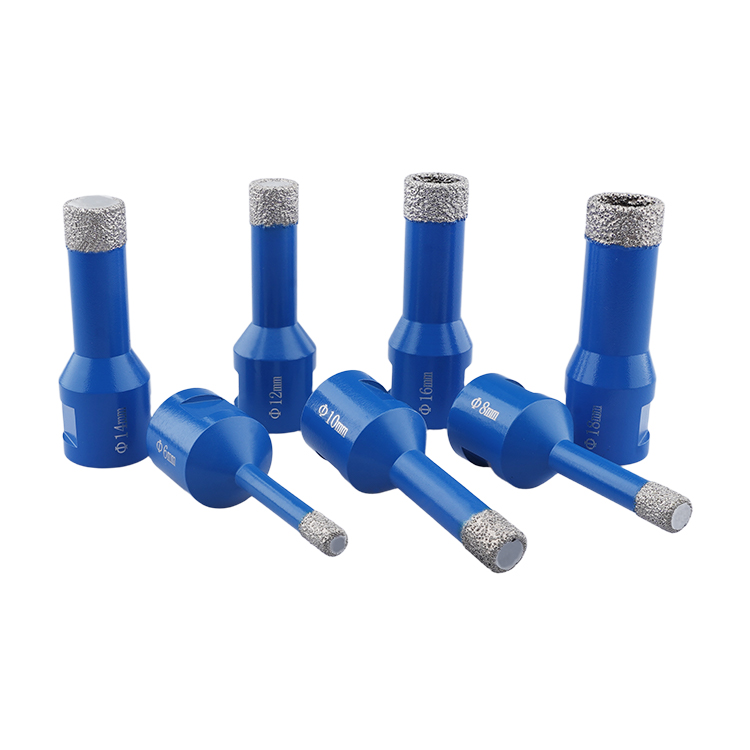
Plasma Surface Modification for Stronger Diamond–Braze Interfacial Bonding
Ti and Cr Plasma Metallization: Enhancing Reactivity and Carbide Interlocking
When we apply plasma metallization using titanium or chromium to diamond surfaces, it creates these tiny reactive layers at the nanoscale level. What happens next is pretty remarkable - those layers form carbides like TiC and Cr3C2 that actually bond chemically with the diamond structure itself. This bonding makes the interface between materials significantly stronger than regular untreated diamonds. Tests show around a 40% improvement in strength while still maintaining structural integrity even when exposed to brazing temperatures over 800 degrees Celsius. The real magic comes from how plasma settings affect the grain size of these carbides. Finer grains create barriers against cracks spreading when subjected to shear forces beyond 200 MPa. That means components made this way last longer under heavy loads, which is why many manufacturers are turning to this technique for critical applications where failure isn't an option.
Plasma Nitriding and Ta Diffusion Layers: Suppressing Graphitization to Preserve Diamond Integrity
Graphitization happens at the point where diamond meets braze material, and it's one of the main reasons diamonds fall out of their seats during hot drilling operations. This process can actually reduce how well the diamond stays attached by as much as 60%. To fight against this problem, manufacturers use plasma nitriding along with tantalum diffusion barriers. These treatments create surfaces rich in nitrogen and form stable TaC compounds that hold up better under heat. The thermal expansion rate of TaC (around 1.0 x 10^-6 per Kelvin) aligns pretty well with diamond itself, so there's less stress buildup when things get warm and cool down again. Real world tests have shown over 95% of diamonds stay put after drilling through granite 30 times compared to only about 65% using older techniques. This difference becomes really important once temperatures go past 450 degrees Celsius because diamonds without these protective treatments start turning into graphite very quickly at those levels.
Plasma Treatment Performance Comparison
| Technique | Interfacial Strength Increase | Graphitization Suppression | Optimal Depth |
|---|---|---|---|
| Ti/Cr Metallization | 30–40% | Moderate | 2–5 μm |
| Plasma Nitriding | 20–25% | High | 10–15 μm |
| Ta Diffusion | 35–45% | Extreme | 0.5–2 μm |
These modifications functionally activate diamond surfaces, raising surface energy from 30 mN/m to 70 mN/m. This promotes deeper braze alloy penetration and facilitates covalent bonding—key to long-term grit anchoring.
Active Filler Alloys Engineered for Optimal Diamond Retention
Ag-Cu-Ti and Ni-Cr-B-Si Systems: Reactive Wetting, Carbide Formation, and Thermal Compatibility
Brazing alloys like Ag-Cu-Ti and Ni-Cr-B-Si work through what's called reactive wetting. Basically, these materials spread actively over diamond surfaces and then form carbides right at the contact point either TiC or CrC depending on the alloy composition. The result? Shear strength numbers above 250 MPa which is way better than what we see with regular non-reactive filler materials. Some tests even show interfacial toughness improvements around three times higher. For the Ni-Cr-B-Si group specifically, chromium plays a big role in creating those CrC bonds. Meanwhile, adding boron and silicon does double duty lowering the melting point while also refining the microstructure. This combination gives much better control over heat distribution throughout the process, which helps prevent those annoying residual stresses from building up. When we look at the finished product, these CTE matched joints cut down on thermal cracking risks by roughly 40%. Plus, the boron component actually forms protective oxides that stand up well against oxidation when exposed to extended periods of high temperatures.
Rare Earth Additions (e.g., Sm) in Ni–Cr Braze Alloys: Segregation-Driven Adhesion Enhancement
When samarium is added as a dopant, it takes advantage of atomic segregation effects. At brazing temps above 800 degrees Celsius, samarium atoms tend to move toward the diamond-braze boundary. There they significantly cut down on oxygen sticking to surfaces by around 60%, while also reducing the surface tension of the molten alloy from 1.85 Newtons per meter all the way down to just 0.92 N/m. The resulting layer rich in samarium stops graphite from forming, helps electrons move better across carbide interfaces which creates stronger bonds, and makes the material spread out much faster during application processes. Spreading times now fall below five seconds instead of taking longer. Field tests show these modified nickel-chromium alloys retain diamonds at an impressive rate of 92% after going through 50 complete drilling cycles. That's actually 34 percentage points better than what regular nickel-chromium formulations can achieve in similar conditions.
CVD and Hybrid Composite Coatings for Sustained Diamond Retention Under Load
SiC and WC/C Nanolayer CVD Coatings: Balancing Wear Resistance, Thermal Stability, and Interfacial Cohesion
The Chemical Vapor Deposition process creates very uniform, sticky nanolayers especially for materials like silicon carbide (SiC) and tungsten carbide/carbon (WC/C), which help protect diamond grits when they're subjected to really tough operating conditions. Silicon carbide has amazing heat resistance that goes above 1200 degrees Celsius, so it doesn't turn into graphite during annealing processes. Plus, its hardness level ranges from about 28 to 32 gigapascals, making it pretty good at standing up against wear and tear. When it comes to WC/C coatings, they actually improve how well different surfaces stick together because of tiny mechanical interlocks and chemical bonds with the diamond material. Tests show this makes grit adhesion better by around 18 to 23 percent during abrasive operations. The carbon part of these coatings is also slippery, which cuts down on friction related heating issues. All these characteristics combined mean drill bits last significantly longer in things like reinforced concrete and granite compared to regular uncoated tools. They perform much better without getting bigger or messing with the brazing quality.
Comparative Performance and Practical Selection Criteria for Diamond Retention
When selecting diamond retention technologies for brazed diamond drill bits, prioritize evidence-based performance trade-offs aligned with application demands:
- Bonding Strength: Ti/Cr plasma metallization delivers up to 40% higher interfacial adhesion versus conventional methods; Ag-Cu-Ti braze alloys reinforce this with continuous TiC layers proven to withstand 800°C thermal stress.
- Thermal Resilience: CVD SiC coatings preserve diamond integrity beyond 1,200°C, while plasma nitriding provides reliable graphitization suppression up to 700°C—ideal for sustained high-temperature operations.
- Cost Efficiency: Ni-Cr-B-Si alloys offer strong performance at mid-temperature ranges (700–900°C) with 30% lower processing costs than multilayer hybrid coatings.
- Operational Longevity: WC/C nanolayers extend bit service life by 2.5—demonstrating superior grit retention under impact and friction.
Matching the right technology to both the substrate material and how it will be loaded is critical. Tungsten carbide tool matrices work best with chromium based plasma treatments, whereas steel tools tend to hold up better with nickel chromium braze alloys that have been improved with rare earth elements added. Thermal expansion compatibility should never be overlooked either. When there's too much difference in coefficient of thermal expansion values, typically above 2.5 times 10 to the minus sixth per Kelvin during repeated loading cycles, interfacial cracks start appearing pretty quickly. In situations where impact resistance matters most, look at carbide forming systems like titanium plasma coatings or brazes containing titanium. These need to meet minimum peel strength requirements around 180 mega pascals or higher according to testing standards.
FAQ
What is plasma surface modification?
Plasma surface modification involves applying reactive layers of materials like titanium or chromium to surfaces, such as diamonds, to enhance bonding and structural integrity.
Why is graphitization a concern in diamond brazing?
Graphitization can weaken the bond between diamond and braze material, causing diamonds to become loose during high-temperature operations, thus reducing their attachment by up to 60%.
How do CVD coatings benefit diamond tools?
CVD coatings, such as SiC and WC/C nanolayers, improve wear resistance and thermal stability, helping diamonds withstand extreme conditions and enhancing their longevity.
What role do rare earth elements play in braze alloys?
Rare earth elements like samarium enhance adhesion by reducing oxygen at the bonding surface and minimizing surface tension, leading to stronger bonds and faster application.