 EN
EN
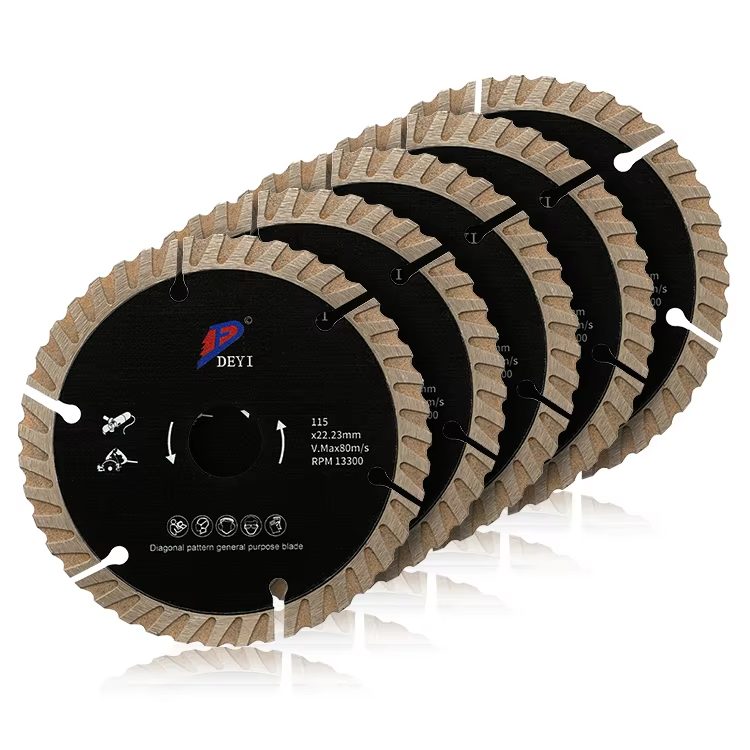
Core Functions of Metal Bond Matrices in Hot Pressed Diamond Blades
Understanding the role of bond matrices in diamond tool performance
The metal bond matrix in hot pressed diamond blades acts as what holds everything together while the blade cuts through tough materials. Basically, these matrices do three main things: first, they keep the abrasive particles from flying off during operation; second, they manage wear so new diamonds get exposed as old ones wear down; third, they help get rid of excess heat generated during cutting. A good matrix design finds that sweet spot between holding onto diamonds long enough for them to work properly but allowing just enough wear so the blade keeps performing well over time. Getting this right makes all the difference when working with hard stuff like granite slabs, concrete walls, or ceramic tiles where consistent cutting action matters most for professional results.
How metal composition affects cutting efficiency, wear resistance, and diamond retention
The choice of metal system directly influences blade behavior:
| Metal System | Key Properties | Performance Impact |
|---|---|---|
| Cobalt-based | High thermal stability, strong bonding | Superior diamond retention (+25-30% vs. iron) |
| Iron-based | Cost efficiency, rapid wear rates | Aggressive cutting in soft materials |
| Bronze (Cu-Sn) | Balanced release, mid-range hardness | Versatile use in masonry and stone |
Cobalt creates much stronger connections at the atomic level with diamonds than iron does, which means diamond tools last longer before losing their grit. Studies from Materials Engineering Report back in 2023 found that cobalt actually cuts down on early grit loss by somewhere between 18 and 22 percent when compared to those iron-based systems. Now, while cobalt definitely wins when it comes to keeping diamonds intact, iron matrices have their own advantages too. They wear away quicker, making them better suited for working with softer materials that aren't so abrasive. Bronze alloys sit somewhere in the middle ground here. These work pretty well for cutting through things like tile and softer types of stone, plus they handle heat better during operation, which is always a good thing for tool longevity.
Application-specific demands shaping metal matrix selection
The hardness of bonding agents actually works opposite to how dense the material is. When working with tough stuff like granite, manufacturers go for softer matrix materials so diamonds get exposed faster during cutting. But when dealing with abrasive concrete, they turn to harder alloys made from iron, cobalt, nickel and copper to prevent premature wear. In situations where heat becomes a problem, like when cutting dry asphalt, cobalt rich bonds stay strong even at temperatures reaching around 650 degrees Celsius. These special bonds handle thermal stress much better than regular bronze systems, standing up to about 40 percent more wear before failing. Most professionals know this already - nearly 8 out of 10 premium quality blades on the market today use specially mixed metal powders tailored for specific jobs, showing just how far the industry has come in matching tools to their intended applications.
Primary Metals Used in Hot Pressed Bond Matrices
Bronze-Based Systems: Copper and Tin as Foundational Elements
Bronze alloys show up a lot in basic diamond blades because copper has pretty good heat conducting properties (around 380 W/m·K) while tin helps resist corrosion. When these metals get mixed together, they form a kind of sponge-like structure that actually keeps the blade cool during operation and stops diamonds from getting oxidized. For softer stuff like asphalt, bronze blades cut about 15 to 20 percent quicker compared to those made with iron. But there's a catch worth mentioning here. When faced with tougher jobs like granite or reinforced concrete, bronze starts wearing down much faster than expected. That's why most professionals stick to other materials for heavy duty work where blade longevity matters most.
Cobalt-Based Bonds: Superior Diamond Retention and Sintering Performance
Cobalt helps diamonds stick better mechanically, which cuts down on grit pulling out during testing by around 30% in lab conditions. When it comes to sintering, cobalt actually has these self lubricating qualities that lead to bonds that are denser and more consistent throughout. Sure, cobalt based systems will set manufacturers back about two to three times what bronze alternatives cost. But look at the long term benefits: blades last significantly longer when cutting through tough stones like granite or basalt. Industry data from recent abrasive machining studies shows life spans can jump anywhere between 40% to even 60% longer. For operations where performance matters most, this makes cobalt worth the extra investment despite the higher upfront price tag.
Iron-Based Matrices: Cost-Effective Durability for Aggressive Cutting
Iron powders with high purity levels (around 99.7% or better) strike just the right balance between hardness (typically between 120 and 150 HV) and how well they resist cracking under stress. This makes them particularly good choice when money is tight but quality still matters. The bonds formed from these materials can handle pretty serious impacts during concrete demolition work, surviving forces as high as 18 kilonewtons while keeping about 85% of diamonds intact throughout the process. Recent improvements in how we control the sizes of particles in these powders have cut down on internal voids inside the material to below 5%. As a result, iron-based products now come close to what mid range cobalt alternatives offer, but at roughly half the price tag which represents significant savings for manufacturers looking to cut costs without sacrificing too much performance.
Fe-Co-Ni-Cu Alloy Systems: Synergistic Effects in Matrix Strength and Stability
The quaternary alloy made up of Fe35Co30Ni20Cu15 brings together several key metal properties. Cobalt contributes good wettability, nickel adds thermal stability, copper boosts electrical conductivity, while iron provides necessary mechanical strength. When these metals are combined, they reach around 280 to 320 on the Vickers hardness scale. Their thermal expansion rates measure approximately 10.2 to 11.6 micrometers per meter per degree Celsius, which aligns pretty well with industrial grade diamonds. Because of this close match in expansion characteristics, there's significantly less micro cracking when subjected to repeated heating and cooling cycles. As a result, cutting segments last about 70% to nearly 90% longer during continuous dry cutting applications compared to other materials.
Advanced Additives and Secondary Alloying Elements
Tungsten and Tungsten Carbide for Enhanced Hardness and Abrasion Resistance
The addition of tungsten compounds has become a common practice for enhancing wear resistance in tough industrial settings. According to research published in the International Journal of Refractory Metals last year, cutting tools containing between 10 and 15 percent tungsten carbide demonstrate nearly 18 percent better wear characteristics when working with granite than traditional bronze matrix blades. This comes down to tungsten's impressive hardness rating of around 7.5 on the Mohs scale plus its tendency to create stable carbide structures during the sintering process. Most manufacturers need to strike just the right balance though since too much tungsten can actually reduce the necessary porosity in the matrix material that helps hold diamonds securely in place during operation.
Nickel and Silver Additives: Improving Toughness and Thermal Conductivity
Adding nickel at around 5 to 8 percent weight actually boosts fracture toughness by about 22% according to controlled impact testing, which means materials are less likely to chip or crack under stress. When silver is mixed in at 2 to 4%, it helps manage heat better too. This makes a real difference in cutting applications, bringing down those scorching hot zones by as much as 140 degrees Celsius during long marble cutting sessions. Both these additions work well alongside standard iron cobalt copper systems. They're especially useful for making blades that cut ceramic tiles with precision, since these blades need to stand up to sudden temperature changes without failing.
Performance Comparison: Cobalt-Based vs. Iron-Based Bond Systems
Laboratory and field data on granite cutting efficiency and wear rates
When it comes to cutting through granite, cobalt based materials actually create about 18 to 22 percent less friction compared to their iron counterparts when temps go over 200 degrees Celsius. This means tools can cut faster without overheating. On the flip side though, iron bonds are harder stuff altogether measuring around 53.2 on the Rockwell scale versus only 42.9 for cobalt, so they hold up better against really rough grinding situations where things get deformed easily. Some real world testing has been done too. After running these tools for 50 straight hours on granite surfaces, cobalt systems only showed around 5% wear on segments whereas iron ones had between 7 and 9% wear marks showing similar usage patterns.
Diamond retention and segment longevity in real-world applications
The way cobalt bonds with materials gives it better performance when it comes to holding onto diamonds during concrete work. We're talking about around 85 to 88 percent retention rate, while iron based systems only manage about 72 to 75 percent. The difference really shows up at higher RPMs though. After running for 120 hours straight, iron segments lose their diamonds about 30 percent faster than cobalt ones. Contractors know this well from field tests. Still, many stick with iron matrices for jobs where budget matters most. Even though they need replacing more often, the raw materials cost roughly 40 to 45 percent less than cobalt alternatives. So for short term projects or tight budgets, iron remains a go to choice despite its limitations.
Key trade-offs at a glance:
| Metric | Cobalt-Based Systems | Iron-Based Systems |
|---|---|---|
| Diamond retention (%) | 85-88 | 72-75 |
| Segment wear rate (%) | <5 | 7-9 |
| Production cost index | 145 | 100 |
| Optimal cutting speed | 2200 RPM | 1800 RPM |
Emerging Trends in Metal Matrix Development for Diamond Blades
Innovations in Sintering Alloys and Hybrid Bond Formulations
New sintering methods are adding reactive components like chromium and tungsten (about 0.5 to 2%) to standard iron-cobalt-copper mixtures. These advanced approaches reach nearly 98% of theoretical density when heated between 750 and 850 degrees Celsius. That's way better than the usual 92-94% seen in older manufacturing techniques according to recent research published in Materials Science in Cutting Tools last year. With gradient sintering, we get these special layered structures. The outside layers have really tough materials rated around 700-800 on the hardness scale to stand up against wear and tear. Meanwhile, the inner parts stay flexible enough with fracture toughness values between 15 and 18 MPa root meters. This combination makes the final product much more durable in real world applications where both strength and flexibility matter.
Cobalt-Free Systems: Advancing Sustainability and Cost-Efficiency
Environmental rules are pushing change in the industry, and about 38 percent of European blade makers have started using Fe-Ni-Mn systems instead of traditional materials. These new systems hold onto diamonds just as well as cobalt does, around 85 to 89 percent retention rate, but they actually save money too, cutting production costs somewhere between $11 and $15 per kilogram. When tested on quartzite, the cobalt free blades last almost as long as their counterparts, managing about 120 to 135 linear meters before needing replacement. What makes this switch even better is that manufacturing these blades creates 60 percent fewer carbon dioxide emissions during the sintering process. So we get a greener option that still performs at acceptable levels for most applications.
Tailoring Bond Hardness and Composition for Specific Cutting Applications
Blade design these days focuses heavily on getting the specs just right. For granite processing work, manufacturers typically go with bonds rated between 55 to 60 HRC containing around 12-18% copper to handle thermal shocks better. When it comes to reinforced concrete jobs though, they need something tougher - usually Fe-W systems at 65-68 HRC that can take temperatures ranging from 800 to 950 degrees Celsius. There's also this new stuff called laser-clad hybrid segments where Fe-based and Cu-Sn layers alternate. These actually cut through asphalt about 40% quicker than traditional blades without compromising the diamond stability. What we're seeing here is pretty interesting really, as tool makers increasingly turn to these functionally graded materials for their high performance tools across various industrial applications.
FAQ
What is the role of the metal bond matrix in diamond blades?
The metal bond matrix in diamond blades holds the abrasive particles in place, manages wear to expose new diamonds as old ones wear down, and helps dissipate heat generated during cutting, ensuring the blade's consistent performance over time.
Why are different metal systems used in diamond blades?
Different metal systems, such as cobalt-based, iron-based, and bronze-based, are used in diamond blades to influence blade behavior in terms of cutting efficiency, wear resistance, and diamond retention, depending on the application and material being cut.
What are some advanced additives used in diamond blades?
Advanced additives like tungsten and tungsten carbide are used for enhanced hardness and abrasion resistance, while nickel and silver additives are employed to improve toughness and thermal conductivity in diamond blades.