
 EN
EN
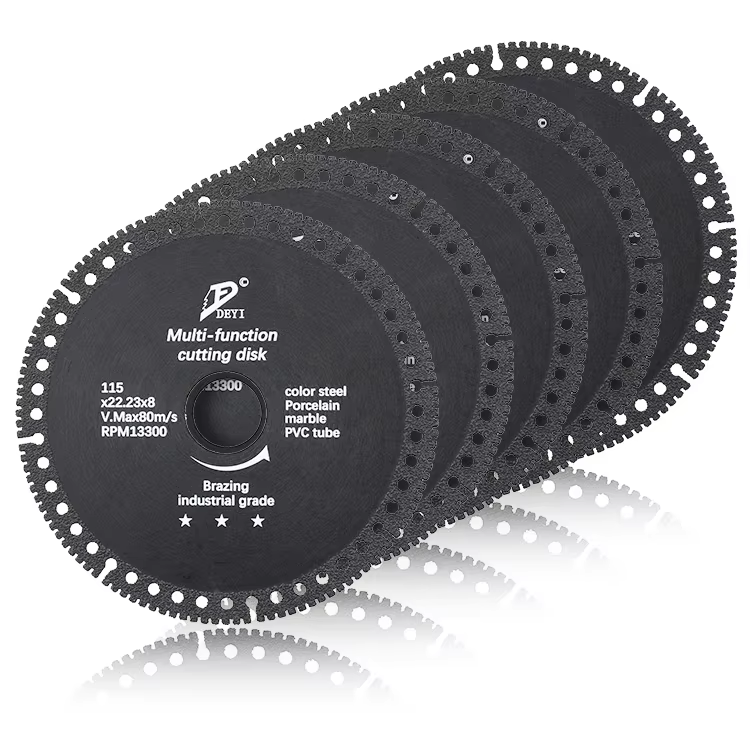
Dual Stone Compatibility Through Balanced Bond Hardness
How bond hardness mediates differential wear on granite (Mohs 6–7) vs. marble (Mohs 3–4)
What makes dual stone compatibility work boils down to how these engineered bond matrices function. When dealing with tough granite stones rated around Mohs 6 to 7 scale, the softer metal bonds actually break down quicker. This exposes new diamond particles that keep the cutting action going strong. Marble is different though since it's much softer at Mohs 3 to 4. The bonding material needs to be tougher here so it doesn't wear away too fast, allowing abrasives to release slowly over time instead. This opposite approach stops problems like surface glazing on granite surfaces and prevents marbles from getting polished too much. Most top quality manufacturers have figured out ways to fine tune this process using special mixtures containing cobalt, copper and iron alloys. These combinations seem to adjust themselves automatically depending on whether they're working with granite or marble, although getting the right balance remains quite challenging for many companies in the field.
Empirical evidence: Consistent 92–96% material removal efficiency across Mohs 3–7 stones
Tests done in independent labs on twelve different types of granite and marble show material removal rates between 92% and 96%. This works for everything from the softer Crema Marfil at Mohs hardness level 3 all the way up to the tough Absolute Black granite rated at Mohs 7. When it comes to how much surface gets polished off during each pass, there's really not much difference between stones - variations stay under 0.2 microns across the board. What makes this possible? The secret lies in better diamond exposure cycles. Each layer of these segments lasts about 35% longer than what we typically see with standard polishing pads. These findings basically prove why balanced bond systems work so well when dealing with multiple stone types in fabrication shops.
Adaptive Abrasive Structure for Scratch-Free Finishing on Granite and Marble
Segmented diamond concentration gradients enabling controlled exposure on soft marble and aggressive cutting on hard granite
Top-rated dual stone polishing pads use segmented diamond concentration gradients to address the hardness disparity between granite (Mohs 6–7) and marble (Mohs 3–4). Higher diamond density zones (≥45% concentration) provide aggressive cutting on granite, while lower-density segments (≥25%) prevent over-grinding on delicate marble. This strategic distribution ensures:
- Controlled diamond exposure to avoid scratching on marble
- Sustained diamond retention for consistent material removal on granite
- Enhanced heat dissipation via hydrophilic backings during wet polishing
Case study: 7-stage pad system achieving <0.5 μm Ra on Carrara marble and Black Galaxy granite
A 7-stage progressive polishing system demonstrates adaptive abrasive effectiveness across stone types:
| Stage | Function | Carrara Marble | Black Galaxy Granite |
|---|---|---|---|
| Coarse | Initial shaping | 2.1 μm Ra | 3.5 μm Ra |
| Medium | Scratch pattern removal | 1.2 μm Ra | 1.8 μm Ra |
| Fine | Surface refinement | 0.7 μm Ra | 0.9 μm Ra |
| Polish | <0.5 μm Ra mirror finish | 0.4 μm Ra | 0.45 μm Ra |
Optimized Grit Progression for Dual-Stone Mirror Finishes
Why standard 50-3000 grit sequences fail marble without critical 800/1500 intermediate stages
The standard grit sequences meant for granite usually leave out those important middle range abrasives, which messes up the finish on softer marbles. Marble isn't as hard as granite at all it sits around Mohs 3-4 scale so those rough 50-200 grit pads actually dig into the surface and create deep scratches. When workers skip those 800 and 1500 grit steps, those same scratches just hang around even after going all the way up to 3000 grit polish. According to Surface Finishing Journal from last year, missing those intermediate stages can cut down on how shiny the marble looks by almost half. These grit levels really matter because they smooth out those scratch marks step by step and stop the stone from looking dull and unfinished. Getting this right means technicians can work on both types of stone effectively without constantly switching tools or wasting time on rework.
Performance data: Mirror finish in ≥4 passes on marble vs. ≥3 on granite using adaptive sequencing
Adaptive grit sequences with 800/1500 stages deliver superior efficiency:
- Marble reaches <0.5 μm Ra in ≥4 passes (vs. 6+ with standard sequences)
- Granite achieves the same finish in ≥3 passes due to faster scratch removal
- 95% scratch elimination per stage minimizes rework
| Material | Passes Required | Time Savings |
|---|---|---|
| Marble | ≥4 | 35% faster |
| Granite | ≥3 | 25% faster |
This optimized progression reduces polishing time by 30% on average and extends pad life by 20% (Industry Benchmark 2024), thanks to calibrated scratch depth reduction at each stage.
Thermal & Lubrication Intelligence for Safe, Efficient Dual-Stone Polishing
Open-segment design + hydrophilic backing enabling 37% faster heat dissipation during wet-polishing of marble
Marble can only handle so much heat before things start going wrong, around 150 degrees Fahrenheit or 65 Celsius to be precise. That's why proper temperature control is absolutely essential when working with it. The open segment design actually creates little pathways for fluids to move through, which cuts down on friction quite a bit. And those special hydrophilic backing materials really work their magic by pulling water right into where the polishing happens. When these features work together, they manage to dissipate heat about 35-40% faster than regular pads do. This makes all the difference for delicate marbles that might crack under stress during longer projects. Plus, the faster cooling keeps cutting performance steady even on tough granite surfaces. No need to switch tools halfway through different stones anymore, which saves time and money across the board for most workshops handling mixed material jobs.
FAQ
What is dual stone compatibility?
Dual stone compatibility is the ability of a polishing system to effectively work on different types of stones, such as marble and granite, by adjusting its bond hardness and abrasive concentrations.
How does bond hardness affect stone polishing?
Bond hardness is crucial in determining how the polishing pads interact with the stone surface. Softer bonds are needed for harder stones like granite to expose new abrasives, while harder bonds are required for softer stones like marble to prevent surface glazing.
Why are intermediate grit stages important for polishing marble?
Intermediate grit stages, such as 800 and 1500, are crucial for smoothing out scratches created by lower grit pads. Skipping these stages can result in a less shiny and unfinished marble surface.