 EN
EN
The Fundamental Role of Metal Matrix in Diamond Tool Performance
Understanding the metal matrix in sintered diamond blade bonds
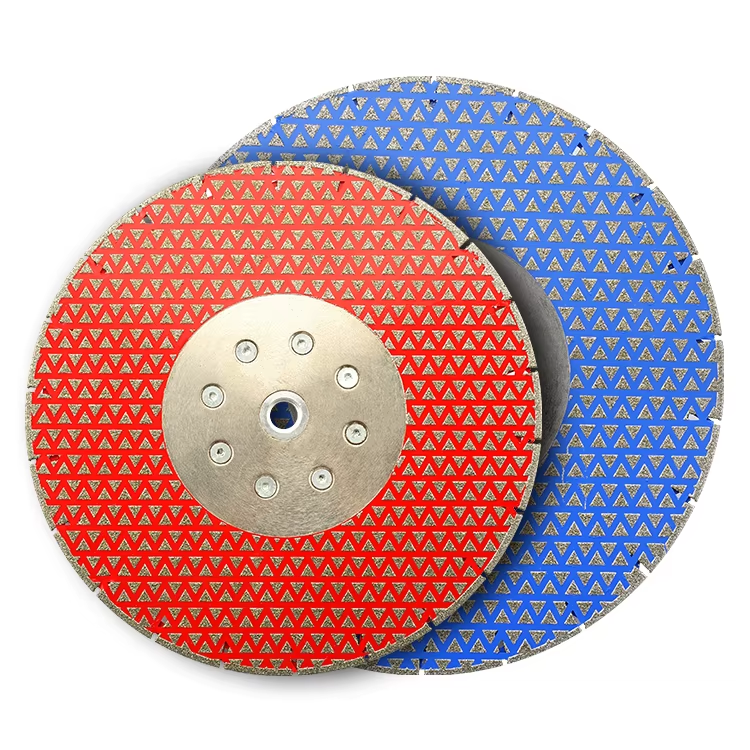
The metal matrix within sintered diamond blades acts as the main structural component that determines how well these tools perform overall. Made from various metal powders like cobalt, iron, or different types of bronze alloy, this matrix holds together the diamond grit particles during the intense heat process known as sintering. Studies looking into optimizing bond hardness show there needs to be just the right amount of strength here. The matrix has to be tough enough to keep those diamonds firmly in place while cutting materials, but also designed so it wears down gradually alongside the diamonds themselves. When everything works properly, around 12 to 18 percent of the matrix material gets worn away throughout the lifetime of the diamond coating. This gradual erosion helps maintain access to new abrasive surfaces for continued effectiveness according to findings published by Ponemon Institute back in 2023.
Mechanical support and diamond retention through the bond matrix
Diamonds stay embedded in metal matrices through mechanical locking mechanisms and chemical bonds between materials. When it comes to granite cutting operations, cobalt based systems tend to hold onto diamonds better than iron alternatives. Research indicates around a 23 percent improvement in diamond retention for cobalt systems because they form stronger carbides where the diamond meets the metal matrix. Transverse rupture strength or TRS is another critical factor affecting blade longevity. Most industrial blades have TRS values ranging from approximately 800 to 1400 MPa. Blades with higher TRS can withstand greater cutting forces during operation, which extends their useful life. However there's a tradeoff here since increased TRS requires careful management of wear rates to ensure the blade maintains its self sharpening properties throughout extended use periods.
Self-sharpening mechanism: Controlled matrix wear for optimal diamond exposure
The self sharpening process works through the balance of matrix erosion and diamond protrusion. When cutting concrete, the matrix material typically wears away at around 3 to 5 micrometers each hour, gradually exposing fresh diamond particles as they become available. The softer bond matrices rated between Rockwell B 85 and 95 tend to wear down about 40 percent quicker compared to harder ones in the Rockwell C 25 to 35 range. This makes soft bonds particularly good for applications where rapid blade renewal matters most during tough cuts. Getting this right the relationship between how fast the bonding material wears versus how diamonds break apart determines whether a tool can keep performing well over time across different types of materials being cut.
Mechanical and Chemical Functions of the Metal Matrix in Diamond Retention
Mechanical anchoring: How the matrix secures diamond grit during cutting
During sintering, molten metal infiltrates diamond surfaces, creating microstructures that mechanically lock 60–80% of each diamond’s surface area. This interlocking prevents dislodgement under lateral forces up to 300 MPa while allowing controlled wear to expose fresh grit, maintaining cutting effectiveness throughout the tool's life.
Influence of matrix hardness on tool life and wear rate
Matrix hardness (Rockwell B 75–110) significantly affects performance. Harder bonds (B 95–110) reduce diamond loss by 18–22% in non-abrasive materials like marble but generate 40°C–60°C more heat due to increased friction. Softer matrices (B 75–85) promote rapid self-sharpening in abrasive concrete applications, though they accelerate blade wear by 25–30% per operating hour.
Balancing bond wear and diamond retention for sustained cutting efficiency
Optimal matrix design aligns wear rates with diamond degradation—typically 0.03–0.12 mm/hr for standard 40/50 mesh diamonds. This synchronization maintains 30–35% diamond protrusion height, delivering consistent material removal rates (±5% variation) across 85–90% of the blade’s service life before resharpening is needed.
Impact of metal matrix properties on cutting speed and blade longevity
Cobalt-enhanced matrices offer 15–20% greater thermal stability than iron-based systems at 600°C–800°C, reducing the risk of diamond graphitization. In reinforced concrete applications, this extends continuous operation by 120–150 minutes per shift while maintaining ±2% consistency in cutting speed over 300+ cuts.
Key Materials and Alloy Systems in Sintered Metal Matrix Design
Sintered diamond blade performance hinges on precisely engineered metal matrices that balance diamond retention, wear resistance, and cutting efficiency. These composite systems combine metallic powders with diamonds under high heat and pressure, forming durable bonds tailored to specific applications.
Bronze-Based Bond Systems: Common Composition and Applications
Bronze matrices made up mostly of copper (around 60 to 80 percent) mixed with tin and zinc are pretty much standard for construction grade blades because they handle heat pretty well and wear at a consistent rate over time. Some recent research from 2023 on sintering processes showed that when using bronze instead of pure copper, there's about a 15% reduction in diamond pullout during concrete cutting operations. These materials work great for everyday jobs cutting through things like granite and asphalt surfaces since these materials aren't too hard and won't wear down the blade too quickly in most situations.
Cobalt-Based vs Iron-Based Matrices: Performance and Cost Trade-Offs
Testing under ISO 9284:2022 standards shows cobalt matrices last about 40 percent longer when cutting abrasive stone compared to iron based systems. But let's face it, most contractors go for iron alloys because they save around 60 to maybe 70 percent on material costs. That makes sense for everyday jobs like cutting bricks or tiles where budgets matter. The good news is newer blends mixing iron, cobalt and nickel are changing things. These advanced hybrids deliver roughly 80% of pure cobalt's durability while cutting material expenses by nearly half thanks to better sintering techniques. Contractors are starting to notice these middle ground options that balance quality with affordability.
Steel-Based and Hybrid Matrices for High-Strength Sintered Blade Applications
The powder metallurgy process creates steel matrices that can handle tensile strengths ranging around 1,200 to 1,400 MPa, making them ideal for slicing through reinforced concrete and materials with embedded steel rebar. According to a recent materials study from 2024, blades made with chromium molybdenum steel actually last about three times longer when cutting railroad ties compared to old school bronze systems. Many manufacturers now opt for hybrid approaches where they put steel at the core and wrap it with bronze on the outside. This setup helps strike a good balance between how tough the material is against breaking and how fast it wears down during actual use.
Metal Powders and Alloy Formulations in Advanced Sintered Bond Systems
Innovations include titanium-carbide-reinforced powders (<75μm) that create gradient matrix structures, enabling controlled radial wear and maintaining diamond protrusion angles within 2° variance. Nano-scale silver coatings (0.5–1.2μm) on bond particles reduce sintering temperatures by 150–200°C while enhancing interfacial adhesion between the matrix and diamond.
Evolution of Sintered Bond Families and Material Innovation Trends
The 2024 Global Sintered Tools Report notes a 32% annual growth in functionally graded matrices that vary hardness across blade segments. Emerging smart alloys with shape-memory properties can adjust diamond exposure in response to cutting temperatures exceeding 450°C, potentially reducing blade downtime by 40% in continuous industrial operations.
Comparative Mechanical Properties: Co-Based vs Fe-Based Matrices Under Stress
Wear Resistance and Durability of Sintered Metal Matrices
Cobalt-based (Co-based) matrices exhibit superior wear resistance, losing 12–15% less material than iron-based (Fe-based) systems under high-load conditions (see Table 1). This stems from Co’s ability to form intermetallic compounds with diamond, creating a cohesive microstructure. Fe-based matrices compensate with higher ductility, offering better shock absorption in variable cutting environments.
| Property | Co-Based Matrix | Fe-Based Matrix |
|---|---|---|
| Wear Rate (mm³/hr) | 0.8–1.2 | 1.5–2.1 |
| Fracture Toughness (MPa−m) | 8.1–9.3 | 6.7–7.9 |
| Thermal Conductivity (W/m·K) | 69 | 80 |
Performance of Co-Based and Fe-Based Matrices Under Thermal and Mechanical Stress
When subjected to both high temperatures ranging from 600 to 800 degrees Celsius and mechanical forces, cobalt based materials tend to hold their shape better than iron counterparts. These Co matrices actually retain about thirty percent more structural strength because they expand less when heated. On the flip side though, iron systems perform better during quick cooling situations. The reason? Iron has around twenty three percent greater ability to conduct heat away, which helps prevent diamonds from turning into graphite under extreme conditions. According to computer modeling studies, cobalt bonds can keep diamonds intact even at pressures exceeding 250 megapascals. But for iron based systems, workers usually need to dress the tools more regularly just to get back to normal cutting performance levels after exposure to such stresses.
Interfacial Bonding Between Matrix and Diamond: Effects on Diamond Wear Rate
The way cobalt interacts chemically with diamond actually forms much stronger bonds at the interface, cutting down on those annoying diamond pull-outs by somewhere around 18 to 22 percent when compared to iron based systems. Iron matrices work mostly through mechanical anchoring via sintered pores, but this often results in pretty inconsistent wear across different areas. Some liquid phase infiltration methods have been shown to boost adhesion in iron systems by about 14 percent. Still worth noting though, these bonds don't hold up so well when temperatures start fluctuating, making them somewhat unreliable under varying conditions.
Advancements and Real-World Applications of Smart Metal Matrix Design
Soft, Medium, and Hard Bond Matrices: Matching Performance to Cutting Conditions
These days, manufacturers are getting pretty good at matching bond hardness to what the job actually needs. Take soft matrices between 45 and 55 HRC for instance they work great on tough stuff like quartzite or porcelain because the quicker wear keeps those diamonds exposed consistently during cutting. Medium hard bonds ranging from around 55 to 65 HRC strike a nice middle ground between lasting power and cutting speed when working with granite or engineered stone surfaces. For softer materials such as asphalt, the harder matrices above 65 HRC really shine since they wear down slowly enough to keep those precious diamonds intact longer. According to research published last year in the International Journal of Diamond Tools, picking the right matrix can boost blade lifespan by about 40 percent while also cutting energy use by nearly 20% when slicing through concrete. That makes a big difference over time for anyone doing serious cutting work.
Field Performance: Bronze vs Cobalt-Based Systems in Industrial Applications
In masonry work where budget matters most, bronze based matrices are still pretty common because they save about 60 to 80 percent compared to cobalt alternatives. They cut through bricks and limestone just fine for what many projects need. Cobalt options have better heat resistance though, holding up at around 750 degrees Celsius compared to bronze's limit of 550. That makes cobalt the go to choice when working on granite or reinforced concrete at higher speeds. According to recent field reports covering nearly 7,500 operations from Advanced Cutting Solutions in 2024, cobalt blades tend to last roughly 2.3 times longer when dealing with concrete full of rebar. Still, most contractors stick with bronze for jobs that don't demand perfection simply because it costs less initially even if it means replacing tools more often down the road.
FAQ
What is the role of the metal matrix in diamond tools?
The metal matrix serves as the primary structural component holding the diamond grit particles together during the sintering process, influencing the overall performance, durability, and self-sharpening capabilities of diamond tools.
How does matrix hardness affect diamond tool performance?
Matrix hardness affects diamond retention and wear rate. Harder matrices offer better diamond retention and perform well with non-abrasive materials, whereas softer matrices enable rapid self-sharpening with abrasive materials but wear faster.
What are the differences between cobalt-based and iron-based matrices?
Cobalt-based matrices offer superior diamond retention and thermal stability under stress but are more expensive. Iron-based matrices are cost-effective but may require more frequent maintenance and exhibit less durability under intense conditions.
Table of Contents
- The Fundamental Role of Metal Matrix in Diamond Tool Performance
- Mechanical and Chemical Functions of the Metal Matrix in Diamond Retention
-
Key Materials and Alloy Systems in Sintered Metal Matrix Design
- Bronze-Based Bond Systems: Common Composition and Applications
- Cobalt-Based vs Iron-Based Matrices: Performance and Cost Trade-Offs
- Steel-Based and Hybrid Matrices for High-Strength Sintered Blade Applications
- Metal Powders and Alloy Formulations in Advanced Sintered Bond Systems
- Evolution of Sintered Bond Families and Material Innovation Trends
- Comparative Mechanical Properties: Co-Based vs Fe-Based Matrices Under Stress
- Advancements and Real-World Applications of Smart Metal Matrix Design
- Soft, Medium, and Hard Bond Matrices: Matching Performance to Cutting Conditions
- Field Performance: Bronze vs Cobalt-Based Systems in Industrial Applications
- FAQ