
 EN
EN
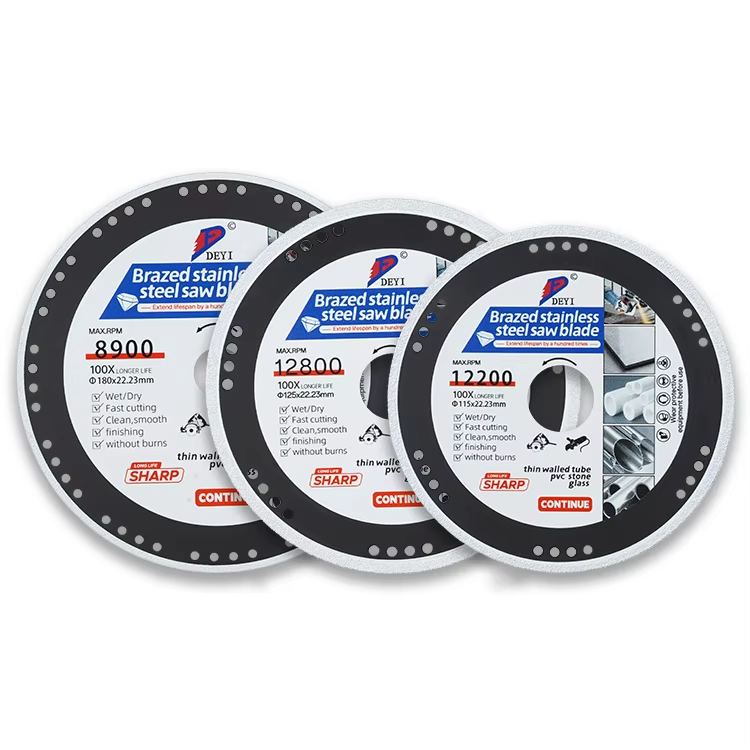
Defining Cost-Performance Trade-Offs in Affordable Diamond Cutting Discs
When looking at diamond cutting discs, there's always that tug-of-war between what something costs initially versus how well it performs over time. The cheaper options usually come in at about half the price or so compared to top quality models, but they just don't hold up as long and cut things much slower too. Take discs made with lower grade diamonds (those below 60% concentration), these tend to need replacing after roughly 30 to 50 fewer cuts than better ones, based on recent industry standards from 2023. Contractors face this dilemma constantly when planning projects - saving money now versus spending more later because their tools wore out faster. Most end up somewhere in the middle depending on what kind of job they're tackling.
How Material Composition Affects Initial Price and Long-Term Value
| Material Factor | Budget Disc Impact | Premium Disc Impact |
|---|---|---|
| Diamond Concentration | 40–50% synthetic grit | 70–90% high-purity industrial grit |
| Bond Material Hardness | Soft metal bonds wear faster | Laser-fused nickel alloys |
| Segment Welding Quality | Spot-welded (risk of separation) | Full-perimeter brazing |
Lower diamond quality reduces manufacturing costs but accelerates wear—field data from 2023 shows inferior grit degrades 2.1% faster during granite cutting. However, the 3–4% higher price of premium materials only becomes cost-effective in projects exceeding 200 cutting hours, establishing clear value thresholds based on usage intensity.
The Role of Total Cost of Ownership in Evaluating Performance
Total cost of ownership (TCO) uncovers hidden expenses associated with budget discs:
- Replacement Costs: Low-end discs require 2.3% more changes under wet cutting conditions
- Labor Impacts: Blade changes consume 12–18 minutes per hour in continuous operations
- Material Waste: Inconsistent edges increase stone breakage rates by 8–15%
A masonry contractor case study found that while premium discs cost $82 versus $35 for budget options, their 290-cut lifespan—compared to 110 cuts—reduced cost-per-cut by 61%. This metric is essential for high-volume applications where operational efficiency outweighs initial savings.
Material Properties That Impact Cutting Efficiency and Blade Lifespan
Evaluating cost-performance trade-offs requires understanding how key material properties influence tool longevity and productivity.
Diamond Concentration, Segment Height, and Their Influence on Performance
When it comes to diamond concentration, more diamonds generally means faster cutting speeds, though this comes at a higher price point. Premium quality discs typically contain between 40 to 50 percent diamond material. However studies indicate that there's actually an optimal range for most everyday masonry tasks. Discs with around 30 to 35 percent diamond content combined with 7mm segment sizes tend to offer the best value when looking at cost per cut according to the Diamond Tool Performance Metrics Study from 2023. The height of those diamond segments matters too for how long they'll last. Professional grade tools with segments measuring 8 to 10mm in height can endure roughly two to three times longer compared to cheaper options where segments are only 5 to 6mm tall.
Low-Grade Diamonds: Trade-Offs in Cutting Speed and Durability
Discs with ≤20% diamond concentration save 35–40% upfront but wear 60% faster, requiring 2.5% more replacements in concrete cutting projects. Over 12 months, this increases total costs by 18% compared to mid-grade alternatives.
Yield and Consistency Differences Between Budget and Professional-Grade Discs
| Performance Metric | Budget Discs (≤$25) | Professional Discs ($45-$60) |
|---|---|---|
| Average Cuts per Disc | 300-400 | 800-1,200 |
| Cut Speed (mm²/sec) | 120-150 | 220-280 |
| Replacement Frequency | Every 8-10 hrs | Every 20-25 hrs |
Professional discs maintain 90% cutting consistency over their lifespan, compared to 55–60% in budget models, reducing material waste from uneven cuts by 27% (ICPA 2022).
Cost Per Cut: Measuring True Value Beyond Upfront Price
Why Cost Per Cut Is a More Accurate Metric Than Purchase Price
The initial price tag doesn't tell the whole story when it comes to money spent on tools. According to an analysis done last year on how efficient equipment really is, cheaper discs costing about 20% less at first glance actually needed replacing three times more frequently during masonry jobs. Looking at cost per cut makes all the difference here. Just take total project costs and divide them by how many actual cuts get made, and suddenly those rock bottom prices look quite different. Let's put some numbers into perspective. A disc priced around $50 that lasts through 200 cuts beats hands down a cheaper $30 alternative which breaks down after only 75 cuts. Contractors who calculate based on what gets done instead of just what they paid upfront tend to save both time and money in the long run.
Hidden Costs: Downtime, Labor, and Frequent Replacements With Low-End Discs
Cheap cutting discs end up costing way more in the long run. When the diamond concentration drops below 30%, the wear happens much faster. This means replacing blades anywhere from 40 to almost 60 percent more often when working with concrete. Every time someone swaps out a worn disc, it eats up between 15 and half an hour of their time. At around $50 per hour for labor, these replacements start adding serious dollars to the bottom line not to mention all the lost time while waiting for replacements. What's worse, bad bonding between segments creates extra vibration during operation. Operators have no choice but to slow down their cutting speed by roughly a quarter just to keep things accurate. That kind of slowdown represents real money on the floor that most people never even track as part of their regular expenses.
Case Study: Total Cost of Ownership in a High-Volume Masonry Project
A commercial contractor evaluated two 10,000-cut concrete projects:
- Budget disc ($28): 110 discs used, 8hrs downtime, $6,160 total cost
- Mid-range disc ($45): 42 discs used, 3hrs downtime, $3,780 total cost
Despite a 60% higher unit price, the mid-range option delivered a 38% lower cost per cut ($0.38 vs. $0.61), highlighting the importance of engineered performance in labor-sensitive and time-critical environments.
Performance Comparison: Budget vs. Premium Diamond Cutting Discs
Real-world cutting performance: Speed, smoothness, and edge wear
Premium discs cut 23% faster in granite and concrete due to higher diamond concentration (40–50% vs. 25–30%) and optimized segment designs that minimize heat buildup. Although low-cost discs save $8–$12 per unit, inconsistent diamond distribution leads to uneven wear, requiring 30% more operator pressure and increasing edge chipping risks.
Field test insights: Blade life and efficiency across price tiers
A 2023 Blade Efficiency Report tracking 1,200 hours of masonry work found:
| Metric | Premium Discs | Budget Discs |
|---|---|---|
| Average lifespan | 420 cuts | 140 cuts |
| Labor downtime costs | $18/hr | $26/hr |
| Replacement frequency | Every 3 days | Daily |
Frequent changes and reduced cutting consistency make budget discs 40% more expensive per linear foot in commercial settings.
Industry paradox: Low upfront cost vs. higher long-term project expenses
While entry-level discs range from $15–$25 compared to $45–$70 for professional-grade, a 2024 total cost analysis revealed budget options increase annual expenses by 60% due to:
- 3x faster depletion rates
- 22% longer timelines from reduced accuracy
- 18% higher safety risks linked to vibration
This disconnect explains why 78% of contractors now use cost-per-cut calculations instead of relying solely on purchase price.
Strategies to Maximize Value in Affordable Diamond Disc Selection
Balancing Segment Design, Diamond Quality, and Price for Optimal Yield
Getting the most out of diamond blades means finding the right mix between diamond concentration, segment shape, and the quality of the base metal used. When it comes to diamonds themselves, going for the higher grade stuff (around 40/50 mesh) can really make a difference. These top tier diamonds cut about 15 to 20 percent faster than their cheaper counterparts (the 80/100 mesh ones), though they do cost anywhere from $3 to $5 extra per blade. For those working primarily with concrete, thicker segments measuring between 10 and 12 millimeters tend to last roughly 30% longer, even if they tack on another $1.50 to $2.50 to the price tag. Smart manufacturers know how to strike this balance just right, creating blades that deliver around 8 to 12 cuts per inch while still saving customers between 30 and 40% compared to what the premium brands charge.
Evaluating Supplier Options: Cost Variations and Reliability Benchmarks
Procurement should weigh price against proven reliability. While budget suppliers offer discs at $6–$8/unit versus $12–$15 for top-tier brands, performance gaps persist:
| Metric | Budget Discs | Verified Suppliers |
|---|---|---|
| Cut Consistency | ±23% variance | ±8% variance |
| Warranty Claims | 18% | 4% |
| Diameter Tolerance | ±1.2mm | ±0.4mm |
These results explain why 73% of contractors prefer ISO 6106-certified suppliers despite 10–15% higher pricing.
Matching Disc Specifications to Application Needs for Long-Term Efficiency
Matching the right disc specifications to what the job actually requires can cut costs per cut anywhere from 40 to 60 percent. When dealing with lighter tile work that involves around 50 cuts or less each week, resin bonded discs containing about 30% diamond content typically bring down expenses to roughly 18 cents per cut. Granite fabricators who handle large volumes, say over 300 linear feet per day, often see their costs drop to as low as seven cents per cut when they switch to vacuum brazed, laser welded segmented discs. These specialized discs hold up well even when exposed to temperatures exceeding 120 degrees Fahrenheit without breaking down. Industry professionals who take time to select equipment based on specific applications tend to change discs halfway through jobs about 22% less frequently and spend approximately 19% less money on waste disposal overall.
Frequently Asked Questions
What is the cost-performance trade-off in diamond cutting discs?
The cost-performance trade-off refers to the balance between the initial cost of a diamond cutting disc and its long-term efficiency and durability. Cheaper discs may cost less upfront but often require frequent replacements and perform slower, leading to higher long-term costs.
How does diamond concentration affect cutting disc performance?
Higher diamond concentration in a cutting disc generally leads to faster cutting speeds and increased durability. However, this comes at a higher initial cost. The right concentration for optimal performance often depends on specific project requirements.
What are the hidden costs associated with budget diamond cutting discs?
Budget diamond cutting discs may incur hidden costs through increased replacement needs, higher labor costs due to frequent downtime, and more material waste from inconsistent cuts, which negatively affect overall project costs.
Why is cost per cut a more accurate metric than purchase price?
Cost per cut considers the total expenditure incurred per completed cut, factoring in replacement frequency and efficiency, rather than only the initial purchase price, providing a clearer measure of a disc's true value.
Table of Contents
- Defining Cost-Performance Trade-Offs in Affordable Diamond Cutting Discs
- How Material Composition Affects Initial Price and Long-Term Value
- The Role of Total Cost of Ownership in Evaluating Performance
- Material Properties That Impact Cutting Efficiency and Blade Lifespan
- Cost Per Cut: Measuring True Value Beyond Upfront Price
- Performance Comparison: Budget vs. Premium Diamond Cutting Discs
- Strategies to Maximize Value in Affordable Diamond Disc Selection
- Frequently Asked Questions