
 EN
EN
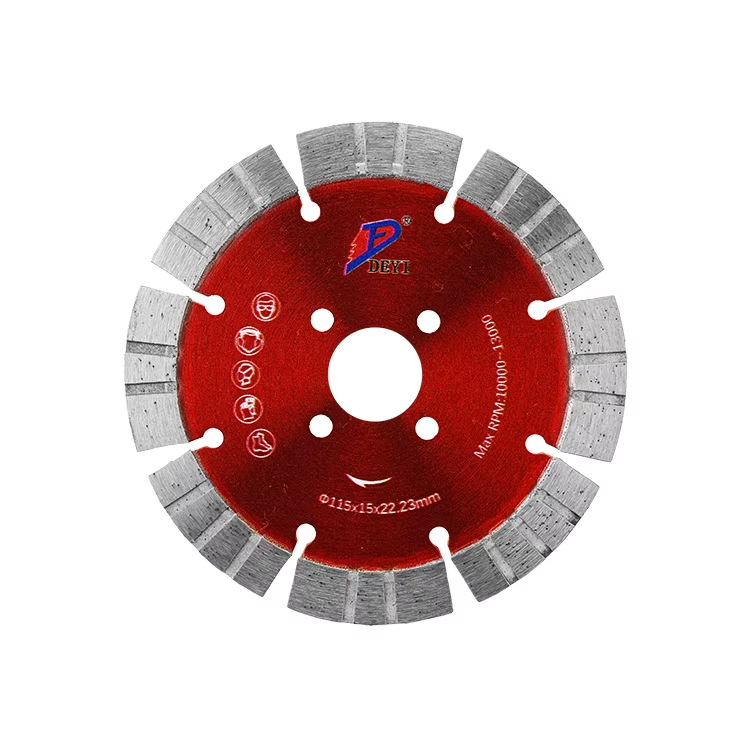
Why Feed Rate Adjustment Is Critical for Diamond Blade Performance in Reinforced Concrete
The Consequences of Incorrect Feed Rate: Glazing, Overheating, and Premature Blade Failure
When feed rates aren't adjusted properly, diamond blades face three main problems that shorten their life span by around 70%. First comes glazing, then overheating, followed by early blade failure. These issues tend to happen together. If someone feeds too slowly, there's just not enough pressure to break through the concrete. What happens next? Friction builds up heat that melts the metal bond, creating this glassy coating on the blade segments that stops them from cutting effectively. On the flip side, pushing too hard puts way too much stress on the blade, particularly when working with reinforced concrete containing more than 2% steel. This causes warping in the core, segments coming loose, and eventually breaks down the bonding material completely. Most experienced operators watch for spark colors as a guide. Blue sparks mean things are going well. But if sparks turn white or yellow, that's a warning sign something's getting too hot, time to back off the feed rate immediately.
How Reinforced Concrete’s Dual-Phase Structure Demands Dynamic Feed Rate Adjustment
The composite nature of reinforced concrete creates some serious challenges during cutting operations. Basically, we have brittle aggregates rated between Mohs 3 to 5 embedded in cement paste, all mixed with much harder steel rebars at around Mohs 7.5 to 8. This combination leads to sudden mechanical shifts that really mess with consistent feed rates. When cutting tools hit those rebar clusters which make up roughly 5 to 15% of most sections, resistance jumps as much as three times normal levels. That kind of force puts blades at real risk for breaking segments or losing diamonds altogether. Concrete itself can handle faster feeds, but whenever there's a steel transition, pressure needs to drop almost instantly. Practical tests indicate that operators who notice vibrations changing and adjust feed rates within half a second after sensing increased resonance tend to replace blades about 40% less frequently than those sticking to fixed speed settings throughout the job.
The Science Behind Optimal Feed Rate Adjustment: Material Hardness, RPM, and Blade Design
Hardness-Feed Relationship: Why Softer Concrete Requires Slower Feed Rates (Contrary to Intuition)
Most operators get this wrong: when dealing with soft or weathered concrete (anything under 3,000 PSI), going slower actually works better than pushing harder. The thing is, weaker concrete doesn't resist as much, but it also doesn't provide enough impact to break those diamond segments and reveal new cutting surfaces. When there's not enough pressure behind the cut, the diamonds just slide along instead of grinding properly, which creates way too much heat and wears down the bonding material faster. Tests from labs show what experienced technicians already know - ramping up feed rates on weak concrete boosts blade temps around 40% and shortens tool life by about two thirds. For best results, knock feed rates down roughly 15 to 20% from what manufacturers recommend when working with stuff that's porous, wet through, or showing signs of carbonation. Better to focus on steady, controlled cutting than chasing speed in these situations.
RPM—Feed Synchronization: The 3-Step Calibration Protocol for Wet and Dry Cutting Conditions
Synchronizing RPM and feed rate is essential for thermal management and cutting efficiency. A validated three-step calibration protocol ensures consistency across conditions:
- Establish baseline RPM: Match blade diameter to saw manufacturer specifications—never exceed maximum rated RPM.
- Calibrate feed pressure: Adjust downward until cutting produces consistent, rope-like dust ribbons (dry) or opaque, viscous slurry (wet).
- Monitor thermal feedback: For dry cutting, reduce RPM by 20% at first sign of discoloration (bluing or straw tint); for wet cutting, increase feed if slurry becomes thin or translucent—indicating underloading and inefficient cooling.
| Condition | Critical Adjustment | Performance Impact |
|---|---|---|
| Wet Cutting | +15% Feed Rate | Prevents slurry dilution and maintains cooling efficiency |
| Dry Cutting | -200 RPM | Reduces thermal stress without sacrificing material removal rate |
Field validation shows adherence to this protocol extends diamond blade life by 25% during reinforced concrete cutting.
Feed Rate Adjustment Strategies When Cutting Through Steel Rebar
Managing Load Spikes: Real-Time Feed Rate Modulation During Rebar Engagement
When the machine hits steel rebar, it causes these massive load spikes that can go over three times what's normal. This is actually one of the main reasons segments start chipping away and bonds begin to fail over time. To handle this problem properly, workers need to cut back on feed speed right away but not completely shut things down. If they notice signs like changes in vibrations, a drop in sound pitch, or see slurry mixed with metal bits and sparks flying, they should lower feed pressure somewhere around 40 to 50 percent. At the same time, keeping the RPMs between 2,500 and 3,000 helps maintain cutting power without causing damage from abrupt slowdowns. According to some field tests published in the Construction Tech Journal last year, this approach cuts down on chipping problems by about two thirds compared to just running at steady speeds all the time.
Safety vs. Efficiency: Evidence-Based Guidance on Pausing vs. Continuous Feed Through Rebar
A comprehensive analysis of 1,200 real-world reinforced concrete cuts reveals clear trade-offs between safety, blade longevity, and productivity:
| Approach | Blade Wear Increase | Cutting Time Delay | Safety Risk |
|---|---|---|---|
| Full Pause | 12% | 35% | Low |
| Continuous Feed | 42% | 0% | High |
| Modulated Feed | 18% | 8% | Medium |
Adjusting feed rates down to around 15-20 centimeters per minute while keeping the machine running seems to strike the best balance for most operations. This approach keeps cutting tool temps under control, staying below that critical 300 degree Celsius mark where graphite starts forming on the blades. The process actually finishes jobs about 27 percent quicker compared to stopping completely between cuts, plus it puts less sideways pressure on materials when everything stays aligned straight up and down. What happens though is pretty significant when operators aren't careful with vertical positioning during those transitions through reinforcing bars. Even small deviations can cause segments to wear out roughly 3.5 times faster because the load gets distributed unevenly across the cutting surface.
Proven Operator Techniques for Consistent Feed Rate Adjustment in Field Conditions
Mastering feed rate adjustment in reinforced concrete demands sensory awareness, calibrated reflexes, and adaptive control—not rigid adherence to preset speeds. Experienced operators rely on integrated feedback:
- Audible cues: A rising, strained pitch signals overload; a stable, resonant hum indicates optimal engagement.
- Visual indicators: Gray slurry confirms concrete cutting; a sudden shift to silvery or metallic-hued slurry—or white sparks—signals rebar contact and mandates immediate feed reduction.
- Tactile response: Increased handle vibration beyond 15% amplitude deviation from initial-pass baseline signals glazing onset or misalignment.
- Thermal management tactics: In dense rebar zones, segmented cutting—advancing 2—3 inches, pausing 3—5 seconds—dissipates heat and prevents motor overload without compromising blade integrity.
When working with wet cutting methods, looking at the cloudiness and thickness of the slurry gives immediate clues about tool wear. For dry operations though, experienced technicians still rely mainly on observing the spark patterns as their best indicator of heat buildup. These different approaches actually create something quite valuable on site - they let workers constantly tweak their cutting process to get better results without wearing out blades so quickly. According to recent field research from several manufacturing plants, crews that combine all these sensory checks end up changing blades unexpectedly about 40 percent less often than teams who just watch the machine gauges or stick to scheduled maintenance intervals. This makes a big difference in both downtime costs and overall productivity across various industrial settings.
FAQ Section
- Why is feed rate adjustment crucial for diamond blades? Proper feed rate is essential to prevent glazing, overheating, and premature failure, which can reduce blade lifespan by about 70%.
- How does reinforced concrete affect cutting operations? The combination of aggregates and steel rebars creates shifts in resistance, requiring dynamic feed rate adjustments to avoid blade damage.
- Why does softer concrete require slower feed rates? Softer concrete doesn't provide enough impact to break diamond segments, leading to heat and increased wear if cuts are made too fast.
- What is the 3-step RPM-Feed synchronization? This protocol ensures thermal management and efficiency by establishing baseline RPM, calibrating feed pressure, and monitoring thermal feedback.
- How can load spikes during rebar engagement be managed? By reducing feed speed by 40-50% and maintaining RPMs between 2,500-3,000, you can manage load spikes effectively.
Table of Contents
- Why Feed Rate Adjustment Is Critical for Diamond Blade Performance in Reinforced Concrete
- The Science Behind Optimal Feed Rate Adjustment: Material Hardness, RPM, and Blade Design
- Feed Rate Adjustment Strategies When Cutting Through Steel Rebar
- Proven Operator Techniques for Consistent Feed Rate Adjustment in Field Conditions