
 EN
EN
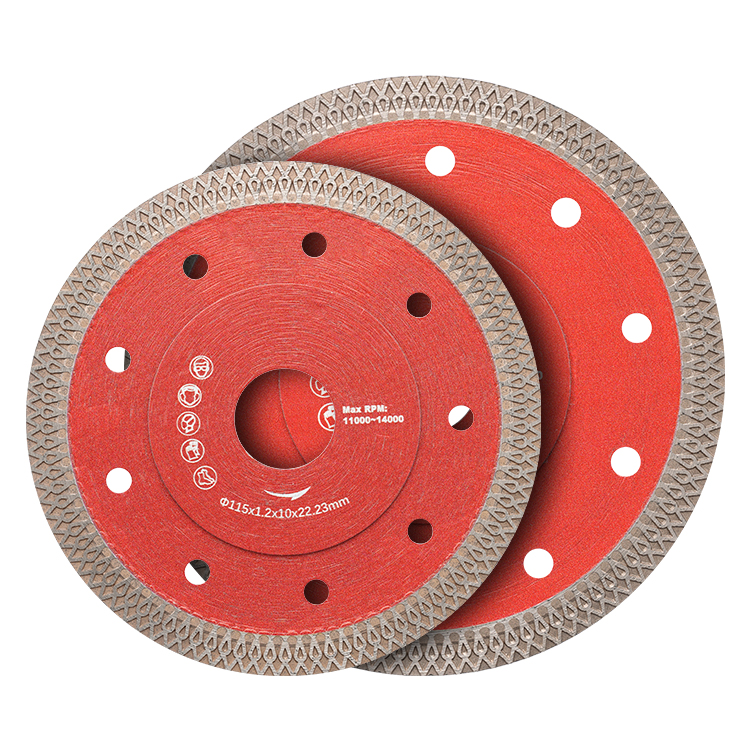
Why Segment Height Consistency Is Critical for Cutting Performance
Immediate effects of height variation on cut quality, vibration, and operator safety
When segment heights vary even slightly beyond ±0.1 mm, cutting performance takes a noticeable hit right away. Segments that aren't perfectly aligned create these annoying vibration patterns which lead to uneven cuts and all sorts of surface problems when working with tough stuff like concrete or asphalt surfaces. What's worse, those vibrations make their way right into the saw handle itself, making operators tire faster and putting them at greater risk for developing hand-arm vibration syndrome over time. According to some recent research published in Industrial Cutting Journal back in 2023, any height differences larger than 0.08 mm actually boost vibration levels by around 27%. That kind of jump isn't just bad for comfort it seriously affects workplace safety standards and poses real threats to workers' health in the long run.
Mechanical load imbalance: How inconsistent segment height accelerates delamination and chipping
When segments aren't all the same height, it creates uneven pressure while cutting. The taller parts take most of the strain, which isn't good for anyone involved. What happens next? The steel core gets overloaded with too much sideways and spinning force. This leads to tiny cracks forming, segments coming loose from their base, and diamonds breaking off before their time. Look at blades where segment heights vary by around 0.15 mm - these tend to wear down about 35% quicker than ones made with precision manufacturing techniques. That means they need replacing sooner than expected. And if left unchecked, this whole mess weakens the blade structure itself. At high speeds, there's a real danger of complete blade failure, something no one wants when working with expensive equipment.
Root Causes of Segment Height Inconsistency in Mass Production
Sintering Process Drift and Its Direct Impact on Green Density and Final Segment Height
When sintering temperatures vary more than 10 degrees Celsius above or below target, it messes with how the powder metallurgy reacts, leading to uneven green density throughout different parts of the component. The denser spots don't shrink as much when things cool down, whereas the less dense sections tend to contract quite a bit more. This difference creates height variations around 0.15 millimeters in the finished product. Such temperature inconsistencies really throw off dimensional stability prior to grinding operations. Fixing these issues after the fact becomes a challenge, which ultimately cuts into production yields for manufacturers working on precision components where tolerances matter most.
Tolerance Stacking Across Pressing, Sintering, and Grinding Stages
Segment height discrepancies often stem from cumulative tolerances across manufacturing stages. A typical process chain includes:
- Pressing: ±0.08 mm variance
- Sintering: ±0.12 mm shrinkage deviation
- Grinding: ±0.05 mm removal inconsistency
When these tolerances align unfavorably, total variation can reach ±0.25 mm—sufficient to reduce blade life by 20% (Abrasive Technology Studies). Without statistical process control (SPC) at each stage, small errors compound into significant height mismatches, undermining cutting consistency in mass-produced blades.
Quantifying the Impact: Wear Rate, Blade Life, and System-Level Predictability
Correlation between ±0.1 mm height variation and up to 35% reduction in average blade life
Keeping segment heights within a tight range of plus or minus 0.1 mm really matters when it comes to how long blades last in operation. When segments get too tall compared to others, the cutting force gets concentrated there instead of being spread out evenly across all segments. What happens next? The diamonds start breaking down faster and the metal matrix around them wears away quicker than normal. We're talking about abrasive wear increasing somewhere around 35% or so. That means blades need replacing much more often than they should. For companies running large production volumes, these kinds of problems don't just add up over time. According to the Tooling Efficiency Report from last year, some operations are losing close to 740 grand every single year because of poor dimensional control. Makes sense why most serious manufacturers treat even small measurements as critical business decisions.
Multi-blade systems: How height mismatch induces cascading wear and uneven power draw
In gang-cutting setups, even one blade with inconsistent segment height disrupts the entire system. It creates imbalance across the cutting head, amplifying harmonic vibrations that accelerate wear in adjacent blades. This cascading effect results in:
- 15–20% higher power draw on overloaded blades
- Thermal stress fractures in bonding materials
- Progressive loss of cutting accuracy across workpieces
When segment height tolerance exceeds ±0.08 mm, system-wide blade life predictability drops by over 50%, complicating maintenance scheduling and reducing throughput in production environments.
Ensuring Segment Height Consistency Through Precision Quality Control
Tightening dimensional tolerances: From ±0.25 mm to ±0.08 mm in high-reliability production
Manufacturers at the forefront of their field are now pushing segment height tolerances down to around ±0.08 mm, which represents roughly a 68% improvement compared to the old standard of ±0.25 mm. According to some industry research, this tighter specification has actually led to about 30% fewer blades failing early on. The secret behind this progress lies in the use of those fancy Coordinate Measuring Machines or CMMs as they're commonly called. These devices allow companies to check multiple points before the sintering process even begins. What happens next? Well, it gives them much better control over where diamonds end up distributed across segments and how dense those segments become. This approach cuts down on what we call tolerance stacking issues during pressing operations and ultimately makes the whole cutting process perform better overall.
Real-time laser profiling and closed-loop feedback in automated grinding stations
Modern grinding setups now incorporate laser profilometers capable of scanning parts at around 2000 points every second, picking up those tiny height differences down to the micron level. The information collected gets sent straight to closed loop control systems which then tweak both the grinding pressure and wheel positioning as things happen. Looking at actual production numbers, these advanced systems cut down on height variations by roughly 42% when compared against traditional manual methods, making it much easier to predict how long components will last before needing replacement. With constant calibration happening during the process itself, manufacturers achieve better surface finishes and maintain consistent dimensions even during large batch productions. This helps avoid those pesky 0.05mm differences that used to cause all sorts of problems in multi blade operations back in the day.
FAQ
Why is segment height consistency important for cutting performance?
Segment height consistency is crucial as it directly influences the cutting quality, vibration levels, and operator safety. Inconsistent heights lead to uneven cuts and surface defects, increasing operator fatigue and risk of health issues like hand-arm vibration syndrome.
What causes inconsistency in segment heights during production?
Inconsistencies can occur due to variations in sintering temperatures, leading to uneven green densities, or stacking of tolerances across pressing, sintering, and grinding stages.
How does height variation affect blade life?
A variation of ±0.1 mm in segment height can reduce the average blade life by up to 35% due to concentrated cutting forces on taller segments, leading to accelerated wear.
What are some modern solutions to ensure segment height consistency?
Using Coordinate Measuring Machines (CMMs), real-time laser profiling, and closed-loop feedback systems helps maintain tight dimensional tolerances and enhance the reliability of segment height consistency.